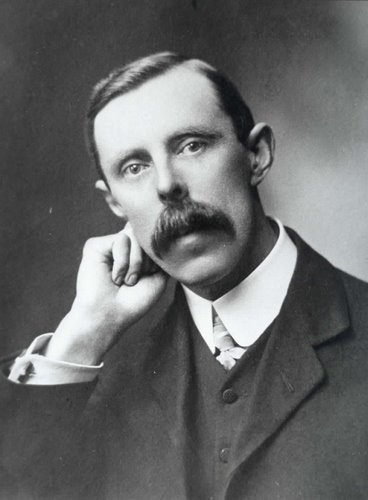
Frank William Boreham 1871-1959

Frank William Boreham 1871-1959
A photo F W Boreham took of himself in 1911

Saturday, April 29, 2006

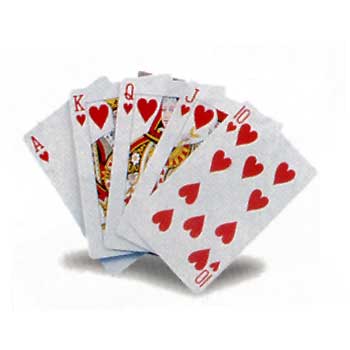
Boreham on the Deck of Cards

Helen, a regular reader of this site has alerted me to an interesting Boreham angle.

In Dr Boreham’s book, ‘The Drums of Dawn’, there is an essay entitled ‘Second Husband’ about a man named Curley. This man, Boreham said, used playing cards as his bible and his calendar.

Helen goes on to write about an old time ‘singing cowboy’, named Tex Ritter, who made a record about an American GI, during WWII, using a deck of cards in chapel for a bible and calendar. The title of the record was ‘Deck of Cards’.

A quick Google search of the Internet has revealed numerous sites (see one below) explaining how one can use playing cards to speak about the Christian message. It also gives information on the singing cowboy’.

One story on this site says that a young soldier was in his bunkhouse all alone one Sunday morning over in Afghanistan. It was quiet that day, the guns and the mortars, and land mines for some reason hadn't made a noise. The young soldier knew it was Sunday, the holiest day of the week. As he was sitting there, he got out an old deck of cards and laid them out across his bunk.

Just then an army sergeant came in and said, "Why aren't you with the rest of the platoon?" The soldier replied, "I thought I would stay behind and spend some time with the Lord." The sergeant said, "Looks like you're going to play cards." The soldier said, "No sir, you see, since we are not allowed to have Bibles or other spiritual books in this country, I've decided to talk to the Lord by studying this deck of cards." The sergeant asked in disbelief, "How will you do that?"

"You see the Ace, sergeant, it reminds that there is only one God.
The Two represents the two parts of the Bible, Old and New Testaments.
The Three represents the Father, the Son, and the Holy Ghost.
The Four stands for the Four Apostles: Matthew, Mark, Luke and John.
The Five is for the five virgins that were ten but only five of them were glorified.
The Six is for the six days it took God to create the Heavens and Earth.
The Seven is for the day God rested after working the six days.
The Eight is for the family of Noah and his wife, their three sons and their wives, in which God saved the eight people from the flood that destroyed the earth for the first time.
The Nine is for the lepers that Jesus cleansed of leprosy. He cleansed ten but nine never thanked Him.
The Ten represents the Ten Commandments that God handed down to Moses on tablets made of stone.
The Jack is a reminder of Satan. One of God's first angels, but he got kicked out of heaven for his sly and wicked ways and is now the joker of eternal hell.
The Queen stands for the Virgin Mary.
The King stands for Jesus, for he is the King of all kings.

When I count the dots on all the cards, I come up with 365 total, one for every day of the year. There are a total of 52 cards in a deck, each is a week, 52 weeks in a year.
The four suits represents the four seasons: Spring, Summer, Fall and Winter.
Each suit has thirteen cards, there are exactly thirteen weeks in a quarter.

So when I want to talk to God and thank Him, I just pull out this old deck of cards and they remind me of all that I have to be thankful for."

The sergeant just stood there and after a minute, with tears in his eyes and pain in his heart, he said, "Soldier, can I borrow that deck of cards?"

There are many variations on how these cards can be used. We may not find the entire card commentary to our theological taste. But it is an interesting way of using familiar symbols and charging them with a deeper meaning.

When I worked for several years in a Prison one of my guests who came inside to assist me with a worship service used the cards in a similar way. I was amazed at the impact his illustrated talk had on that captive audience.

Geoff Pound

Thanks to Helen for the inspiration for this posting.

Site: http://www.snopes.com/glurge/cards.htm

Image: Playing Cards

Tuesday, April 25, 2006

So This Is Boreham: Part Ten

This brings to mind a story Boreham shared. A minister was leaving his church for another charge, when a church member approached him at a farewell reception and said, "Sir, I am sorry to see you go. I never had but one objection to you; your preaching was always too horizontal!" Boreham ties in this parishioner's brutal honesty with the words of Henry Jowett: "We must preach more upon the great texts of the Scriptures; we must preach on those tremendous passages whose vastnesses almost terrify us as we approach them!"

If you are looking for unexcelled conversion testimonies, his Great Texts series is a necessity. Some of the best devotional thoughts penned anywhere can be found in The Tide Comes In. Boreham delves into the Beatitudes in The Heavenly Octave and sheds light upon Luke 15 in The Prodigal. Mrs. Ruth Graham Bell was influenced by The Prodigal and includes a wonderful Boreham story of Dostoyevsky's death-bed scene in her book, Prodigals and Those Who Love Them.

Finally, in one of his rarest and earliest writings, Whisper of God, Boreham reminds the preacher that he must have a vision of Deity before he steps into the pulpit. Preaching must flow from the wellspring that has as its source a personal relationship with Almighty God. Says Boreham, "A man who has no personal experience of the presence and power of God cannot possibly impress others with the august and intense reality of things eternal."

He reminds us of how this truth permeated the thoughts of our preaching forefathers. Boreham shares the words from the journal of an old Puritan divine: "'Resolved that, when I address a large meeting, I shall remember that God is there, and that will make it small. Resolved that, when I address a small meeting, I shall remember that God is there, and that will make it great.'

It is said that, when Chrysostom was composing his sermons, he was wont to fancy that the communion rails around the pulpit were crowded with listening angels. It was splendid inspiration. But the truth is greater still. Dr. Gordon dreamed that, when he preached, the Christ sat in the pew. It is verily so. The preacher needs a vision of Deity as will fill his whole horizon with the grandeur of the Divine, and assure him, in the hours of loneliness and listlessness, of the stupendous fact that God is his witness and Co-worker."

Where do you begin? Just like the rest of us who love Boreham's writings--on your hands and knees scouring second-hand book shops. Be warned! His books are not easy finds, but when one is discovered, the recipient is awash with a sense of instant gratification and accomplishment of a job well done. Those of us in the ministry need that from time to time! Then the reward: relax in a comfortable chair, pour a cup of coffee, (Boreham would prefer that you imbibe with a cup of tea), and settle back. Happy hunting!

Rev. Jeffrey S. Cranston is Senior Pastor of LowCountry Community Church, Hilton Head Island/Bluffton, South Carolina, USA.

Thanks
This is the final instalment of So, This is Boreham. Many thanks Jeff for your permission to publish it here on The Official F W Boreham Blog Site (GP).

Sources
Benson, Irving C. "Dr. Frank W. Boreham--The Man and the Writer." In The Last Milestone, F.W. Boreham, London: The Epworth Press, 1961.
Boreham, Frank W., Jr. Personal correspondence with the author, 01 February 1997.
Boreham, F.W. Cliffs of Opal. Wheels Within Wheels. London: The Epworth Press, 1940.
________. Cliffs of Opal. So This is Moody!. London: The Epworth Press, 1940.
________. Faces In the Fire. The Baby Among the Bombshells. London: The Epworth Press, 1941.
________. My Pilgrimage. London: The Epworth Press, 1940.
________. A Temple of Topaz. London: The Epworth Press, 1928.
________. Whisper of God. The Seer. London: Arthur H. Stockwell, 1902.
Crago, Rev. T. Howard. "Tribute to Dr. F.W. Boreham." The Australian Baptist, May 27, 1959.
The Australian Baptist. "Death of Dr. F.W. Boreham", May 27, 1959.
The Victorian Baptist Witness. "New Mission Centre is Dedicated". July 1995, p. 3.
...next page ________. Scholarships and New Courses. December 1996, p. 14.
Wiersbe, Warren. Walking With the Giants. Chicago: Moody Press.

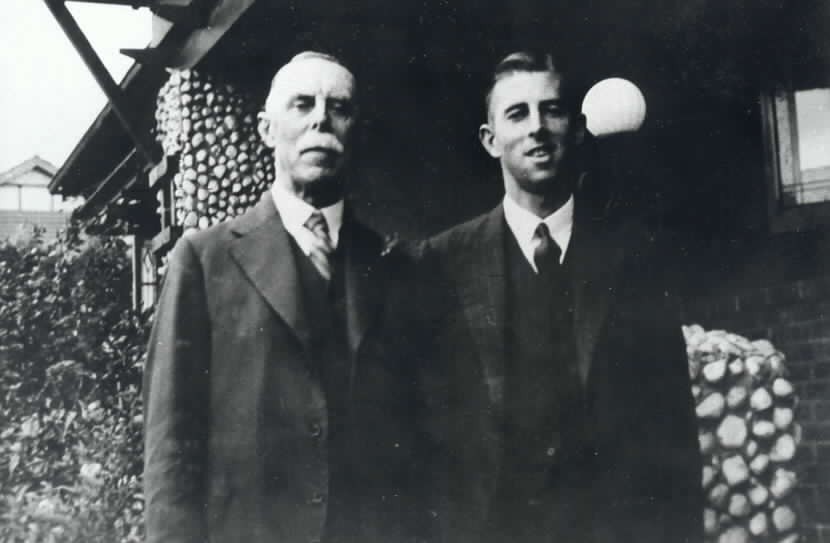
Image: F W Boreham with his son, Frank, circa 1958 (GP). Frank, Jnr died about three years ago and he with his wife Betty, was very helpful to all those who were seeking to learn about their famous father.

Monday, April 24, 2006

So This Is Boreham: Part Nine

In his essay entitled, “Wheels Within Wheels”, from his book, Cliffs of Opal, Boreham writes to a young man, the son of a ministerial colleague. The young minister had just been ordained and the reader senses a veteran Paul addressing a greenhorn Timothy. Boreham tells our young friend that preaching has "three distinct values." Preaching, he says, should have an entertainment value. This is not to be confused with what comes through our television cable boxes that some call entertainment. Preaching should be of entertainment value in the regard that the preacher should, "at every art of his command...capture and hold the attention of his hearers.

It is not enough that [the preacher] should say what it is his duty to say in the first words that happen to come. He must arrange his matter so attractively, and present it so effectively, that the most listless and languid will be compelled to follow him. There is no earthly reason why actors, [lawyers] or statesmen should state their cases more attractively, more convincingly, or, if you like, more entertainingly, than the preacher.

The art of preaching...is the art of compelling the congregation to listen to your message; and you can only be sure that they will listen if you make it worth their while to listen. The Master preachers - Jesus, Paul, Wesley, Whitefield, Spurgeon, Moody and the rest - knew that they had something to say that was well worth saying."

With a rather unique analogy, Boreham continues, "You will never attract or arrest your hearers by an elaborate display of theology. The prominence of theology in a sermon suggests a slipshod preparation. Theology is what ladies call a foundational garment: it imparts shapeliness and affords support to the drapery of your utterance without itself becoming visible. It is very noticeable that Jesus Himself seldom or never became theological." Preaching should have an entertainment value and therefore, force the listener to pay attention.

Boreham also believed that preaching should have an educational value. It "fill[s] the hearts of people, with thoughts and emotions that were startlingly and sensationally new to them."

"And, as an inevitable climax, [preaching] has evangelistic value." In everything the preacher does - from prayer to preparation to delivery - "it [leads] his hearers to the feet of God."

Jeff Cranston

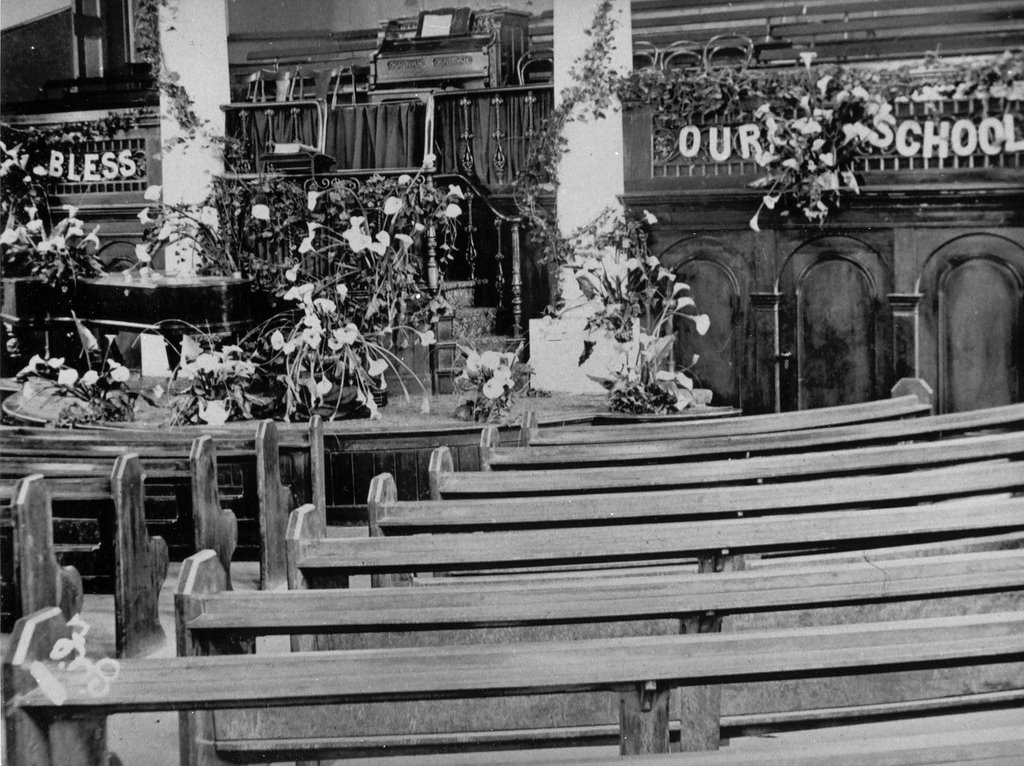
Image: Another photo that FWB took, this one of the inside of the Hobart Baptist Tabernacle on the day of the Sunday School Anniversary. This is a good reminder of Boreham's ability to speak attractively, educationally and evangelistically (GP).

Sunday, April 23, 2006

So This Is Boreham: Part Eight

Boreham preached in numerous pulpits, to a variety of crowds, over the course of six decades. Nuggets for the preacher are buried just below surface level throughout his writings.

One fine day, while on a bush walk in New Zealand with a very eminent preacher, young Boreham was asking advice from the seasoned preacher regarding the art and calling of preaching. His walking partner turned to him, looked him squarely in the eye, and remarked,

"Keep up your surprise power, my dear fellow; the pulpit must never, never lose its power of startling people!"

Let's have Boreham mine the ore and extract the gold: "Is it enough for a preacher to preach the truth? In a place where I was quite unknown, I turned into a church one day and enjoyed the rare luxury of hearing another man preach. But, much as I appreciated the experience, I found, when I came out, that the preacher had started a rather curious line of thought. He was a very gracious man; it was a genuine pleasure to have seen and heard him. And yet there seemed to be a something lacking. The sermon was absolutely without surprise. Every sentence was splendidly true, and yet not a single sentence startled me. There was no sting in it. I seem to have heard it all over and over and over again; I could even see what was coming."

"Surely it is the preacher's duty to give the truth such a setting, and present it in such a way that the oldest truths will appear newer than the latest sensations. He must arouse me from my torpor; he must compel me to open my eyes and pull myself together; he must make me sit up and think. 'Keep your surprise power, my dear fellow,' said my companion that evening in the bush, speaking out of his long and rich experience. 'The pulpit,' he said, 'must never, never lose its power of startling people!' The preacher, that is to say, must keep up his stock of explosives. The Bishop of London declared the other day that the Church is suffering from too much 'dearly beloved brethren.' She would be better judiciously to mix it with a few bombshells."

Jeff Cranston

Image: Boreham, the church planter. Laying the foundation for the Moonah Baptist Church in Hobart, I think from memory, 1908. FWB is in the front (GP).

Saturday, April 22, 2006

So This Is Boreham: Part Seven

Perhaps one of the greatest gifts Boreham shares with preachers is his ability of story-telling. For those of us who stand in the pulpit on a weekly basis, we know the necessity of being able to communicate interesting stories.

Boreham excelled at this. Reading his works and catching the spirit of the man will benefit every preacher.

Boreham's use of the language excels most of what is available to the general reader today.

You will gain a deeper appreciation for the turn and twist of a phrase, the use of a properly presented adjective, and the spiritual truths that spring from the paragraphs near the close of a chapter.

Heed Dr. Warren Wiersbe's advice: "If at first Boreham does not excite you, give him time. He grows on you. He has a way of touching the nerve centers of life and getting to that level of reality that too often we miss. Some may consider him sentimental; others may feel he is a relic from a vanished era. They are welcome to their opinions. But before you pass judgment, read him for yourself and read enough to give him a fair trial."

Jeff Cranston

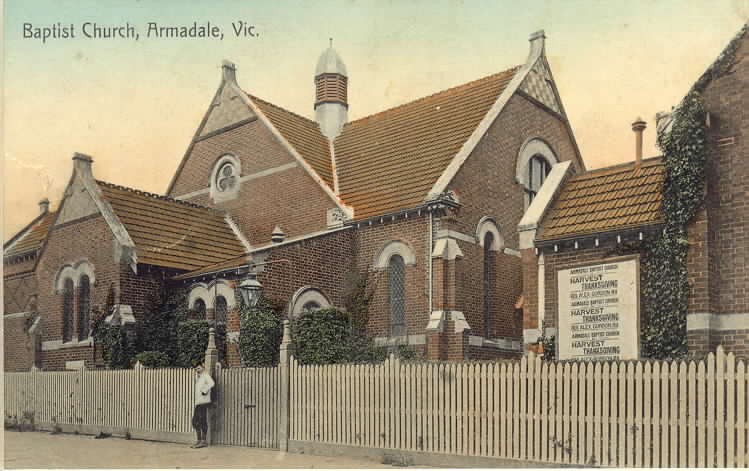
Image: A photo of the Armadale Church, in Melbourne (taken in the Boreham era 1916-1928).

Friday, April 21, 2006

So This Is Boreham: Part Six

Into the life of every pastor come M.G.R. (More Grace Required) parish-ioners. Boreham presents the minister with a stellar example of how to deal with his critics. His close friend, C. Irving Benson, tells us how one day Boreham handed over a very strongly worded letter commanding him to preach the gospel.

Benson said, "[The writer] was apparently misled by one of his intriguing titles. All who heard Frank Boreham knew full well that, however far away on the circumference he began, he always came to the very heart of the gospel. The letter hurt him and I advised he consign it to the waste-paper basket and forget it. 'I have already answered it,' he said. 'I wrote and told her that I appreciated her concern for the preaching of Christ's Gospel and asked her to pray for me that I may be a faithful minister of the Word.'" Every minister needs some of that spirit.

Although he lived a busy life, Boreham was always in control of his schedule and nothing stood in the way of him spending each and every morning in writing and study. His preaching and his writing were closely linked but his books are not necessarily collections of sermons.

Once he was asked which he liked better: to write or to preach? He answered without hesitation that preaching and pastoring held the upper hand. He went on to add, "Of course, it is like asking a man which of his two children he loves best! I glory in my pulpit--the greatest moments of my life have been spent there--but I am scarcely less fond of my pen. I do not like to choose between them. I want to be a preacher and a scribbler to the end of the chapter."

There is much wisdom and insight to be gained for every minister as the reader meets Pastor John Broadbanks of Silverstream, surely one of the choicest ministers who ever lived. He and Boreham were inseparably linked in life; you will delight in learning about John. His knowledge, expertise, and sagacity will be a boon for every minister struggling with the daily challenges presented by both the ministry and people.

Jeff Cranston

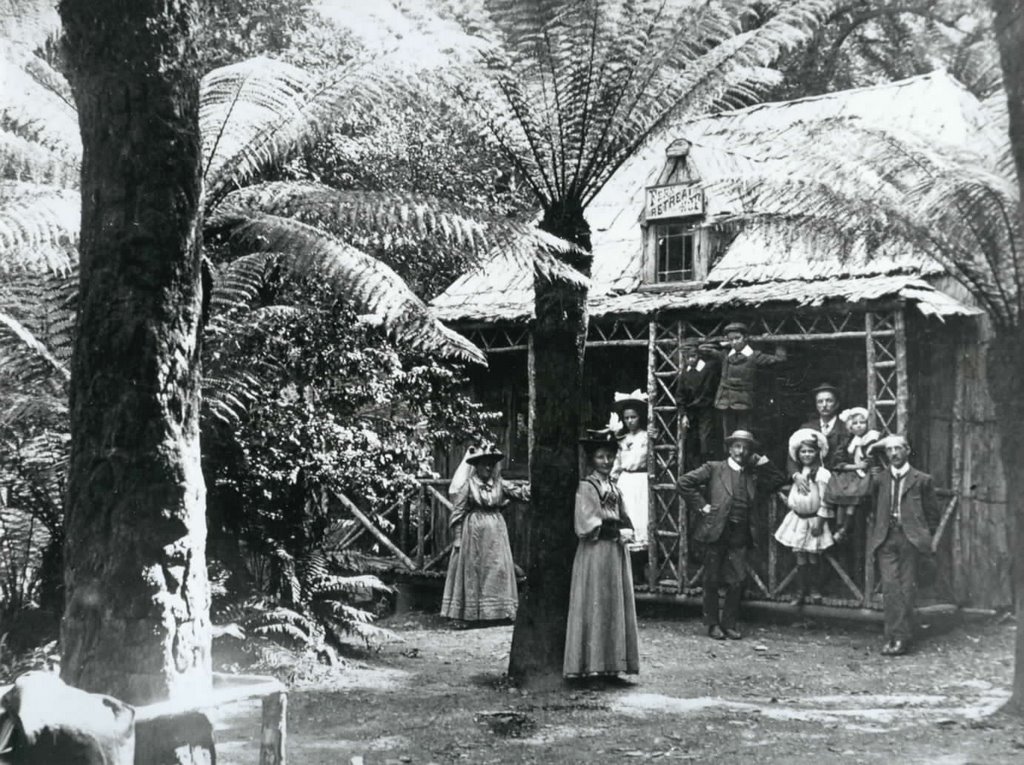
Image: This photo was taken by Boreham. It is of a bush scene near Hobart with family (Stella is in the front and the children are theirs) and friends.

Thursday, April 20, 2006

So This Is Boreham: Part Five

His most well-known sermon series came about in a unique way. He tells it best. If you're able, secure a copy of A Temple of Topaz and you shall find printed there, in the foreword, these words:
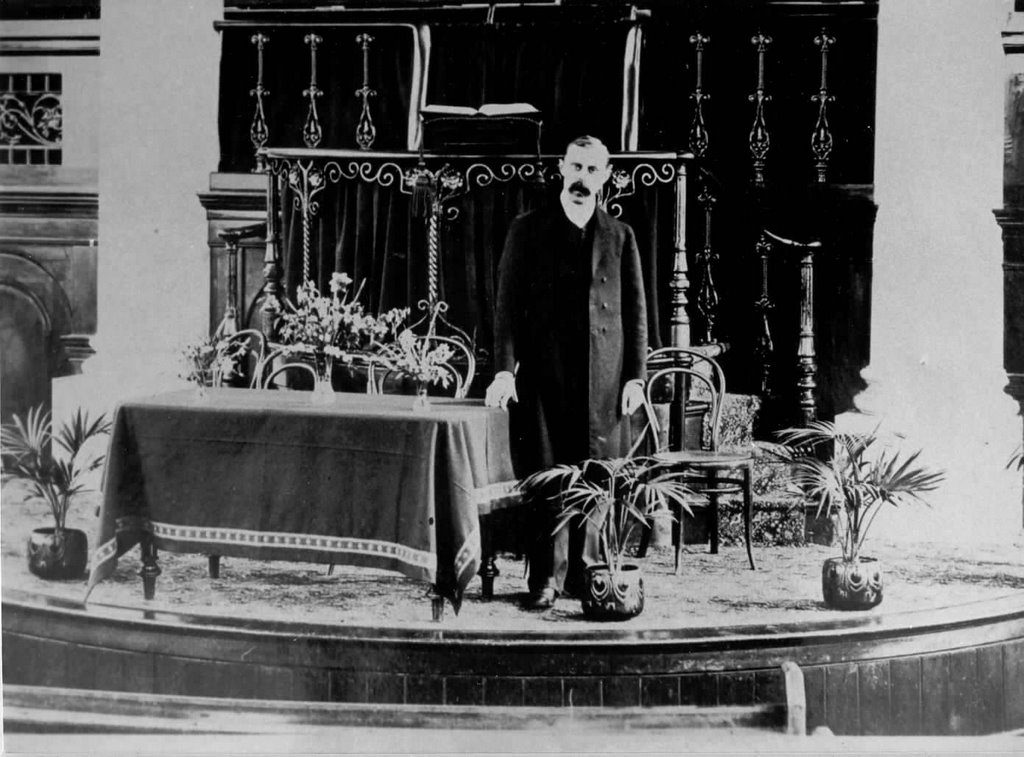
"One Sunday evening...I was standing in my pulpit in Hobart, Tasmania. The occasion was special and the church was crowded. I was commencing that night my Winter Series of Addresses. The addresses, as the printed syllabus showed, were to be delivered at fortnightly intervals. During the hymn before the announcements, I was deliberating on the precise phraseology in which I should refer to the course on which I was embarking. It suddenly flashed upon me that, by emphasizing the address that was to be delivered a fortnight hence, I was virtually inviting the more casual members of the congregation to absent themselves on the following Sunday. Could I not say a word that would make the intervening Sundays attractive? It happened that, during the week, I had been reading the Life of Luther, and had been impressed by the way in which the Reformation sprang from a single text."

"Whilst I was still engrossed in this brown study, the hymn came to an end and the people resumed their seats. I announced my fortnightly addresses according to the printed syllabus; and then astonished myself by intimating that, on the following Sunday evening, I should commence an alternating series of fortnightly addresses entitled Texts That Made History. 'Next Sunday evening,' I added with extraordinary temerity, 'I shall deal with Martin Luther's Text!'

"At the close of the service, one of my most trusted officers came to me in great delight.’That's a noble idea,' he exclaimed enthusiastically; 'it will be the best series that you have ever preached!' It has certainly been the longest, and the most evangelistic, and the most effective. And it has been the series in which I myself have found the most delight."

This series is composed of 125 messages Boreham delivered on fortnightly Sunday evenings. As a result of these compelling messages, scores of people placed their trust in the Saviour. Kregel Publishing in Grand Rapids, Michigan, has recently reprinted these addresses. Included are the salvation accounts, with the Scripture texts God used, of such notable figures as Abraham Lincoln, Catherine Booth, John Wesley, Robinson Crusoe, Blaise Pascal, John Milton, David Brainerd, William Penn, and Everybody's Text (Jn. 3:16). These delightful histories are readily available and should be in every minister's library.

Jeff Cranston

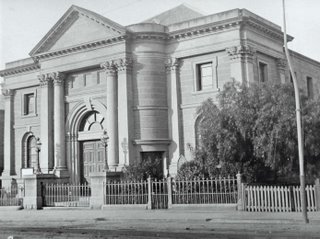
Image: The Hobart Baptist Tabernacle. Photo taken in the Boreham era by FWB. It is a huge auditorium and was regularly packed out in Boreham's ministry (GP).

So This Is Boreham: Part Four

After twelve fruitful years, the Borehams left Mosgiel and moved to Hobart, Tasmania, to accept the leading Baptist pulpit there.

During his years at Hobart, his writing found an even greater readership. More articles and books flowed from his pen.

His final pastorate was in Armadale, a prosperous suburb of Melbourne, Australia. He settled in nicely there and it was in Armadale where he spent his remaining pastoral years. As his writing became increasingly well known, invitations to speak began to come his way. He ministered all over the world addressing denominational councils and Bible conferences. He maintained his Baptistic convictions but in his heart his outlook was ecumenical. In his autobiography, My Pilgrimage, he writes, "During these years I have preached an almost exactly equal number of times in the pulpits of the various denominations and have felt equally at home in each. Indeed I like to think of myself as a kind of shuttle, moving to and fro, between the Churches and, perhaps binding them a little closer together." He added that he felt his sermons were equally accepted in all the churches. Moving between various denominational traditions fulfilled a lifelong dream of his. He stated at his commissioning service prior to sailing for New Zealand and embarking on his ministerial career, "...it is my hope that in the course of my ministry, that I shall hold three pastorates, and then be free to travel in many lands preaching the everlasting gospel among all denominations."

While speaking at the Church of Scotland's General Assembly in 1936, the moderator, Dr. Daniel Lamont, welcomed him as "the man whose name is on all our lips, whose books are on all our shelves, and whose illustrations are in all our sermons." His heart's desire had come to fruition.

Jeff Cranston

Image: F W Boreham on the platform of the Hobart Tabernacle. Note his traditional preaching coat (GP).

Tuesday, April 18, 2006

So This Is Boreham: Part Three

Believing God was indeed calling him to ministry of some sort, Boreham enrolled at Spurgeon's College. He was among the last students personally accepted by C. H. Spurgeon himself. In 1894, Thomas Spurgeon, who had been ministering in New Zealand but was returning to London to assume some of his father's responsibilities, issued a call for men to immigrate to New Zealand. There was a need for pastors in this newly opened Dominion, especially for someone to minister in the South Island, who would assume the pastorate of the Mosgiel Baptist Church. After conferring with his parents, Frank declared that he would go.

He set sail in January 1895, not even 24 years old and with a full year of school yet to complete. While en route, he cabled back to the little country village, Theydon Bois, where he had served a student pastorate. He asked for the hand of a young lady to whom he had become rather attached. Her father gave his approval and Frank's teen-age fiancé arrived in New Zealand later that year. They were married by their close friend, Rev. J. J. Doke, who later was instrumental in saving the life of Mahatmas Ghandi while both were in South Africa.

Mosgiel was settled primarily by Scots who had left the Old Country not many years prior. Within a matter of months they had built a manse for their new minister and his wife. It stands there still today. Oh, the stories that poured out of the lives of those to whom he ministered! Read his essays and learn of Tammas the church treasurer. Boreham writes, "The man who got Church money out of Tammas was regarded in the light of a genius." You will get to know Gavin and Wullie, Saddle Hill, and the engaging love story of Seth and Emily. Boreham himself played match-maker--partnering with a pressed nasturtium!

It was in Mosgiel that Boreham's pen started to make its presence known. He began to write on the many ordinary things in life that he observed, peculiarly different from others. He wrote as few others have. His command of language is impressive but the truths behind the words are what really capture the reader. Most of his writings are of the "devotional essay" style; they are engrossing and moving. He often enjoyed telling of the old gypsy crone who told his nanny, while she was taking him for a stroll one day, "Put a pen in his hand and he'll never want for a living." From childhood, he began his "scribbling," sending in submissions to children's magazines. In his later years he would be a household name among the Christian community of the British Commonwealth and North America.

Jeff Cranston

Image: Photo taken in 1898 of some of the members of the church at Mosgiel. F W Boreham is standing on the left holding his first-born baby. His wife Stella is in the back row, second from the right (with her eyes on her husband and child!). Unfortunately the Mosgiel Baptist church declined in vitality and about two to three years ago, wound up as a church. (GP)

Monday, April 17, 2006

So This Is Boreham: Part Two

One day in Tunbridge Wells, it was announced that the American evangelist, D.L. Moody, would be preaching that Sunday afternoon at the Village Green. Young Frank and his siblings were escorted to the village center by their aunt, she with strong evangelical leanings, and no doubt hoping for the salvation of her nieces and nephews. Upon arrival, they discovered the Green packed with people. There was no hope of getting close enough to the portly preacher to hear him. As they were resigning themselves to this fact, there was a sudden commotion behind them. The wind had shifted and a makeshift platform was being erected. Frank had a front row spot from which to listen to Mr. Moody!

Frank learned a great deal about preaching that day. It is a lesson every preacher must learn and of which he should be constantly reminded. Boreham writes, "...the astonishment of that afternoon lay in the circumstance that I could understand every word! I had somehow assumed that preachers of eminence must be very abstruse, recondite, and difficult to follow. I had hoped that, by intense concentration, I might occasionally catch the drift of the speaker's argument. But Mr. Moody took a text in which there was no word containing more than one syllable: The Son of Man is come to seek and save that which was lost. He used the simplest and most homely speech: he told stories that interested and affected me: he became sometimes impassioned and sometimes pathetic: he held my attention spellbound until the last syllable had died away. I could scarcely believe my ears. It was all so different - so delightfully different - from what I had expected the utterance of a world-renowned preacher to be." Moody was not the only great man of God used to mold Boreham's life.

Taking leave of home and moving to London for work at age 16, Frank was first employed in a clerical capacity. He later found a better paying job with a railway company. While working there, he suffered a serious accident that almost cost him his life and affected him through his remaining years. Living in a boarding house introduced him to many temptations only a metropolis like London could offer. Frank decided he needed to join a church and seek further spiritual training and teaching. The great Bible teacher, Dr. F.B. Meyer, pastored a church in London and offered a Saturday afternoon Bible class for young men. As Frank sat under Dr. Meyer's expository teaching week after week, he sensed God's call to the ministry. In order that he might test this tugging at his heart, he joined a group of young men from C. H. Spurgeon's Preacher's College and assisted them in evangelistic street meetings. Soon he found himself standing on a London street corner preaching the gospel.

Jeff Cranston

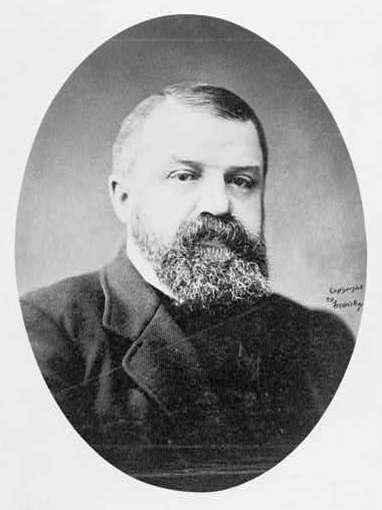
Image: D L Moody

So This Is Boreham: Part One

"For all of his life, he was a person apart. His Saviour was all important to him." So runs the descriptive phrase of a son about his father. The son is Frank Boreham, Jr. and his father is the man I wish for you to meet.

Frank William Boreham was a prolific author, penning more than 45 books, the composer of numerous booklets and approximately 2,000 newspaper articles. He served as pastor to three Baptist congregations in Mosgiel, New Zealand, Hobart, Tasmania and Armadale, Australia. His name is still spoken of with reverence in these locales today. As a minister, there is much to learn from him. As a writer, he leaves few equals in his wake. He was a consummate story-teller and every preacher can garner useful illustrations and acquire the knowledge on how to tell a good story simply be sitting at his feet and observing. He is a favorite of Mrs. Ruth Bell Graham, Warren Wiersbe, and Ravi Zacharias, along with countless others through the years.

F. W. Boreham was born in Tunbridge Wells, Kent, England on March 3, 1871. He says of that day, "Salvoes of artillery and peals of bells echoed across Europe on the morning of my birth." He was speaking, of course, not about his advent, but about the culmination of the Franco-Prussian War "that self-same day." It was the days of Victorian England and a wonderful setting in which a boy could grow up. "Wroxton Lodge," as his childhood home was called, held within its walls Frank and his nine brothers and sisters. He often recalled one of his favorite childhood memories: those Sunday nights when his mother would gather her brood around the fireplace and read a chapter or two from a classical book and then tell a personal story. Their perennial favorite was of their mother when she was a young girl visiting Canterbury Cathedral. She was to tour the grand old cathedral with her cousin, but her cousin failed to materialize. His mother was turning away, "disgusted and dejected," when a kindly gentleman, "with a short, pointed beard, brown hair going gray, a very fine forehead and wonderfully lustrous eyes," approached and offered to personally guide her through the Cathedral. She received a delightful tour and was later embarrassed to find out, upon receiving her escort's card as they departed, that her tour guide had been none other than Charles Dickens! Years later, Boreham related that perhaps the greatest developments in his heart and mind took place at that fireside, "...and, of all the stories that I have ever heard or read, none ever moved me like those stories that, in the flickering firelight, mother told!"

Jeff Cranston

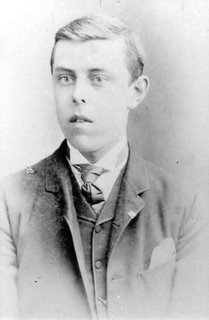
Image: Boreham as a boy.

Time for an F W Boreham Overview

Many readers of this blogsite have a long term interest in the life and writings of F W Boreham. I have received, however, one or two letters from readers who have little acquaintance with Boreham’s life. I thought it would be good to offer an overview of the life and ministry of Dr Boreham. To present this I have sought and gained permission from Dr Jeff Cranston, to republish a fine article he wrote for Preaching Magazine in Winter 1998.

Jeff Cranston is the Senior Pastor of the Low Country Community Church in South Carolina where he has served since June, 1999. Prior ministry experience includes serving with Ravi Zacharias International Ministries; he also ministered for seventeen years as a senior pastor and youth pastor with the Christian and Missionary Alliance and Southern Baptist Convention. You can find out more about Jeff’s church at:
http://www.lowcountrycc.org/

In addition to serving as Senior Pastor, Jeff also serves as an Associate Trainer with EQUIP, (http://www.iequip.org/), training Christian leaders in Manchester, England, bi-annually.

I have carved this article So This is Boreham, into ten parts so sit back over these next two weeks and enjoy all the work Jeff has put into its research and presentation. Grateful thanks to you Jeff.

Geoff Pound

Image: Jeff Cranston

Saturday, April 15, 2006

Boreham on Travel

F W Boreham wrote many times about the value of travel and two of his published books were travel diaries‑ Loose Leaves (1902) and From England to Mosgiel (1903). He loved to cite the story in which Lord Chesterfield was asked about the best way to acquire a good education. He answered, “There are three main ways, travel, travel and travel.”[1]

The enrichment of travel was another legacy that Boreham’s mentor passed on to the young minister. Boreham later wrote, “J J Doke was an incorrigible traveler….What had impressed him most in his travels? The unstinted kindness one meets with from everyone, everywhere.”[2]

Frank Boreham took this advice to heart and there are many ways in which it is clear that his understanding and his writing was enriched through travel. For instance he alludes to his travels to the Australian outback,[3] the gold mines of Western Australia,[4] the village of Captain Cook,[5] the garden of naturalist, Gilbert White[6] and The Isle of Wight.[7] In his retirement Boreham was able to travel more extensively to places like North America, Jamaica[8] and Canada.[9]

Boreham wrote of the way his eyes were opened to the treasures of London when after years of absence he returned to the United Kingdom. He said, “I never saw London until I left it.”[10] Inherent in this quote is the truth that travel per se will not extend our education. One needs to have the eyes to see or as Boreham learned from James Cook, the secret “lies in the traveler’s ability to detect the treasures that are best worth gathering.”[11]

Boreham’s essays reveal that there is a world of difference between being a tourist and traveling as a pilgrim. In the Drums of Dawn Boreham writes about one holiday he spent, “exploring the road along which Bunyan’s pilgrims traveled.”[12] He visited the Bunhill Fields burial ground as a pilgrim at the grave of Susannah Wesley[13] and at Westminister Abbey he spent some sacred moments at the tombs of famous people.[14] How much of the spirit of the pilgrim is summed up in Boreham’s words, “When in England recently I spent a good deal of my time with John Bunyan.”[15]

In this present age when there is a reaction to things that are fast (fast food etc.) and a turning to doing things that are slow (see Carl Honore’s In Praise of Slow) it is clear that Boreham was an early advocate of slow travel. He said we must travel “slowly enough to evoke the value of wonder.”[16] He enjoyed the quotation of Richard Jeffries who said, “The best way to see is to stand still.”[17] Like Gilbert White, Boreham advocated micro travel (not his words) or the taking of time to travel around one’s backyard or local patch.[18] It is not essential, Boreham often said in war time when travel was restricted, to travel great distances but you can be a traveller in your own familiar area.

Geoff Pound

[1] F W Boreham, The Passing of John Broadbanks, 195; The Prodigal, 35.
[2] Boreham, The Passing of John Broadbanks, 200.
[3] F W Boreham, Boulevards of Paradise, 98.
[4] F W Boreham, Bunches of Everlasting, 55, 98.
[5] F W Boreham, When the Swans Fly High, 101.
[6] Boreham, When the Swans Fly High, 105.
[7] Boreham, Bunches of Everlastings, 211.
[8] Boreham, Bunches of Everlastings, 188.
[9] Boreham, When the Swans Fly High, 12.
[10] Boreham, When the Swans Fly High, 75-79.
[11] Boreham, The Passing of John Broadbanks, 204.
[12] F W Boreham, Drums of Dawn, 198.
[13] F W Boreham, I Forgot to Say, 113.
[14] F W Boreham, The Silver Shadow, 159.
[15] Boreham, When the Swans Fly High, 156.
[16] F W Boreham, A Witch’s Brewing, 233.
[17] Boreham, A Witch’s Brewing, 242.
[18] Boreham, When the Swans Fly High, 105.

Monday, April 10, 2006

Your Comments About F W Boreham

Geoff, I first heard about FWB while working with Dr. Ravi Zacharias. He asked me to peruse a certain book by an author I had never heard of, and glean any illustrations which were biblical in nature. I enjoyed reading and so I thought, "Why not? Maybe I can learn something here."

I started leafing through this little worn book and began to read "Hatpins and Button Hooks." I was hooked! I never imagined that one afternoon of reading would propel me to New Zealand, Australia and the U.K. and while in these locales, spend so much time scouring used bookshops!

FWB's use of the English language is second-to-none and his obvious love for life shines through his writings. I always enjoy reading the stories from his early days regarding some of the characters that were a part of his life.

I find much commonality with him, as I serve as a pastor. He's been a mentor to me.

Thanks for the opportunity to share these few thoughts.

Regards,
Jeff Cranston

Jeffrey S. Cranston, D. Min.
Senior Pastor LowCountry Community Church
---------------
You are also invited to share your thoughts on the questions:

When and how did you first learn about F W Boreham?

What is it about his books/sermons/essays etc. that you particularly like?

Please hit the comment button or email me with your words and I can post them on this site
geoffpound@yahoo.com.au

Geoff Pound

F W Boreham Interaction

I thought it would be timely to hear from those of you who frequently peruse this Official F W Boreham web site.

I am not expecting long or polished contributions but I/we would like to hear from you.

Here's a question to get you thinking:

When and how did you first learn about F W Boreham?

What is it about his books/sermons/essays etc. that you particularly like?

Please hit the comment button and make your contribution or email me with your words and I can post them on this site.
geoffpound@yahoo.com.au

Geoff

Saturday, April 08, 2006

Boreham on Wedge Bay

Boreham always thought of himself as a generalist yet in the following quotes from one of his early books he boasts of being an expert:

“There is just one spot on God's fair earth that I fancy I know better than
anyone else...It is a landlocked bay a couple of square miles across. I have
spent about six months of my life poking about this solitary place trying to woo
its favour and win its golden secrets and I really think that if one of the
trees about the waters edge were to fall in my absence I should miss it and
mourn it next time I go…”

“I rowed one day recently into a shady little inlet and was surprised to find it exactly as I had left it a couple of years before..... It was here, as it was in the beginning it is now and ever shall be world without end and it is restful to saturate oneself in the brooding silence of the primeval forest. I like to sit in this quiet cove where I picknicked two years ago and to reflect that it is today exactly as it was in the days of Caesar. It is like closing your tired eyes when at the cinematograph you can bear the flicker no longer....”

“The local inhabitants have never awakened to the charms of the beauty-spots around them.”[1]

These excerpts are further illustrations of the way F W Boreham took time out for leisure and silence. It reveals his love of nature which he possessed from childhood. These lines contain some of his signature themes‑the importance of beauty to the world, the way nature links us to the ages, his disdain for the artificial (viz. the cinema) and the importance of cultivating an appreciation for the commonplace and the familiar.

Geoff Pound

Image: One of Boreham’s photos of Wedge Bay, Tasmania, Australia.

[1] F W Boreham, The Golden Milestone, 109.

Friday, April 07, 2006

Boreham the Biographer

F W Boreham was an essayist, an editorialist, a sermon writer, a poet, a hymn writer and also a biographer. It is interesting that Boreham, a Baptist, wrote his full length biography on an Anglican, the famous Bishop to New Zealand, George Augustus Selwyn. The book illustrates Boreham’s love of biography and his ecumenical spirit.

Boreham finished the book while he was in Tasmania but he said that in moving around New Zealand, “I had ample opportunities of observing the supreme veneration in which the people of these romantic islands have enshrined the illustrious memory of Bishop Selwyn.”[1] [The old black, wooden churches in Auckland’s Howick and Mission Bay and Selwyn College in Glendowie, are all reminders of Selwyn’s amazing influence]

Boreham attributed Selwyn’s influence to his ability to identify with his people whether they were European settlers or Maori. He took the time to learn the Maori language and “this was a master stroke in identifying with his people.”[2]

A major stuff up had been caused in England before Selwyn was sent out to New Zealand. His superiors got their latitude and longitudes mucked up and instead of making Selwyn responsible for New Zealand he found out that he was the Bishop for the whole of the Pacific! Undaunted, he set about visiting the islands and he established an important strategy of inviting one representative from every island country to come and train at the Theological College in Auckland.

Selwyn was a person who worked for justice and reconciliation. The Maori were literally in a battle with the government over land rights. The indigenous people incorrectly thought the Bishop was siding with the British troops so Selwyn called a conference with the Maori leaders, saying he would come and visit them on their land. The Maori leaders agreed among themselves that if the bishop came they would not let him onto their marae (meeting place). When he arrived near evening they barred him from their meeting house but said he could spend the night in the pigsty. That is exactly what he did and where he slept! This act of humility had such an impact on the Maori that the next day they agreed to talk but for years afterwards they said, “You cannot ‘whakatatua’ this man or in English, “You cannot degrade the dignity of this man.”

F W Boreham wrote many times about Selwyn[3] and in one essay he told this story and then went on to recall the way Jesus of Nazareth was draped in mock purple and given a mock crown and a mock scepter. Boreham concluded that Jesus did not have his dignity degraded as he led the procession.[4]

Geoff Pound

Image: George Augustus Selwyn

Because of its theme this posting appears today on these two web sites:
The Official F W Boreham web site: http://www.fwboreham.blogspot.com/
Stories for Speakers web site: http://www.storiesforspeakers.blogspot.com/

[1] F W Boreham, George Augustus Selwyn, 5.
[2] Boreham, George Augustus Selwyn, 52.
[3] F W Boreham, Mountains in the Mist, 125; F W Boreham, The Crystal Pointers, 118.
[4] F W Boreham, Cliffs of Opal, 135.

Tuesday, April 04, 2006

The Mistress of the Manse

F W Boreham lovingly referrred to his wife as 'The Mistress of the Manse'.

Reference has been made in an earlier posting to the fact that Stella Boreham got severe post natal depression after having each of her five babies and almost died after the birth of one of their children.

The church at Mosgiel released the Borehams so that they were able to spend months away from ministry recuperating in Piripiki Gorge (Taieri Mouth). It was here that they realized how nature is such a tonic.[1] After that the Borehams spent a month each year holidaying and “exploring this panoramic paradise.”[2] When they went to Hobart they made the same practice, but this time at Wedge Bay. In Melbourne they often holidayed in the Dandenong Mountains.

Stella Boreham was a quiet retiring person and from accounts did not appear to take an upfront, leading role in church or community life. Perhaps Boreham’s chapter on ‘The Minister’s Wife’ reveals how they both understood this role.[3]

Many people who knew her have said to me that she was a lovely person with a beautiful nature. The photo indicates that Stella and Frank had lots of fun and laughter.

Geoff Pound

Image: Photo taken by F W Boreham of Stella dressed in a kimono.

[1] F W Boreham, The Blue Flame, 160.
[2] F W Boreham, Home of the Echoes, 36.
[3] F W Boreham, The Silver Shadow, 50.

Mrs Stella Boreham

Frank and Stella met when he was the student pastor at Theydon Bois. Stella Cottee was only sixteen and her parents invited him home for lunch. She came from good evangelical stock. In his Bunch of Everlastings F W Boreham wrote of visiting William Cottee (Stella’s grandfather) who was over ninety years of age at the time. Boreham must have found him rather daunting for the student pastor said: “He had no respect for any theological opinions of mine. He was a sturdy old hyper Calvinist, my doctrines were milk and water.”[1] What did Frank and Stella do in their courtship in their Theydon Bois days? Who knows but one of the things they did was read to each other. In some of Boreham’s books that he had acquired he wrote (with the date), ‘Read to Stella & Mrs Cottee’ or ‘Read to Stella and Mr Cottee.”[2]

Stella was young when she arrived in Christchurch, NZ to get married to Frank and set up their new life together. Reading between the lines it seems that they both experienced extreme homesickness. Writing more than fifty years later Boreham lets down his guard and speaks honestly of how they felt and the most painful times:

“Although I have spent nearly three score Christmases under the Southern Cross,
I have never completely resigned myself to celebrating Christmas at midsummer
and have never quite recovered from the shock that I sustained when that strange
experience first befell me.”

“As we approached the first Christmas after our wedding, my second Christmas in
New Zealand, my wife's first thought of spending the festive season by our two
homesick selves grew increasingly intolerable. But whom could we invite?”[3] They sought to alleviate their homesickness by inviting
friends such as J J Doke.[4]

In this posting there is a photo taken by Frank of Stella posing as a nun!

Geoff Pound

[1] F W Boreham Bunch of Everlastings, 173.
[2] These books are in the F W Boreham Collection, Whitley College, Melbourne and include a book of sermons by F B Meyer.
[3] F W Boreham, My Christmas Book, 12.
[4] F W Boreham, The Man Who Saved Gandhi, 3

Sunday, April 02, 2006

Boreham the Photographer

Boreham Family Photos
Helen, a regular reader of this site, asked a question about the availability of photographs of the Boreham family. Her question has prompted this posting and some others to follow. I mentioned to her that there are portraits of Frank Boreham in many of his books and My Pilgrimage contains one of his wife Stella. Boreham tried to keep his wife (The Mistress of the Manse) and his children out of his books. Apart from his autobiography he is very restrained in writing about what he gets up to.

Life Through a Lens
“The photographs hanging here and there around the room transport my mind
to
other days and other places .... the pictures transform it [the
apartment] into
an observatory and I am able to survey the entire
universe."
F.W. Boreham, Rubble and Roseleaves

For F.W. Boreham there were no uninteresting subjects, only uninterested persons. He had an observant eye which took in every detail and stored them in an unusually retentive memory. It was as if he saw life through a camera lens which concentrates on its subject and ignores the rest.

In recent years, some boxes of glass negatives that were taken and developed by F.W. Boreham have come to light and are now part of the Tasmanian Baptist historical records. Among the plates are shots of the Hobart Tabernacle and its officers, many family pictures, scenes of his much loved Wedge Bay on the Tasman Peninsula and some trick photography which includes a portrayal of a ghost on the steps of the Hobart manse! I will continue to post these on this site.

His children, Joan Lincoln of Hobart and Frank Boreham of Templestowe, remember their father's hooded camera requiring a black sheet so that the image could be clearly seen in the glass plate on top of the camera and the shutter was operated by a length of string. In this way and by using a tripod, Dr. Boreham took several self-portraits and group photographs with him in the frame. Joan and Frank remember their father developing the glass plate negatives in the cellar under the Armadale Baptist church manse. The cellar had a small window which he covered with red paper when making prints. Once he started work the children were not allowed in. [Joan and Frank junior are now dead but these insights were passed on to me when I interviewed them in the mid 1990s]

Photographer and editor of the Tasmanian Baptist Advance, Laurie Rowston says:
"Boreham's photographic work is all the more compelling when we consider that the business of photography in the early years of the twentieth century was a very different affair to that of the present day. There were no point-and-shoot automatic cameras then. A photographer needed a high degree of skill which included knowing how to measure the light and develop and print the film. All this before even considering what he wanted to photograph. Boreham must have been a perfectionist because he chose to use a photographic method (the dry glass plate) which was far more complex than what was being offered when he commenced and which became popular. In taking photographs Boreham also became a wordless writer. But more importantly his photographs, like his books, make you see."

(These notes are adapted from an article written by Laurie Rowston for the Tasmanian Baptist Advance. Appreciation is expressed to Laurie for his willingness for this to be reprinted).

Geoff Pound

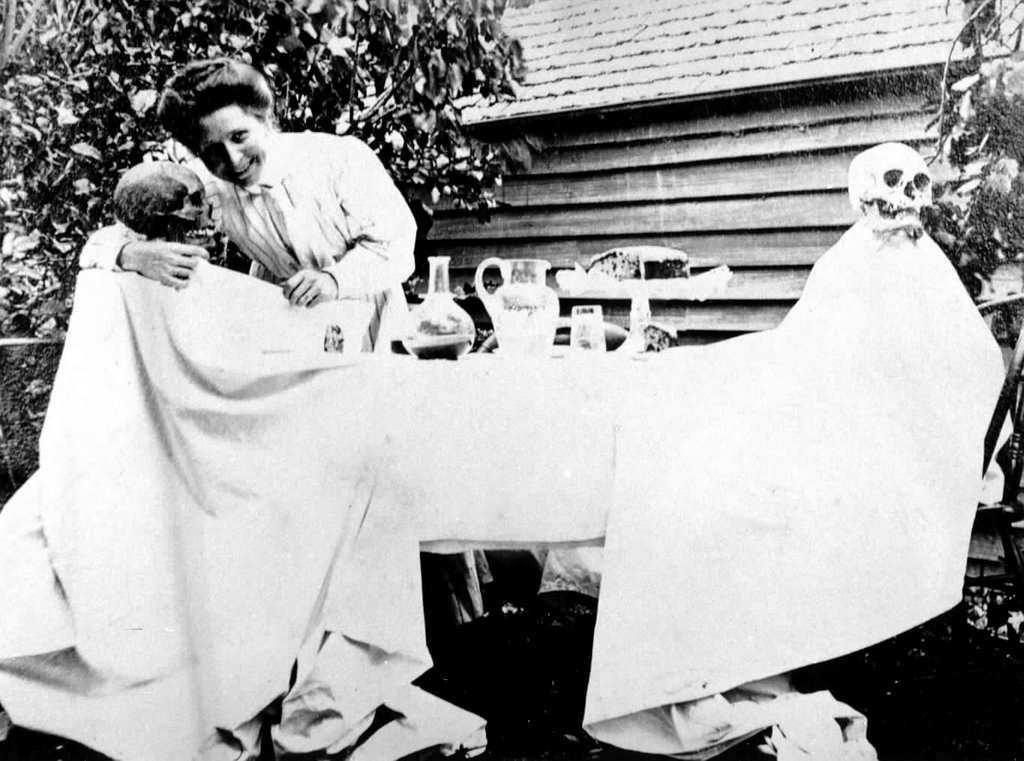
Image: Boreham’s photo of his wife and two ghosts!? He found these human skulls on the Otago (NZ) beach of Taieri Mouth and kept them through his Tasmanian days.