Frank William Boreham 1871-1959

Frank William Boreham 1871-1959
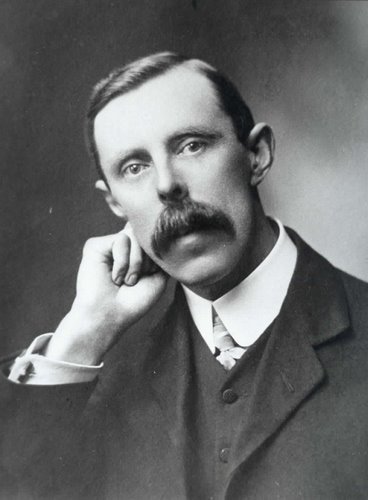
A photo F W Boreham took of himself in 1911

Wednesday, October 11, 2006

Boreham on Science and Religion

Moving Together
F W Boreham’s study of history and particularly his research into the lives of Galileo Galilei, Thomas Huxley and Benjamin Disraeli, had revealed to him the contentious divide between science and religion. In 1934, he stated, “No modern movement has aroused greater hostility than has the scientific movement”.[1] By 1948, he observed that “Science and Religion ... have moved towards each other” but he was swift to remind his readers that “a century ago the young people of Christian homes were forbidden to read the works of scientists; while the sages and savants looked with ill-disguised contempt upon all religious trends and institutions”.[2]

On the Side of the Angels
Boreham wrote many articles on scientific themes because he wanted to highlight the “affinities between science and religion”.[3] He advised his readers neither to dread new discoveries[4] nor to conclude that scientific discoveries were hostile to the church.[5] The role of science was to interpret nature and the church needed to demonstrate a reverence toward science[6] because science was, in the words of Disraeli, “on the side of the angels”.[7] Boreham declared, “We are confronted ... by One Universe [in which] a sense of basic unity and exquisite harmony is the outstanding feature”.[8] He continued: “Truth can never by any possibility be the enemy of truth. The truth that the astronomer discovers among the stars cannot be at variance with the truth that the geologist finds among the stones. The truth that the botanist reveals from among earth’s flora cannot contradict the truth that the zoologist reads among earth’s fauna”.[9]

Harmony of the Spheres
Calling not for a truce but a peaceful partnership, Boreham said, “We ask the scientists to reconsider their interpretation of the one, and the theologians to review their interpretation of the other, in the certainty that, when they have done so, we shall hear once more the music of the Spheres”.[10]

Geoff Pound

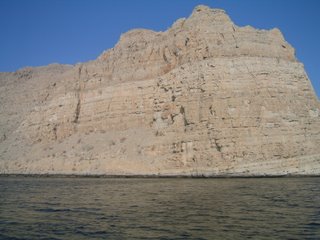
Image: Truth in the Stones- Musumdam Peninsula, Oman

[1] Boreham, Mercury, 27 October 1934; Age, 24 August 1946.
[2] Boreham, Mercury, 11 September 1948.
[3] Boreham, Mercury, 2 September 1916.
[4] Boreham, Mercury, 11 September 1948.
[5] Boreham, Mercury, 14 April 1928.
[6] Boreham, Mercury, 11 September 1915.
[7] Boreham, Mercury, 22 August 1914.
[8] Boreham, Mercury, 11 September 1948.
[9] Boreham, Mercury, 11 September 1948.
[10] Boreham, Mercury, 11 September 1948.

Tuesday, October 10, 2006

Boreham on Nature and God

Nature Mediating the Spiritual
Historian David Bebbington observes that the quintessence of English romantic verse “has been called ‘natural supernaturalism’ [or] the ability to discern spiritual significance in the everyday world”.[1] F W Boreham believed the tenet of the Romantic poets that nature was a medium for the revelation of the spiritual. However, he did not see nature as the only avenue of truth and could not agree with his mentor Mark Rutherford who claimed that the poet’s “real God is not the God of the Church, but the God of the hills, the abstraction Nature”.[2]

Nature With Personality
His earlier statement about the forests was typical of the endearing way Boreham often imbued nature with personality. He wrote on other occasions of the companionship of the mountains,[3] addressing the two sparrows on his sill as Jack and Jill[4] and the two tall poplars, Gog and Magog, keeping ceaseless vigil at his gate.[5] He interpreted this depth of relationship with nature as “real life speaking to real life”.[6]

Aloof and Detached
While Boreham often wrote of the way the seasons “enter so directly and so intimately into our lives that they seem to become part of us”, he was also conscious of the “unconcerned aloofness and distressing detachment of the seasons” and the way “they behave as though they had no spark of interest in us”.[7] Boreham also recognized nature’s distance in the sea “that holds you at arm’s length and encourages no intimacies”.[8] Similarly, other unattractive features of nature included its terror[9] and its apparent lack of sympathy for the unfit and the weak.[10]

Experience Nature
Like the Romantic poets, Boreham had little regard for religion as a body of propositional truths and continually in his nature editorials he encouraged people into an experience of nature’s wealth. Bernard Reardon’s assessment that a faith focused on nature “spoke so powerfully to the Victorian doubter” helps illumine something of the appeal of Boreham’s nature writings to people who had given up on the institutional church as an agent for truth and a place of worship.[11]

Whetting Appetite for Nature
Writing editorials with a nature theme was one of the ways Boreham sought to whet readers’ appetites for connecting with the creator. Writing at the time of his retirement, Boreham revealed, “I have learned that my quenchless longing for life is, after all, unconsciously, a secret, unutterable yearning after God; for how can you conceive of life apart from Him?”[12]

Hinting and Pointing
For most of his career, Boreham wrote about nature’s important role as educator but he suggested that its greatest contribution was that it “hinted even more”.[13] In this phrase, Boreham was alluding to nature’s disclosure of the creator, in a similar way that he saw his writings as the pointers of the Southern Cross—they “possess no value or importance of their own; but they point to things that no man can afford to miss: that is their only glory”.[14]

Nature Story
Boreham expressed most clearly the relationship between nature and God in the story of the naturalist Richard Jeffries.[15] In Boreham’s estimation, “No man was ever more deeply enamored of life than was Richard Jefferies. He simply reveled in it ... life was his passion; it fascinated and hypnotized him”. He had been a lifelong seeker for truth in nature while being suspicious of religion. Reading the Bible a few weeks before his death gave him a vision of life that he had never explored. According to Boreham: “He recognized in Him [Jesus] the life that he so passionately loved in its most attractive and exalted form. It was like turning from the stream to the fountainhead .… He discovered that, although Nature had taught him much, she had failed to teach him the things that he most needed to know, and he reveled in this ampler vision of life that came to him at the last”.

Geoff Pound

Image: “pointers of the Southern Cross.”

[1] Bebbington, Evangelicalism in modern Britain, 81.
[2] Bernard M G Reardon, From Coleridge to Gore: A century of religious thought in Britain (London: Longman, 1971), 361.
[3] Boreham, The home of the echoes, 146.
[4] Boreham, A witch’s brewing, 140.
[5] F W Boreham, Mushrooms on the moor (London: The Epworth Press, 1915), 127.
[6] Boreham, Mercury, 8 June 1935.
[7] Boreham, Mercury, 3 May 1947.
[8] Boreham, The last milestone, 59.
[9] Boreham, The home of the echoes, 150.
[10] Boreham, Mercury, 27 May 1922.
[11] Reardon, From Coleridge to Gore, 363.
[12] Boreham, The three half moons, 125.
[13] Boreham, The three half moons, 125.
[14] Boreham, The crystal pointers, 8.
[15] Boreham, Mercury, 30 October 1948.

Monday, October 09, 2006

Boreham on Earthy Spirituality

Liquid Craving
In confessing his “liquid craving” for the sea, F W Boreham was giving voice to the human yearning for the spiritual as well as declaring that all of nature’s handiwork possessed a primal power.[1] However, a major theological theme in Boreham’s writings on ‘Reverence for nature’ was the importance of land as a sphere for experiencing the spiritual dimension of life.

Spirit and the Land
While he delighted in the beauty of the remote wilderness areas, an important feature of Boreham’s writing about the spirit and the land was the way he encouraged readers to be open to the spiritual dimension of the ‘ordinary’ land on which they lived and worked. Boreham’s annual editorial to coincide with the Agricultural Show in Tasmania often pursued this theme. In one of his later editorials he gave expression to “the lure of the land” and wrote about the way it provided ample ways for nature to link creation with its Creator:

"The farmer trades in life—life in its very nature and essence—in order that he in turn, may minister life to the rest of us. And what is that life? A farmer does not know; the scientist does not know; nobody knows. We dumbly feel that, throughout the farm we touch God, and that from that august and divine source, all those things come to us without which we cannot live. It is because of this that the annual Show holds for us such a resistless attraction."[2]

Magnetism of the Land
F W Boreham was suggesting that the unconscious human magnetism towards the land is an indication of the human urge for life and its divine source. The farm is the sanctuary. The plough is the shrine at which people might be enlivened. The communion is experienced through the wordless touching of soil resulting in renewal and deep mystery. While in this sphere Boreham recognized farmers as ministers of life, this open-air religion was an example of the way that all people might make a priestly contribution. As “through the farm we touch God”,[3] Boreham believed that the naturalist, the scientist, the explorer and all those whose work or leisure required an engagement with nature could experience “the trysting of two worlds—the material and the mystical”.[4]

Turning the World Outdoors
Always eager to reveal a silver lining, Boreham declared (during the First and Second World Wars) that war “has at least succeeded in turning the world out of doors” and thereby closer to nature.[5] He continued his optimism by saying that the poverty resulting from the war had stimulated a new turning towards the soil.[6] Advancing further the spiritual dimensions of involvement with the land and all of nature, Boreham asserted, “There is indeed a sense in which a revival of agriculture is in itself a revival of religion. It is the awakening of that instinct in man which turns in the hour of need, to the invisible and inexplicable”.[7]

Touching God through Nature
Boreham did at times exhibit a utilitarian approach to nature in tandem with a nationalist spirit in which the greatness of Australia was gauged by the extent to which natural resources could be harnessed for the common good. However, his view that one could ‘touch God’ through connecting with nature was an important factor in leading him to value and support the advances in astronomy and meteorology,[8] to praise farmers and advocate the development of farming in Australia[9] and to awaken people to the charms of the Australian bush.[10] His call to readers to experience the spirit and power in the ordinariness of their locality modeled a humble attitude and an important way of connecting with the land.

Geoff Pound

Image: “farmers as ministers of life.”

[1] Boreham, Mercury, 7 February 1920.
[2] Boreham, Mercury, 21 October 1950.
[3] Boreham, Mercury, 11 October 1947.
[4] Boreham, Mercury, 20 October 1951.
[5] Boreham, Mercury, 9 December 1916; Mercury, 9 August 1941.
[6] Boreham, Mercury, 11 October 1941; Age, 20 September 1947.
[7] Boreham, Mercury, 20 October 1951.
[8] Boreham, Mercury, 15 June 1940.
[9] Boreham, Mercury, 17 October 1914.
[10] Boreham, The golden milestone, 109.

Sunday, October 08, 2006

Boreham and His Theology of Nature

Theological Foundations
While F W Boreham’s involvement in the Royal Society of Tasmania stimulated his thinking and action, the observation that in natural history and environmental organizations in Australia “there were many clergymen involved in these groups” hints that there were theological dimensions that underpinned people’s concern for nature.[1]

This posting and the next few will highlight some of Boreham’s theological perspectives on nature.

Life is One
It has been seen that Boreham’s call to care for all people and protect flora and fauna stemmed from his contention that ‘life is one’ and that to care for one part of the environment and spoil another is contradictory to the unity of all life. Springtime was the best illustration of Boreham’s ‘life is one’ doctrine. Describing the way that life in nature calls to the life within human beings, he said: “A life that pulses within us greets, in an ecstasy of kinship, the life that swarms around us. They act and react upon each other. The vision of life multiplying itself in a thousand chaste and charming forms on every side stimulates appreciably our own vitality. Life responds to life as, in other conditions, love responds to love”.[2]

Kinship of Life
F W Boreham is exclaiming that the life force within humanity is the same life that exudes from nature. This essential ‘kinship’ of life in its various forms yearns to flow together in a mutual energizing and a reproduction of further life. This relationship between humans and nature is nurtured by respect and contact. For Boreham spring was an example of the ‘theorem’ coined by Robert Louis Stevenson as “the essential livableness of life” in which, as he put it: “We feel that things are moving. The world is awake. In clapping our hands at the gilding of the wattle and the coming of the swallow we are bearing witness to our dauntless and deathless love of living. We are giving three cheers for life itself and offering an act of grateful homage to that sublime Source of all life without Whom none of these raptures could, by any possibility, be ours”.[3]

Awake to Life
Being awake to life and expressing acclamation for the dramatic acts of nature was, according to Boreham, an expression of humanity’s love of life and its participation with nature. Such communion with nature was unconsciously a joyous service of worship with the ‘Source of life’ involving a liturgy of praise, offering and perception.

Geoff Pound

Image: “three cheers for life.”

[1] Hutton and Connors, A history of the Australian environmental movement, 32.
[2] Boreham, Mercury, 3 September 1949.
[3] Boreham, Mercury, 2 November 1946.

Saturday, October 07, 2006

Boreham on Fostering Wonder

Dwindling Globe
The capacity of nature to surprise, to create wonder and to search beyond the known and familiar led to many editorials by F W Boreham that commended the fostering of these qualities. He wrote numerous articles about Australia’s early explorers and noted the exploits of Ernest Shackleton and Douglas Mawson to the Southern Pole but by 1919 Boreham declared that with the large number of exploratory expeditions to previously unknown countries, including the poles, “We are living on a dwindling globe”.[1]

In 1922, he cited the advances in locomotive travel as contributing to the contraction of the world and as examples of the human achievements that had brought about “the relativity of the impossible”.[2] In 1933, he wrote that the aerial conquest of Everest was “an appealing foretaste of ultimate victory” which illustrated that “the dominant triumph of humanity has consisted in the gradual elimination of the impossible”.[3] Many times, in view of the human conquests in so many spheres of the earth, Boreham had asked, “Is the age of exploration past?”[4]

Exploration Days not Over
Nevertheless, Boreham contended that, “the great days of exploration are not behind us”.[5] Drawing up an agenda for exploration, he wrote in 1921 that “our [geological] knowledge amounts to a certainty of ignorance”,[6] in 1931, he declared that the ocean “remains one realm on the planet, the exploration of which has been scarcely begun”,[7] and in 1942, he noted that there were continents such as South America that were relatively unexplored.[8] Furthermore, following earthquakes in Sicily (1914), Japan (1923) and New Zealand (1931)[9] and after reporting that, “Mt Etna has again lost its temper”,[10] Boreham suggested that in seismology and volcanology “we have still much to learn”[11] and that “the world in which we live is a packet of illusions”.[12] In 1951, on the one-hundredth anniversary of the survey proving Mt Everest to be the world’s highest mountain, Boreham said, “It would be simply crushing if we were assured that nothing remained to be discovered”.[13]

Telescope and Microscope
F W Boreham was enamored with Leonard Darwin’s view about there being two classes of explorers, those who explored new continents and those who made detailed and systematic studies of smaller areas.[14] While recognizing the large spheres still to be explored and affirming that the telescope had offered an important consciousness of the universe, Boreham stated in 1935 that “the era of the telescope had had its day” and that now it was the turn for “the triumph of the microscope”.[15] Gilbert White, the eighteenth-century naturalist who spent most of his life in the English village of Selbourne, was hailed by Boreham as the type of explorer whose time had come.[16] Boreham regarded himself as an explorer of this variety when he wrote of Wedge Bay, “There is just one spot on God’s fair earth that I fancy I know better than anyone else .… I have spent about six months of my life poking about this solitary place trying to woo its favor and win its golden secrets”.[17]

Surprise and Wonder
In pictorial language, Boreham distinguished between momentary experiences of surprise that come from discovering the new and the enduring quality of wonder. He reflected: “When as a small child, I was first permitted to go outdoors at night, I was astonished to see the stars glittering in the skies above me. When, nowadays, I leave home of an evening, the stars fail to surprise me. But, as I observe their movements, admire their arrangement, and contemplate their multitude and immensity, I am filled with wonder such as in infancy”.[18]

Spectacles Without Eyes
Boreham recognized that the tendency in growing older was to lose the childlike capacities for being surprised and astonished. Quoting Carlyle in Sartor resartus, he said, “The man who cannot wonder, who does not habitually wonder ... is but a pair of spectacles behind which there is no eye”.[19] Boreham was terrified by the thought of the world being “shorn of its surprise-power”, believing that “we only exist by being continually startled; we are kept alive by the everlasting bursting of bombshells”.[20] He relished the hungry curiosity of Dickens’ Paul Dombey whose questions typified the spirit that led to explorations and inventions that had advanced the world’s progress.[21]

Nearing his retirement and with a touch of autobiographical reflection, Boreham wrote in 1927, “When a man looks back across the years, his mind is haunted by a variety of vain regrets. And among those futile sorrows there figures conspicuously the thought of the questions that he never asked and the questions that he never answered”.[22] Concerned more at his own capacity to be surprised than the world’s ability to offer thrills, Boreham mourned the tragedy that “in the midst of marvels we tend to be blase”.[23] Later, reflecting on the importance of wonder for other spheres of life, he wrote, “If only I can renew the romance of my childhood, and recapture that early sense of wonder, the world will suddenly become as marvelous as the prince’s palace in the fairy stories, and the ministry of the Church will become life’s most sensational sensation”.[24]

Sensational World
Boreham’s remedies for increasing one’s capacity for wonder included a regular contact with nature whose contagious effect would exert its enlivening powers.[25] While he believed that an experience of wonder “eludes analysis”,[26] he also recognized that “ignorance does not create wonder; it destroys it .… The more I learn, the more sensational the world will become”.[27] In addition to encouraging learning from the arts and history, he commended the study of sciences asking, “Has science done anything at all to eliminate from life the element of mystery?”[28]

Nature and Wonder
While encouraging the advances of science and exploration, Boreham highlighted the mystical relationship between nature and wonder. His vivid descriptions of nature’s delights and his mystical references to nature’s ‘magic’ are reminiscent of the romantic nature writers. In assessing the current challenges of the conservation movement, Michael Mulligan says, “A heavy reliance on scientific expertise and rational arguments for conservation … has blinded the movement to the aesthetic appeal of the romantic philosophical tradition in ecology and the importance of sensuous, embodied experiences of the ‘more than human world’”.[29] According to Mulligan, a stress on the experience of wonder in nature is relevant to contemporary efforts to the new field of ecopsychology that is seeking to motivate the conservation spirit not by guilt but by the opportunity that nature affords in giving pleasure and passion.[30]


Fostering the Pilgrim Spirit
F W Boreham often advocated the value of travel in increasing one’s knowledge and wonder of the world[31] so long as it was not for its own sake in a gipsy-like manner but directed toward the search for truth[32] and undertaken with the pilgrim spirit.[33] During the World Wars, when most people were being deprived of the pleasures of travel, Boreham loved to quote Richard Jeffries who said, “the real secret of sightseeing lies in standing still”.[34]

Geoff Pound

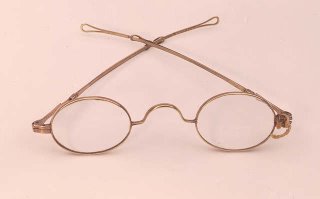
Image: “a pair of spectacles behind which there is no eye.”

[1] Boreham, Mercury, 28 June 1919.
[2] Boreham, Mercury, 18 March 1922.
[3] Boreham, Mercury, 1 July 1933.
[4] Boreham, Mercury, 14 March 1942; Age, 19 June 1948.
[5] Boreham, Mercury, 23 June 1923.
[6] Boreham, Mercury, 29 January 1921.
[7] Boreham, Mercury, 3 October 1931.
[8] Boreham, Mercury, 14 March 1942.
[9] Boreham, Mercury, 23 May 1931.
[10] Boreham, Mercury, 4 August 1923.
[11] Boreham, Mercury, 16 May 1914.
[12] Boreham, Mercury, 6 October 1923.
[13] Boreham, Mercury, 1 September 1951.
[14] Boreham, Mercury, 6 November 1920. Leonard Darwin (1850-1943) was a son of Charles Darwin and was an engineer, economist, eugenist and author. More biographical detail about Leonard Darwin can be found in the Webster’s biographical dictionary 1st edition (Springfield, Mass., USA: G & C Merriam Co. Publishers, 1953), 390.
[15] Boreham, Mercury, 28 September 1935.
[16] Boreham, Mercury, 17 July 1937.
[17] Boreham, The golden milestone, 109.
[18] F W Boreham, Arrows of desire (London: The Epworth Press, 1951), 47.
[19] Boreham, A witch’s brewing, 242.
[20] Boreham, Faces in the fire, 16.
[21] Boreham, Mercury, 12 August 1933.
[22] Boreham, Mercury, 14 May 1927.
[23] Boreham, Faces in the fire, 16.
[24] Boreham, Faces in the fire, 23.
[25] Boreham, Mercury, 9 February 1946; Age, 16 December 1950.
[26] Boreham, Mercury, 14 October 1944; Age, 5 March 1949.
[27] Boreham, Faces in the fire, 19.
[28] Boreham, Mercury, 28 June 1941; Age, 27 September 1947.
[29] Mulligan, Re-enchanting conservation work, 1.
[30] Mulligan, Re-enchanting conservation work, 5.
[31] Boreham, Mercury, 23 March 1935; Age, 2 May 1953.
[32] Boreham, Mercury, 13 July 1935.
[33] Boreham, Mercury, 15 February 1947.
[34] Boreham, Mercury, 17 October 1942.
Friday, October 06, 2006

Boreham on Cultivating Beauty

Jumboism of Cities
F W Boreham’s appreciation of nature’s ‘banquet’ corres-ponded with his scathing comments about the vanda-lisation of nature’s beauty. Mindful of the British experience, he was critical of the spoliation of the countryside due to the “jumboism of cities”,[1] the senseless felling of trees in the name of progress and the emergence of ugliness and pollution due to rapid industrialisation.[2]

War on Beauty
During the Second World War, Boreham asked, “Is Civilisation at war with beauty?” Reflecting on the ravages waged upon the environment, he lamented, “Ugliness is the price we must pay for progress. We made our bargain with Nature and we paid our price”. Boreham recognized the tension between preservation and progress when he wrote that “in our enthusiasm for the new order, we sacrificed too much” but “there is no real reason why the new should perpetuate an outrage on the old. A hurricane of progress need not be a cataract of ugliness”.[3]

Arresting Exit From Eden
Attempting to arrest “the exit from Eden”, Boreham declared that the preservation of nature was a human duty and he named as “culprits” collectors of flowers, agriculturalists who needlessly felled all trees and country councilors who allowed the damage to occur. He called for greater public awareness by attending to the study of nature in schools and an investigation into the relationship between beauty and civilization.[4] Writing in 1947 on ‘The revival of beauty’, Boreham was heartened by “the insistence of the people on the substitution of beauty for ugliness” which was notable in the architecture used in the reconstruction of post-war Europe.[5]

As the Derwent and Gordon River valleys were opening up the scenic state of Tasmania,[6] Boreham said, “From every point of view—scientific, aesthetic, commercial—it is desirable that where novel and magnificent scenery exists, it should be made reasonably accessible to all comers”.[7]

Enlarge Capacity for Beauty
In addition to opening up new scenic tracts and national parks to public view, Boreham wrote of the need to enlarge the human capacity to perceive and appreciate nature’s beauty. In so doing, he observed:

"I never yet walked a pathway that did not sparkle with diamonds. The dustiest track is littered with precious stones. The old road is a wonderfully wealthy place. Its very soil is auriferous. Nuggets are strewn everywhere, and no man can stroll a single mile along its winding way without adding immensely to his shining hoard .… Be sure, if the road leaves me as poor as it found me, it is not because of the road’s incapacity to impart but because of my own incapacity to receive."[8]

Geoff Pound

Image: the ‘jumboism’ of Dubai.

[1] Boreham, Mercury, 13 October 1928.
[2] Boreham, Mercury, 12 June 1926.
[3] Boreham, Mercury, 4 October 1941.
[4] Boreham, Mercury, 12 June 1926.
[5] Boreham, Mercury, 20 December 1947.
[6] Boreham, Mercury, 21 February 1914.
[7] Boreham, Mercury, 11 March 1916.
[8] Boreham, The passing of John Broadbanks, 194.

Thursday, October 05, 2006

Boreham on Partnering With Nature

Encouraging Health
F W Boreham’s belief in the therapeutic role of nature through exposure to its charms extended to the human commitment to work with nature in the cause of health and wholeness. Boreham expressed his commitment as a regular encourager of medical science and he wrote numerous editorials to raise the public awareness of the improvements of child health[1] and to report advances in the reduction of heart disease,[2] leprosy,[3] consumption[4] and malaria.[5]

Nature’s Yearning
Heeding nature’s yearning for wholeness translated into a regular call for greater noise control in industry,[6] extolling a simplicity of life,[7] drawing attention to races such as the North American Indians who were facing extinction,[8] calling upon Australian politicians to accept refugees of war[9] and highlighting the “growing mania for suicide”.[10]

Geoff Pound

Image: “extolling a simplicity of life.”

[1] Boreham, Mercury, 25 November 1913.
[2] Boreham, Mercury, 9 January 1932.
[3] Boreham, Mercury, 16 November 1929.
[4] Boreham, Mercury, 8 January 1921.
[5] Boreham, Mercury, 10 December 1932.
[6] Boreham, Mercury, 16 February 1935.
[7] Boreham, Mercury, 19 October 1935.
[8] Boreham, Mercury, 11 April 1914.
[9] Boreham, Mercury, 30 January 1915.
[10] Boreham, Mercury, 15 April 1922.

Wednesday, October 04, 2006

Boreham on Leisure

Specializing in Margins
Advancing the concept that ‘Nature specializes in margins’, Boreham clothed this principle in compelling imagery before offering the punch line. For example, in 1952, he penned: “She [Nature] wants a bird, so a dozen are hatched. She knows perfectly well that eleven out of the twelve are merely margin .… She wants a tree, so she plants a hundred. Ninety-nine are mere margin; but she wants to make sure of one. It is the margin that makes all the difference”.[1]

Broadening the Margins
In an editorial entitled ‘The broadening of the margin’ Boreham stated his argument particularly for politicians and employers that “work must leave us with a reasonable margin” for leisure.[2] In a climate of employment legislation defining reasonable work hours and the wartime measure of the 6 o’clock closing of hotels, Boreham asserted that “leisure is a national asset” which must be valued by society but “as the hours of labour contract ... the imperative need for some force that shall shape the conscience and behaviour of the people becomes greater and greater”.[3] Recognizing the trend towards more free time, Boreham stated (a view also held by Thomas Macaulay)[4] that “one of the highest arts in life is the wise use of leisure. Leisure is the supreme test of character. A man is what he is in his leisure hours”.[5]

If the House were on Fire
As examples of what a person’s leisure hours might contain, Boreham commended “the habit of reading aloud”[6] and watching cricket, the later of which was such an irresistible fascination for Boreham that his wife declared that “if the house were on fire, [Frank] would leave it to burn if there happened to be a cricket match in progress within twenty miles”.[7]

Find Time for Yourself
Commending leisure and exposure to nature, Boreham said to a new minister at his ordination service:

Find time for yourself. Feel it no shame at proper periods to be doing nothing. Make seasons for leisure and for recreation. Climb the hills; scour the valleys; row on the river; stroll along the beach. Cultivate the friendship of the fields and the ferns and the flowers. Laugh with the young folk and romp with little children. Be at your ease. Let the mind swing into an easy balance, a natural poise, an attitude of perfect repose. The restless soul, eternally doing something, never accomplishes anything. It is the man who can sometimes be at rest who produces the finest work in the long run. Find time for yourself![8]

Geoff Pound

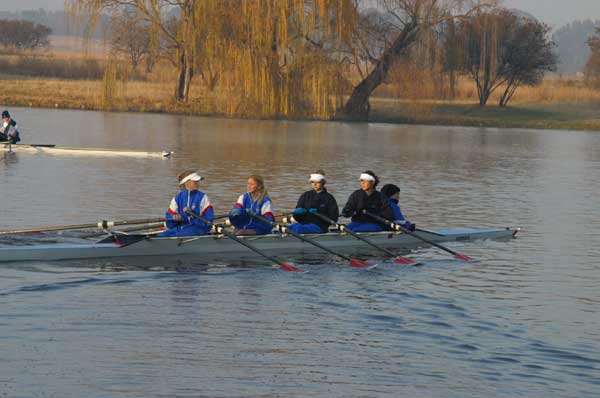
Image: “row on the river…”


[1] Boreham, Mercury, 22 March 1952; Boreham, The last milestone, 132-134.
[2] Boreham, Mercury, 10 April 1937; Age, 8 December 1945.
[3] Boreham, Mercury, 7 August 1920; 22 March 1952; The last milestone, 132-134.
[4] Boreham, The luggage of life, 90.
[5] Boreham, When the swans fly high, 192.
[6] Boreham, Mercury, 7 August 1920.
[7] F W Boreham, The drums of dawn (London: The Epworth Press, 1933), 168; also quoted in Who’s who in Australia 8th edition 1933-34, ed. Errol G Knox, (Melbourne: The Herald Press, 1934), 62, which says of F W Boreham that he “never misses a cricket match unless the house happens to be on fire”.
[8] Boreham, The drums of dawn , 62.

Tuesday, October 03, 2006

Boreham on Retreat

Mirroring Nature
At a personal level F W Boreham recommended a lifestyle that mirrored the rhythm of nature. Mindful that those in public life are more apt to commit “the high crime of doing things”, Boreham said that “half the art of life lies in being able on occasions to do nothing and to do it easily ... to smoke a pipe of tobacco ... to develop the capacity for idleness ... to ruminate like a cow”.[1] He commended the “science of sleep”,[2] the enrichment of dreams,[3] the art of relaxation,[4] and the practice of withdrawal[5] akin to the way that “nature herself provides most of her furry and feathered clients with places of refuge”.[6] When Boreham wrote about “the psychology”[7] and “the mysticism of a holiday”, he had in mind the regular break from one’s routines, responsibilities and familiar surroundings so that “by contact with Nature our spent and flagging frames are thrilled by a glorious inrush of new life”.[8]

Law of Sanctuary
In the writings of Boreham there are glimpses that he diligently observed “the law of sanctuary”[9] through his early afternoon sleep,[10] his evening recourse to the armchair for his “scallop-shell of quiet”[11] and his retreat to Melbourne’s Botanical Gardens “under the shadow of a noble old cypress on a seat to which I make it a practice to repair once a week or so”.[12] Boreham’s many references to the beach at Taieri Mouth,[13] the vista from Mt Wellington,[14] the flora and fauna of Wedge Bay[15] and the delights of the Dandenongs[16] revealed a man whose holidays gave him “a vision of life [that] ... stimulated his own vitality”.[17]

Geoff Pound

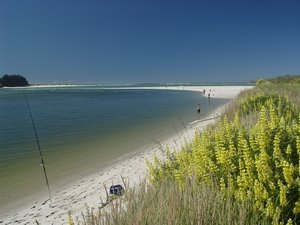
Image: Taieri Mouth, FWB’s favorite sanctuary when at Mosgiel.

[1] Boreham, The other side of the hill, 248.
[2] Boreham, Age, 3 April 1948; Mercury, 14 May 1949.
[3] Boreham, Mercury, 9 June 1956.
[4] Boreham, Mercury, 20 January 1940.
[5] Boreham, Mercury, 28 February 1925.
[6] Boreham, Mercury, 31 October 1942; Age, 8 February 1947.
[7] Boreham, Mercury, 22 December 1934; Age, 3 January 1948.
[8] Boreham, Mercury, 18 January 1941; Age, 12 January 1946.
[9] Boreham, Mercury, 31 October 1942; Age, 8 February 1947.
[10] Boreham, My pilgrimage, 225.
[11] Boreham, The passing of John Broadbanks, 11.
[12] F W Boreham, The three half moons (London: The Epworth Press, 1929), 43.
[13] F W Boreham, The heavenly octave (London: The Epworth Press, 1935), 63-64.
[14] Boreham, The luggage of life, 242.
[15] Boreham, The nest of spears, 165.
[16] Boreham, A witch’s brewing, 62.
[17] Boreham, Mercury, 18 January 1941; Age, 12 January 1946.

Monday, October 02, 2006

Boreham and His Philosophy of Play

Legislation and Leisure
In an era when labor strikes were common and Australian parliaments were transacting labor legislation concerning workers’ wages and hours, Boreham’s articles about the importance of play in society were a variation on nature’s principle of rest, rhythm and retreat.[1]

Game of Life
His editorials addressing ‘A philosophy of play’ were pitched not only towards politicians but teachers and parents to encourage them to realize that toys and play were equipping children with the skills for “the game of life”.[2]

Education for Play
As an interesting development of this theme in a later editorial, Boreham suggested that teaching children to play well was preparing them “to enjoy to the utmost the majestic merriments of the eternities”.[3] In one of his earliest Tasmanian editorials, Boreham expressed the “need for more parks and reserves in Hobart” and called upon politicians to ensure that further playgrounds were provided for its people.[4]

Geoff Pound

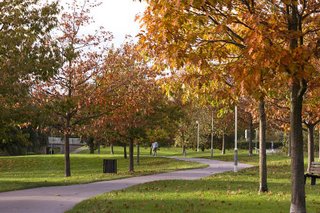
Image: ‘…need for more parks.”

[1] The miners’ strike for maximum daily working hours in 1916 was an example of turbulence in the labour scene. The NSW parliament passed the Eight Hour Act in April 1916.
[2] Boreham, Mercury, 10 March 1913; 28 July 1923; 16 May 1936.
[3] Boreham, Mercury, 7 December 1946.
[4] Boreham, Mercury, 10 March 1913.

Sunday, October 01, 2006

Boreham the Conservationist

Replenish the Soil
Boreham repeatedly called for the conserv-ation and replenish-ment of the soil,[1] the care of the world’s rivers[2] and the conserv-ation of water in the dryness and heat of Australia,[3] particularly in the 1930s and 1940s when drought and overuse of the land in many states caused severe erosion. In describing the intellectual conflict over land use, Drew Hutton and Libby Connors write, “Wise resource use and nature protection were thus two strands of early conservation that capitalized on nationalistic progressivism. On the other hand, the mastery of those resources by human scientific and technical skills was doubly praised”.[4] Boreham’s encouragement of the nation’s greatness through increasing the population and markets indicated that he sometimes resolved this tension by arguing in favor of production rather than protection.

All People not Fanatics
While Boreham applauded the establishment of National Parks and wilderness areas by government, he also called all his readers to care for the properties where they lived. This was and continues to be an important combination as Sydney ecologist Martin Mulligan, in reflecting on the issues facing conservationists in Australia in the twenty-first century, says: “The concern for preservation of wilderness … sets up a conceptual separation between people living mainly in cities and towns and the remote ‘pristine’ areas deemed worthy of preservation. This helped create a perception that nature conservation is a matter for fanatics, eccentrics and experts; not a concern for ‘ordinary’ people”.[5]

Priority for Politicians
Boreham called politicians to exercise respect and responsibility towards the land but his view “that we are all naturalists” highlights that he understood that the tasks of conserving and replenishing nature were incumbent on every citizen in their locality.[6]

Geoff Pound

Image: “replenishing the soil.”

[1] Boreham, Mercury, 5 March 1914; Mercury, 11 October 1941; Age, 20 September 1947.
[2] Boreham, Mercury, 23 November 1940; Age, 15 March 1941.
[3] Boreham, Mercury, 29 May 1914.
[4] Hutton and Connors, A history of the Australian environmental movement, 21.
[5] Martin Mulligan, Re-enchanting conservation work: Reflections on the Australian experience http://www.uws.edu.au/serg/ReConservation_mulligan.html, February, 2001, 2.
[6] Boreham, A witch’s brewing, 197.

Saturday, September 30, 2006

Boreham on Preserving Nature

Life That We Love
In response to the lavish outpouring of life, yet mindful of the human potential to waste and spoil and upset nature’s balance, F W Boreham, in many editorials, highlighted the social responsibilities of protecting and preserving nature. [1] Working from the premise that “it is life that we love ... therefore we should not kill animals”,[2] Boreham wrote editorials calling for the prevention of cruelty to animals[3] and he attacked the “blood lust of the British” and “the vogue of the big game hunter” that resulted in certain animal species being in danger of extinction.[4]

Preserve the Birds
Boreham’s concern for birds led to his plea for the saving of hedges[5] and, writing from Tasmania, the most wooded state of the country, he sounded the urgency of preserving the habitats of birds that were in peril of extinction.[6] He lambasted the installation of air beacons around the world that “have wrought havoc among the vast flights of migratory birds”,[7] he claimed that “the rapid increase of population [in some countries] is threatening the extermination of the loveliest and most valuable of the feathered species” and he denounced “the havoc wrought by the insatiable demands of the milliner”.[8]

Save the Forests
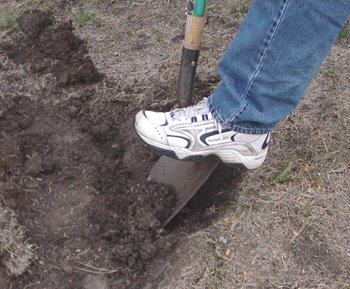
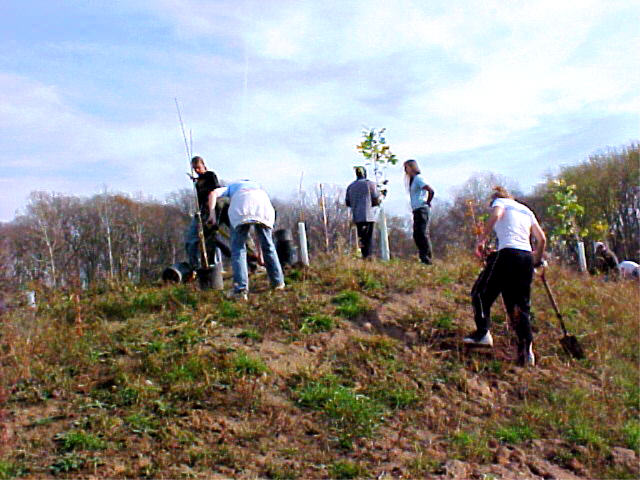
Calling the forest “man’s oldest and most faithful friend, and one towards whom he is inclined to turn with increasing reverence and affection as the ages go by”,[9] in 1920 Boreham joined a growing number of people[10] in castigating those who carelessly cleared the forests and bush, saying, “Australia cannot afford to part with its trees”.[11] While mindful of the instinct for chopping to which Boreham’s heroes, W E Gladstone and Richard Jeffries, succumbed, he expressed in 1928 his pleasure at “the popularisation of Arbor Day” and other government initiatives, saying to his readers that “we should all of us apply ourselves to a wholesale orgy of tree-planting”.[12]

Geoff Pound

Image: “a wholesale orgy of tree-planting.”

[1] Boreham, Mercury, 25 September 1917.
[2] Boreham, Mercury, 9 June 1917; F W Boreham, The home of the echoes (London: The Epworth Press, 1921), 82.
[3] Boreham, Mercury, 26 June 1915.
[4] Boreham, Mercury, 21 March 1914.
[5] Boreham, Mercury, 5 July 1930.
[6] Boreham, Mercury, 13 September 1913; 26 October 1940.
[7] Boreham, Mercury, 20 April 1929.
[8] Boreham, Mercury, 26 October 1940.
[9] Boreham, Mercury, 28 June 1924.
[10] Ann R M Young, Environmental change in Australia since 1788 (Melbourne: Oxford University Press, 1996), 74-75.
[11] Boreham, Mercury, 10 July 1920.
[12] Boreham, Mercury, 9 June 1928.

Friday, September 29, 2006

Boreham on Nature As Silent Preacher

Silent Yet Articulate
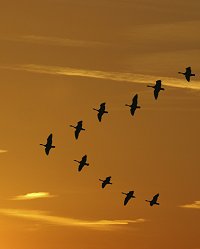
F W Boreham viewed nature as a preacher of truth not in a brash or intrusive style but by being “silent yet articulate”.[1] An example of nature’s propensity to preach by hinting was the migratory instinct of birds, of which Boreham suggested that “we are all affected more than we know by forces that we cannot see” and by stirring up the human conscience to the “boundless, the illimitable, the eternal”.[2]

Signaling Through Semaphore
Symbolism was another of nature’s preaching techniques in which the compelling message of sacrifice could be conveyed through a red poppy[3] or one’s love of country could be declared through a sprig of wattle.[4] Recognizing nature’s preaching ability to transcend barriers of culture and language, Boreham asserted that the coming of the swallow[5] and the emergence of a green shoot from a dead husk[6] were examples of the way the “sublimest messages [were] semaphored” through “the language of gesture”.[7]

Saying It In Signals
Explaining further ‘the science of signals’, Boreham pointed to the fine homiletical tradition in which nature stood. Thus, he affirmed:

"Revelation makes it clear, that, even when Almighty God has something really vital to say, He says it in a language that requires no translation or interpretation. He says it in a way that all men everywhere can comprehend. “The veil of the temple was rent in twain from the top to the bottom.” No man can mistake the awful and profound significance of such a gesture. No man may be able to grasp the doctrine of the atonement; but where is the heart that does not respond to the mute eloquence of the Cross?"[8]


Saying It With Flowers
Nature’s preaching method, according to Boreham, was that of declaration rather than explanation, not the pronouncement of glib answers but the evocation of surprise, earnest questions and child-like wonder. Hence his statement about the human response to nature’s appeal: “We find ourselves saying to the seed and the soil what Tennyson said to the flower in the crannied wall; if we could understand what it is in the seed and in the soil that produces the ears of corn, we should know what God Himself is”.[9]

Geoff Pound

Image: “the migratory instinct of birds.”

[1] Boreham, Mercury, 20 August 1955.
[2] Boreham, Mercury, 7 October 1939; Age, 22 November 1947.
[3] Boreham, Mercury, 10 November 1923.
[4] Boreham, Mercury, 10 November 1934; Age, 9 November 1946.
[5] Boreham, Mercury, 16 March 1940.
[6] Boreham, Mercury, 11 April 1941.
[7] Boreham, Mercury, 20 August 1955.
[8] Boreham, Mercury, 20 August 1955.
[9] Boreham, Mercury, 20 October 1951.

Thursday, September 28, 2006

Boreham on Nature As Educator

Educator Par Excellence
In a statement reminiscent of Benjamin Disraeli, Boreham viewed nature as one of the greatest educational influences in life,[1] and in an editorial he wrote, “We have the trees as teachers and preachers, and many a man has learned the deepest lessons of his life at the feet of these shrewd and silent philosophers”.[2]

Free Education
Boreham paid numerous tributes to nature as his teacher,[3] saying, “All we have learned has increased our reverence for nature”.[4] In writing of the “maxims of the mud”,[5] the “stones articulate”,[6] the “rhetoric of the rocks”,[7] rocks as “the manuscripts of God”[8] and the universe as “the archives of the ages”,[9] Boreham reinforced the educational role of nature for those who were keen to be its students.

Use of Imagery
In writing of the “magpie habit of collecting”[10] or “the mimicking behaviour of the lyrebird”,[11] Boreham was demonstrating ways that nature had taught him to use its imagery. His writings were replete with nature’s parables, including nature’s camouflage,[12] lessons in adapting and adjusting,[13] the way to break bad news,[14] the principle of the undertow[15] and the ‘dead’ Easter-like kernel that “has the latent genius for resurrection”.[16] Moreover, Boreham was discriminating about nature’s teaching style. He encouraged his readers to discover the value of nature’s unattractive features saying, “It is by vipers as well as by violets that God reveals His wondrous ways to men”,[17] but Boreham did not commend nature’s propensity to ignore the weak[18] or its unsympathetic brutality.[19]

Regular Exposure
Boreham often attributed his inspiration to a renewed exposure to nature.[20] Nature had taught him to wonder[21] and to ask questions[22] yet, despite all the learning and resources of religion, he concluded, “We are only on the fringes of things”.[23] The importance of nature’s teaching role for the world was underscored when, in writing about the impact of the trade winds and the way they had compelled human beings to move, Boreham stated that, “It is only by dancing to the tune that Nature plays that civilization can advance and humanity continue its triumphant march”.[24]

Geoff Pound

Image: “the mimicking behavior of the lyrebird”


[1] Boreham, Mercury, 6 October 1923. Benjamin Disraeli, the Earl of Beaconsfield said, “Nature is more powerful than education”. Benjamin Disraeli, Contarini Fleming: An autobiography (New York: D Appleton & Co, 1870), 19.
[2] Boreham, Mercury, 11 June 1932.
[3] Boreham, A tuft of comet’s hair, 63.
[4] Boreham, Mercury, 5 May 1917.
[5] Boreham, The other side of the hill, 152.
[6] Boreham, Mercury, 5 July 1952.
[7] Boreham, Mercury, 25 May 1957.
[8] Boreham, When the swans fly high, 63.
[9] Boreham, Mercury, 26 October 1957; Age, 5 September 1953.
[10] F W Boreham, The nest of spears (London: The Epworth Press, 1927), 10.
[11] Boreham, Rubble and roseleaves, 181.
[12] Boreham, Mercury, 27 July 1918.
[13] Boreham, Mercury, 15 November 1919.
[14] Boreham, Mercury, 16 September 1922.
[15] Boreham, Mercury, 17 April 1915.
[16] Boreham, Mercury, 11 April 1941.
[17] Boreham, Mercury, 3 April 1954.
[18] Boreham, Mercury, 27 May 1922.
[19] Boreham, Mercury, 21 June 1941.
[20] Boreham, When the swans fly high, 7, 187.
[21] Boreham, Mercury, 9 February 1946.
[22] Boreham, When the swans fly high, 87.
[23] Boreham, Mercury, 28 June 1941.
[24] Boreham, Mercury, 1 August 1925.

Wednesday, September 27, 2006

Boreham on Nature as Hope Bearer

Messenger of Hope
According to F W Boreham, a prominent aspect of nature was its rhythm in which “like a gigantic wheel, the cycle of the seasons revolve without apparently achieving anything by its revolutions”,[1] but despite this ‘illusion of futility’ “high ends are being compassed .… Nature was making progress all the time”.[2] Boreham perceived the purposefulness of nature in the turning of the tides,[3] the return of the swallow[4] and the day when “the elms ... having attired themselves in all their bravery of their new spring dresses, have curtained from me every object lying beyond themselves”, a day which he recorded for many years with precision.[5]

Indomitable During Tragedy
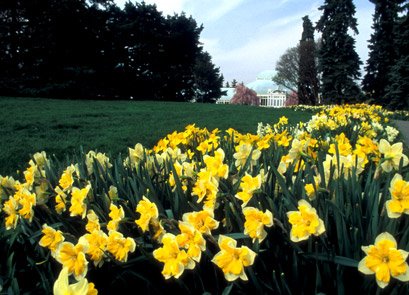
While he observed the irregularity of nature in the variegated patterns of flowers in contrast to the boring predictability of linoleum,[6] the relentless momentum and indomitability of nature was never more evident to Boreham than in the years of the Second World War. For example, during this period he observed: “Crocuses break through the snow; nodding daffodils smother the bank; yellow primroses carpet the leafy woods; bluebells swarm along the hedgerows; and the birds sing their mating-songs in utter indifference to the horror of the world’s stark tragedy”.[7]

Eloquent and Articulate
Boreham interpreted this death-defying messenger of hope as “the eloquent articulation of all those dumb forces that are struggling to tell of the light that breaks from the gloom of midnight, of the peace that issues from the terrors of war, of the good that triumphs at last over the mightiest evil and of the redemption that comes to men through the darkness and dereliction of the Cross”.[8]

Geoff Pound

Image: “nodding daffodils smother the bank”


[1] Boreham, Mercury, 1 December 1951.
[2] Boreham, Mercury, 5 June 1943; Age, 6 December 1947.
[3] F W Boreham, The uttermost star (London: The Epworth Press, 1919), 264.
[4] F W Boreham, The last milestone (London: The Epworth Press, 1961), 135.
[5] Boreham, The passing of John Broadbanks (London: The Epworth Press, 1936), 261.
[6] Boreham, Faces in the fire, 54.
[7] Boreham, Mercury, 23 October 1943; Age, 6 April 1946.
[8] Boreham, Mercury, 3 May 1947.