 In his Deakin Lecture at the beginning of the twenty-first century, Rodney Hall captured the yearnings of the Australian public when he said, “We need a new story …. In all aspects of living we seek the story of who we are, where we are and how we became like this, simply because we need to know. It applies to our nation too and to our collective future as international citizens.”[1]
John Carroll, in the same lecture series expressed a similar concern, “Where are the … stories of tragic suffering, of passion, of the metamorphosis out of fallen worldliness, of love, of the gaining of poise of spirit?”[2]
F W Boreham’s commendation in 1925 of the storytelling method has great relevance for people everywhere but especially contemporary Australia.[3] His use of story as a Trojan Horse for concealing and revealing ideas and concepts is instructive for theologians seeking to contribute to the story that Australians are seeking.
Remembering Boreham’s difficulty in ‘grasping the nettle’, further work needs to be undertaken to elucidate the benefits and limitations of stories to convey the prophetic word and to “reveal the fault lines hidden beneath the comfortable surface of the worlds we invent for ourselves.”[4] Stories demonstrate that beliefs are “living convictions which give shape to actual lives and actual communities”, not “propositions to be catalogued”[5] and they earth theology in the familiar realm of everyday experience.
David Tacey, who has identified the ordinariness of spirituality in Australia, claims that the most effective public communicators in various mediums have been “intensely visionary and spiritual, if not overtly religious.”[6]
Geoff Pound
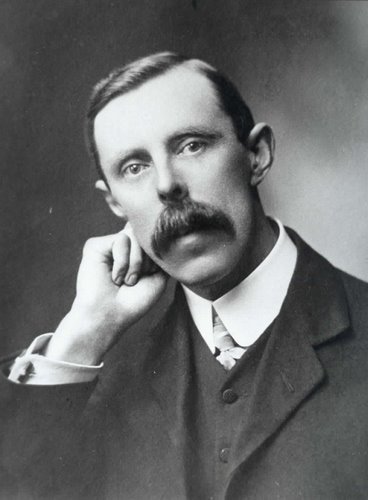
Image: “F W Boreham’s use of story as a Trojan Horse for concealing and revealing ideas and concepts is instructive for theologians.”
[1] Rodney Hall, ‘Being shaped by the stories we choose from our history’, The Alfred Deakin lectures: Ideas for the future of a civil society (Sydney: ABC Books, 2001), 91, 102.
[2] John Carroll, ‘The blessed country: Australian dreaming 1901-2001’, The Alfred Deakin lectures: Ideas for the future of a civil society (Sydney: ABC Books, 2001), 116.
[3] F W Boreham, The ivory spires (London: The Epworth Press, 1925), 113.
[4] Kathleen Norris, The cloister walk (Oxford: Lion Publishing, 1996), 52.
[5] James W McClendon Jr., Biography as theology: How life stories can remake today's theology (Nashville: Abingdon, 1974), 37.
[6] David Tacey, Re-enchantment, 86.


 For most of F W Boreham’s writing career, he discovered, along with other exponents of the art, how the storytelling style frees a writer and speaker from “the tendency to be didactic.”


