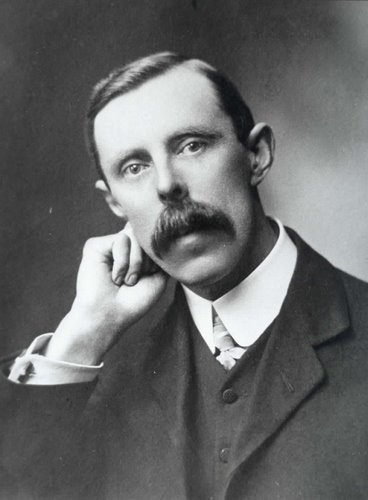
Frank William Boreham 1871-1959

Frank William Boreham 1871-1959
A photo F W Boreham took of himself in 1911

Thursday, January 18, 2007

Boreham on Easter

Easter in all of Life
Deserving special note are the Easter editorials of F W Boreham and the ordinariness with which he addressed this annual event. His editorial approach to this Christian festival was characteristic of the public theology tradition that has sought to avoid theology or religious events such as Easter falling captive to the church. In contrast to those described by Nicholas Lash, who “bind the mystery of God into the It-world, [who] set up a ‘God-district’ alongside the other districts in their life and, by so doing ... obscure the signs of God’s address and presence both in that district and elsewhere”,[1] Boreham wrote about Easter in its interrelatedness to all of life.

Easter in Nature
Approaching Easter in a down-to-earth manner, Dr. Boreham often commenced with the Easter principle in nature, in which the “crocus peeping bravely and promisingly through the snow” (in the northern hemisphere) and “the flaming splendor of the chrysanthemum” (in the southern hemisphere) both expressed the Easter message of “life’s unconquerability ... [and] forward-looking hopefulness”.[2] While recognizing that Easter was one of many “episodes and emotions too sublime and too sacred to be analyzed”,[3] Boreham adopted images from nature (“the living kernel enclosed within the dead husk”) and history (the resurrection of Old St Paul’s) to illustrate the infusion of hope into human life and to show that “humanity has a latent genius for resurrection”.[4]

Experiencing Easter
Boreham’s purpose in his editorials was not to analyse or prove the miracle of the first Easter but to encourage readers in their present ordinariness to experience Easter for themselves or, as Gerard Manley Hopkins expressed ‘easter’ as a verb, to “let him easter in us”.[5]

Supreme Festival
Boreham saw Easter as “the supreme festival of life”, explaining the thrill with which people greet Easter each year as “but another phase of the arresting phenomenon. It is life answering to life”.[6] Promoting the way Easter must be allowed to permeate the ordinariness of life every day of the year, Boreham said at Easter 1954: “Easter may represent the essence of religion; it is also the irradiation of reality. It touches actual life in every aspect and at every point. It assures us that, however prosaic our lot may be, we may, nevertheless, make life, death and the vast forever one grand, sweet song”.[7]

Geoff Pound

Image: “the living kernel enclosed within the dead husk.”


[1] Nicholas Lash, Easter in ordinary: Reflections on human experience and the knowledge of God, 286-287.
[2] F W Boreham, Mercury, 5 April 1958; Age, 20 April 1946.
[3] Boreham, Mercury, 27 March 1948.
[4] Boreham, Mercury, 11 April 1941.
[5] Gerard Manley Hopkins, ‘The wreck of the Deutschland’ Poems of Gerard Manley Hopkins ed. W H Gardner (Oxford: Oxford University Press, 1948), 67.
[6] Boreham, Mercury, 5 April 1947.
[7] Boreham, Mercury, 17 April 1954.

Wednesday, January 17, 2007

Boreham and the God of Small Things

Source of Values
F W Boreham’s themes represented an appreciation of small things, a vision of beauty in the unexpected and the discovery of good in what appeared to be the worst. In a late-in-life editorial in which Boreham appealed for a new kind of looking, he revealed the source of these values:

The New Testament represents the record of One who excelled in the sublime art of seeing the best shining through the worst. In a craven coward who had thrice denied Him, he saw a martyr who would dauntlessly die for his faith. In a woman of the street, he saw a saint of intimate sweetness and charm. In a ruthless and relentless persecutor, he saw a singularly winsome and persuasive evangelist. When he passed by, every berry bush stood beflagged with poems and every thoroughfare was brave with pageantry and masquerade.[1]

Countercultural Values
Dr. Boreham’s portrayal of a new kind of seeing involved a practical and holistic theology expressing counter-cultural values. His articles on the contribution of ordinary people, unsung heroes, the anonymous and the imperfect are expressions of grace and point to what contemporary author, Arundhati Roy, has described as ‘the God of small things’.[2]

Too Small for Public Interest?
F W Boreham was aware of the charge that a discussion of ordinary things could be viewed as too small, trivial and therefore beyond the scope of the public interest. While his titles often appeared to be quirky, Boreham believed that the domain of the ordinary and the everyday had a widespread appeal and a timeless quality. His discussions about work, leisure, play, simplicity and quietness suggested by nature’s rhythms, were clearly addressing matters of public concern.

F W Boreham

Image: “every thoroughfare was brave with pageantry and masquerade.”


[1] F W Boreham, Mercury, 25 February 1956.
[2] Arundhati Roy, The God of small things (London: Flamingo, 1997).

Tuesday, January 16, 2007

Boreham on Waiting for the Tide

Here is one of the stories that will appear in the forthcoming book, The Best Stories of F W Boreham.

The Melbourne Art Gallery possesses, among its treasures, a painting by Arthur Boyd entitled ‘Waiting for the Tide’. It represents a sheltered and tranquil cove in which a couple of boats are lying. The boat in the foreground is occupied by two men. It leans heavily over, showing that it is hard and fast upon the muddy bed of the little inlet.

Until the tide comes welling in, lifting and liberating it, its occupants are helpless. But their presence in the boat sufficiently indicates their determination to ply their oars and leave the bay the moment the waters rise.

Viewed superficially, the attitude of the two men seems to resemble the attitude of Mr. Micawber [in Charles Dicken’s David Copperfield]. In the daytime Mr. Micawber mingles with the throng upon the city streets, hoping for something to turn up among the faces that he finds there. In the evening he throws himself into his chair, adjusts his spectacles and seizes his newspaper, just to see if anything turns up among the advertisements. All life is a lottery to him.

But between Mr. Micawber on the one hand, and the two boatmen on the other, there is, in reality, no ground for comparison. Mr. Micawber represents the wretchedness of wishful thinking; the boatmen represent the satisfaction of a well-based hope.

The tide stands for the stately dependabilities by which we are encompassed and surrounded. The masterly mechanism of the universe—the rising and the setting of the sun, the phases of the moon, the persistence in their orbits of the stars, the revolution of the earth, the cycle of the seasons, the round of the year—all this, like the ebbing and flowing of the tide, is amazingly reliable. It is this element of constancy that, in our friends, means infinitely more than good looks, agreeable behavior or outstanding ability.

In common with all the best things, the tide is leisurely. Like its kinsman, Old Father Thames, ‘it never seems to hurry’. Like the men in Boyd's picture, we must wait its time. It soothes the brain and steadies the nerves and sweetens the soul to fasten one's eyes for awhile on these leisurely things. An oak tree takes just as long to grow in my garden as it took in the Garden of Eden. The tide ebbs and flows today exactly as it ebbed and flowed in the days of the Pharaohs.

Yet, although the tide does its work in a restful and leisurely way, it does it, and does it well. The world's best workers are those who never know the fret and fever of haste, yet who achieve their goals with meticulous certainty and exactitude. They always get there.

There is, according to Brutus, a tide in the affairs of men which, taken at the flood, leads on to fortune. As Shakespeare implies, and as Boyd's picture makes clear, the tide offers every person, sooner or later, the chance of escaping from the tiny cove of the here into the broad bosom of the everywhere; from the microscopic bay of Self to the infinite sea of Service. God suddenly confronts a person. The Savior, in infinite grace, presents Himself. Opportunity appears in some other form; and they are life's most enviable voyagers who, when the sublime moment actually arrives, are all alive and all alert, waiting, with oars in rowlocks, to greet the hour of destiny.

A person can no more hurry time along than these boatmen in the picture can hurry the tide. Life must be harmonized with, and harnessed to, the mighty forces operating around us. He alone is certain of happy days who, with open eyes and eager hands, stands ready to embrace the golden opportunities that every hour will offer.

F W Boreham, The Tide Comes In (London: The Epworth Press, 1958), 103-104.

Image: Waiting for the tide.

F W Boreham: One of the Greatest?


Readers of this Boreham blog site might like to check out a new article on F W Boreham which is the first in a series of articles on The Center for Baptist Studies web site.

The article is entitled F W Boreham: Australia's Greatest Baptist Preacher Ever.

Geoff Pound

Boreham on Boots and Shoes

Teaching Through Things
F W Boreham’s use of metaphors and parables is worthy of detailed study as it illustrated George Drummond’s statement, “Truth can be borne into the soul only through the medium of things”.[1] The movement from ‘things’ to ‘truth’ was evident in Boreham’s editorial entitled, ‘Boots and shoes’[2] which deserves a more detailed study.

Frank Boreham commenced this essay by establishing a connection with his readers as he highlighted both the prosaic nature and the essential importance of one’s footwear. He also noted that Thomas Carlyle, whose Sartor resartus exhaustively probed the inner meaning of garments and hats, had ignored Boreham’s theme. In rapid succession, Boreham told stories from history (footwear in the Napoleonic army), human nature (the perils of bare-footedness) and literature (Bunyan), each illustrating the significance of his subject. His climactic paragraph presented the biblical image of armory and, after establishing the stupidity of a soldier going into battle without wearing boots, Boreham encouraged his readers to put on the shoes of peace.

Boreham the Barrister
It has been noted that F W Boreham modeled his historical writing on Edward Gibbon’s example of arguing a case like a skilful lawyer. However, Boreham’s parabolic method also appeared to be shaped by what he had learned in the law courts. Offering a helpful link between philosophy and jurisprudence, Friedrich Waismann said, “An effective philosopher first makes you see all the weaknesses, disadvantages, shortcomings of a position; he brings to light inconsistencies in it or points out how unnatural some of the ideas underlying the whole theory are by pushing them to their farthest consequences .… On the other hand, he offers you a new way of looking at things, like a barrister, all the facts of his case, and you are in the position of the judge”.[3]

Commenting further on Waismann’s analogy, Nicholas Lash pictured a barrister resting his case, “only when he has reason to believe that he has adduced sufficient evidence, and patterned that evidence into a sufficiently compelling narrative, to persuade the jury to reach the same conclusion”.[4]

Readers in the Witness Box
Many of Boreham’s editorials adopted this legal reasoning, as he led readers through his picturesque case, calling people into the witness box and identifying evidence from everyday life, nature, history, literature and religion and compelling his readership, like Lash’s description, “not by terrorizing, or ... by manipulating the emotions ... not by steamrolling, but by eliciting responsible free acts of judgment, evaluation, and decision”.[5]

Geoff Pound

Image: Truth in Boots

[1] George Drummond, The ideal life and other unpublished addresses, 131.
[2] F W Boreham, Mercury, 10 July 1954.
[3] Friedrich Waismann, 'How I see philosophy', Contemporary British philosophy, (London: H D Lewis, 1956), 480-481.
[4] Nicholas Lash, Easter in ordinary: Reflections on human experience and the knowledge of God (London: SCM Press Ltd., 1988), 286-287.
[5] Lash, Easter in ordinary, 286-287.

Monday, January 15, 2007

Boreham on the Ordinary Becoming Sacramental


Ordinary Becoming Sacramental
The overflowing of the human soul into ordinary things was to F W Boreham, one of the ways an ordinary object became sacramental. This could be achieved at a personal level, as Boreham “invested his chairs with spiritual significance and voices”,[1] but many of his editorials were intended to cultivate a corporate sense of the sacramental.

Hallowed by Heroic Memories
Boreham recognized the power of shared experiences and memories in achieving this purpose, when writing, “Life becomes wonderfully sacramental when it is hallowed by such beautiful heroic memories”.[2] Examples of editorials written in this vein were those composed for national and international anniversaries. Boreham saw in Anzac Day[3] and Armistice Day[4] “a sacrament of memories”, in which the shared act of remembering touched life “with finer issues”.

Sanctity of the Road
Similarly, Boreham hailed Australia Day as an opportunity to rediscover deep significance. In an editorial commemorating nationhood, Boreham wrote of the sanctity that might be attributed to an ordinary Australian road.[5] Recognizing the ‘sanctifying’ role of memory, he wrote, “On every day of the year, but especially on Australia Day, we hear the voices of the pioneers calling to us from the very dust of the road”. This awareness dawns, said Boreham, when people realize that roads are “invested with a sacramental solemnity by the deaths of men like Burke and Wills, and Gray and Poole, and Baxter and Leichhardt, and a hundred others no less brave”. Pointing beyond the pioneers, Boreham openly declared the supreme source and influence upon matters prosaic, when he stated:

"But whence originated the sanctity of the road? It derives from the fountain-head of all real sanctities. In the beginning, when God created the heaven and the earth ... the word “scatter!” became the mandate and the manifesto of the road. The slogan of all civilisation, it imparted a divine significance to all our tracks and paths and thoroughfares. The call of the Road is mightier than the call of the Rooftree simply because the Voice of the Highway is essentially the call of the Highest."

Geoff Pound

Image: ‘The Call of the Road’

[1] F W Boreham, Mercury, 13 June 1942.
[2] Boreham, My pilgrimage, 133.
[3] Boreham, Mercury, 21 April 1956.
[4] Boreham, Mercury, 9 November 1946.
[5] Boreham, Mercury, 30 January 1954.

Saturday, January 13, 2007

Boreham on Finding Connections

Links to Deeper Meanings
F W Boreham did not have an anthropocentric conception in which the taking of the sacraments merely satisfied a spiritual craving as one of his important views was that the sacramental granted a connectedness to the wider world, including a rootedness within the cosmos and a participation in the sacred realm. For example, Boreham saw the sacrament of gardening not only giving this prosaic activity a ‘glory’ but forging connections in the way:

“It links us not only to the prentice efforts of our first ancestors, but to the
scientific sensations of the distant future. Under an easy assumption of hoary
antiquity and drab monotony, the garden guards the secrets that once read, will
become the marvels of the unborn years”.[1]

Two-Way Connections
Dr. Boreham saw the sacramental connecting in both ways. In elaborating on the responsibility of society’s artists and others who have experienced the sacred, David Tacey says:

This, perhaps, is the key feature of the visionary artist in any country at any
time: he or she ‘sees’ the sacred, when apparently the habitual consciousness of
the day does not. The creative artist is a seer …. The task of the artist is to
remind people that they do in fact have spiritual lives, that they do feel and
sense a level of being that is beckoning them to new awareness and
self-identity.[2]

Mutuality of Connections
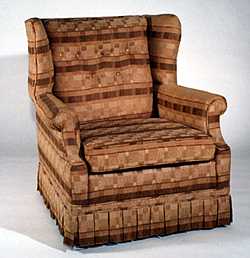
A further development in Boreham’s thinking about the mutuality of sacramental connections is found in his story about his armchair, which is reminiscent of the essay entitled, ‘The story of furniture’, by Boreham’s mentor, Richard Jeffries.[3] After admitting that he had spent hundreds of hours in his chair, Boreham argued, “An armchair is more than an armchair ... if we listen with sufficient care, the old armchair is talking to us”.[4]

Finding the Soul of Things
Reflecting on another occasion about his armchair being driven off for auction prior to him relocating, the anguished writer said, “He cannot persuade me that the old armchair is merely leather and oak. Why, the chair all but spoke to me as it passed. There is something extremely soulful about furniture”.[5] The hundreds of hours in which Boreham had spent sitting in the chair had developed its soul. Remarking on the emergence of the chair’s personality and the termination of their relationship, Boreham concluded quaintly:

This has been a one-sided study. It has concerned itself almost exclusively with
my view of the old armchair. But what does the old armchair think of me? The
armchair seems to me to be so much more than leather and oak. Do I seem to the
armchair to be ever so much more than flesh and blood? I catch myself thinking
about the soul of the armchair, ‘Does the armchair catch itself thinking about
the soul of me? And if not, why not?’ And now the secret is out. I said that it
was all a matter of overflow. The soul of the armchair is my own soul
overflowing into the chair.

Geoff Pound

Image: More than an old armchair.

[1] F W Boreham, Mercury, 3 July 1915.
[2] David Tacey, Re-enchantment: The new Australian spirituality, 113.
[3] Richard Jeffries, Beauty is immortal and other essays ed. Samuel J Looker (Sussex, England: Aldridge Bros., 1948), 74-78.
[4] F W Boreham, The home of the echoes (London: The Epworth Press, 1921), 138.
[5] F W Boreham, Australian Christian world, 31 January 1919.

Thursday, December 07, 2006

Boreham on Hide and Seek

Hidden Treasure
F W Boreham alluded to the hidden features of the sacramental in which its secret meaning was made known only to the initiated or to those who had the eyes to see. In editorials about ordinary objects hiding sacramental treasure, Boreham pleaded for discovering the sacramental in the inn,[1] revealed the “precepts of the porch”[2] and he wrote various articles about understanding “the secret of the street”[3] and seeing “the glory of the street”.[4]

Coming Ready or Not
A corollary to the concept of hiddenness was the belief that there was a power within ordinary objects that was working to make the hidden truths revealed. As already noted, Boreham wrote of ordinary things being “pregnant with romance”, a powerful image signifying the life and emerging quality of the sacramental.[5]

The nineteenth-century British preacher Henry Drummond (about whom Boreham wrote[6] and lectured[7]) voiced this same thought when saying, “If you are apathetic, if you will not look at the things which are seen, they will summon you”.[8]

Geoff Pound

Image: 'the precepts of the porch.'

[1] F W Boreham, Mercury, 14 December 1918.
[2] Boreham, Mercury, 2 October 1915.
[3] Boreham, Mercury, 26 April 1919.
[4] Boreham, Mercury, 5 January 1946.
[5] Boreham, Mercury, 22 December 1956.
[6] Boreham, Mercury, 17 February 1951.
[7] F W Boreham, Mushrooms on the moor (London: The Epworth Press, 1915), 21.
[8] Henry Drummond, The ideal life and other unpublished addresses (London: Hodder and Stoughton, 1897), 129.

Wednesday, December 06, 2006

Boreham on Sacraments and Sanctities

Sacraments Beyond the Church
While eccles-iastical views of the sacraments have variously defined and ordered certain rites performed by the church to produce grace in the recipient by the very performance of the sacramental act, F W Boreham’s understanding of sacraments was broader, less defined and related to a multitude of diverse experiences outside the jurisdiction and influence of the church.[1]

Related to his concept of ‘romance’ was his understanding of an ordinary object becoming a sacrament or receiving sanctity when it was rightly seen. While throughout his career Boreham wrote frequently of the sense of romance, the editorials in which he discussed matters sacramental were written mainly in the latter period of his life when he included distinct religious themes. One example of Boreham’s effort in using ‘thin’ religious language was when, in an early version, he wrote of the surprising value in the hiddenness of the garden using the secular title, ‘When spades are trumps’.[2] A later incarnation of this editorial revealed the sacramental features of a garden.[3]

Window to the Invisible
Sometimes in writing on “the art of looking through commonplaces”, Boreham adopted window imagery. He said that when William Blake looked, “the material realm was a window through which he saw the invisible”.[4] In this window image, Boreham was declaring that an object becomes sacramental when one looks through the material and sees the spiritual or when one views a visible object and an invisible quality dawns.

These concepts are illustrated in Boreham’s account of walking down a tree-lined street in his Melbourne suburb of Armadale. Overwhelmed by the vibrancy of life along his regular route, Boreham noted a towering gum and in his mind he saw thousands of kookaburras.

He passed an elm and this species brought to his mind an old lane in Kent in which he saw many squirrels. Boreham’s walk along Irving Street made him declare, “The loveliest things in all the world are the things that are not there. There is something strangely sacramental about those branches,” and such memories and the resulting reverence were reasons why he declared, “they should never be cut down”.[5]

These recollections highlight the role of imagination in appreciating the sacramental. Boreham’s flexibility in the way objects might be ascribed sacramental meaning are once again evident in his conclusion to another editorial entitled, ‘Spare that tree’, when he stated that branches and boughs may remind readers of another tree “on a green hill outside a city wall”.[6]

Emblems of Immortality
It appeared Frank Boreham believed that ordinary, visible things were sacramental when they represented a spiritual significance. This meant that an ordinary object like a mushroom was “the natural emblem of the ephemeral”,[7] or looking through the lens of scripture (“the grass withers”)[8] the blades of grass can become “emblems of immortality”.[9]

Pointing to a Higher Realm
A variant on this theme was Boreham’s understanding that an ordinary object becomes sacramental not only as it represents some value, but also when it actively points to a higher realm. In this way he identified sleep as a sacrament because it symbolised trust and belief in God.[10] He said, “Properly understood every sob is a sacrament. The sign of the Cross is indelibly stamped on every manifestation of mortal pain”.[11] Boreham saw chimneys serving an important role in “pointing to something loftier”[12] and the sacramental work of mountains fulfilling their divine destiny. He explained: “It is the glory of the mountains that they point to something infinitely loftier than themselves. The snow-white summits point like sacred spires from the high to the Highest, from the terrestrial to the celestial, from earth to heaven; and, having done that, the mission of the mountains has been triumphantly achieved”.[13]

Geoff Pound

Image: “thousands of kookaburras…”


[1] Richard McBrien, Catholicism 3rd ed. (North Blackburn, Vic.: CollinsDove, 1994), 1250. The sacraments defined by the Roman Catholic Church include Baptism, Confirmation, Eucharist, Penance, Marriage, Holy Orders and the Anointing of the Sick.
[2] F W Boreham, Mercury, 21 August 1937.
[3] Boreham, Mercury, 17 March 1945; Age, 29 March 1947.
[4] Boreham, Mercury, 26 November 1949.
[5] Boreham, The fiery crags, 138.
[6] Boreham, Mercury, 11 January 1958; Age, 26 October 1946.
[7] Boreham, Mercury, 1 March 1958; Age, 3 April 1954.
[8] Isa. 40: 7.
[9] Boreham, Mercury, 30 June 1956.
[10] Boreham, Mercury, 25 August 1945.
[11] Boreham, Mercury, 6 February 1954.
[12] Boreham, Mercury, 20 January 1951.
[13] Boreham, Mercury, 18 April 1953.

Tuesday, December 05, 2006

Boreham and the God of the Tea Cup


Highlighting the Natural
In contrast to the prevailing Australian religious culture that has often highlighted the miraculous, the sensational and the ‘out of this world’, F W Boreham pointed to ordinary things as a rich vein in which truth may be experienced. His encouragement of the ordinary as a valuable sphere of theological reflection was motivated by his personal delight in Dickens, Turner and others who specialized in portraying the ordinary and the public commendation that these artists were given. Boreham was also prompted by the public context of war and depression which limited the availability of money, possessions and travel. The enforced deprivation led Boreham to encourage his readers to discover richness in common objects and everyday experiences.

Reinforcing the view that at any period the ordinary is a largely untapped and unnoticed source of wealth, Myron Orleans, the editor of the Journal of mundane behavior wrote, “All around us are ordinary phenomena that can astound us if only we attend to them with the seriousness they do not typically receive”.[1]

Astounded by the Ordinary
This astonishment that often emerges out of theological reflection on ordinary things is illustrated in the vocational epiphany of Australian theologian Robert Banks. Recording how his intellectual pilgrimage was influenced by reading an essay by the Scottish author John Baillie on ‘A theology of sleep’, Banks remarked how “Baillie’s juxtaposition of ‘theology’ with something as mundane as ‘sleep’ came as a shock”.[2] Further reflection and study led Banks to discover the Bible’s invitation to finding God in the routine and to write a theology on ‘All the business of life’.

Readers of Boreham’s essays have commented on experiencing a similar shock at seeing the ordinariness of his subjects.[3] However, Boreham’s commitment to the study of ordinary things was not only a deliberate adoption of the communication model of Jesus but it enabled him to be viewed along with John Baillie,[4] Jacques Ellul,[5] Robert Banks[6] and a growing number of others as a ‘down-to-earth’ (Banks’ term) theologian intent on fostering a theology and spirituality of everyday life.

Theological Reflection for Everybody
Frank Boreham wrote about ordinary things because he hoped that all his readers, not only professional theologians, might engage in theological reflection. Not only did he express this hope but, as indicated in this chapter, he suggested some tools of theology that included training the vision, trusting one’s own judgement (‘seeing for yourself’), ‘looking through’ things and experiences and combining a contemplative and imaginative approach with rational analysis.

He urged his readers to begin with the ordinary, everyday and commonplace because he recognised that this was an inclusive sphere accessible to all people, not just the preserve of the church or an area mediated by religious specialists. As stated earlier in this chapter, Boreham also hoped that the domain of the ordinary would be a meeting ground for theologians, philosophers and people representing many other disciplines.[7]

Spirituality Grounded in Ordinary Sphere
Demonstrating the importance of this theme for contemporary Australians, David Tacey says, “Australian spirituality is, and will continue to be, grounded in the ordinary events and experiences of daily existence …. If we are looking for the God who produces otherworldly miracles and wonders, He will not necessarily be found in Australia”.[8] Finding the sacred to be revealed in the ordinary, by ordinary people, indicated for Tacey the “radically democratic God”.[9]

God in All Spheres
An extension of this thinking is that if God can be found in ordinary things, then there is no sphere in which God cannot be experienced. In his editorials, Dr Boreham intentionally blurred the usual dualistic distinctions between the natural and the spiritual, the holy and the profane. While Thomas Keneally’s definition of tea drinking as “the great secular sacrament”[10] exemplifies the way Boreham sought the sacramental in ordinary things outside the limits of the church, Boreham went further by exploding the ‘sacred’ and ‘secular’ categories to heighten their essential integration.

Knowable in Every Part of Life
A further implication of Boreham’s assertion that the sphere of the ordinary is a primary theatre of spiritual life is the truth that God is eternally present and knowable in every part of the world and universe. As author Elizabeth Dreyer says: “In the past, we may have seen the sacraments as “discrete discharges of grace” into a profane world. But today our theology invites us to see the world as permanently graced at its root, borne up by God’s self-communication whether or not we choose to accept it, whether or not our jaded sensibilities can perceive it”.[11]

Geoff Pound

Image: ‘The great secular sacrament’


[1] Myron Orleans, Journal of mundane behavior: Mission statement
http://www.mundanebehavior.org/mission.htm, 2000.
[2] Robert Banks, All the business of life (Sutherland, NSW: Albatross Books, 1987), 9-10.
[3] T H Crago, Australian Baptist, 13 March 1945. Crago said of Boreham, “He amazes his readers with what he sees in smoke and what he gets out of pockets”.
[4] John Baillie, Christian devotion (Oxford: Oxford University Press, 1962).
[5]Jacques Ellul, The presence of the kingdom (London: SCM, 1951).
[6] In addition to the book already cited, Banks has extended his thinking in Robert Banks, Faith goes to work: Reflections from the marketplace (Washington D C: The Alban Institute, 1993).
[7] Boreham, Mercury, 9 January 1954.
[8] David Tacey, Re-enchantment: The new Australian spirituality, 111.
[9] Tacey, Re-enchantment: The new Australian spirituality, 121.
[10] Tom Keneally, An angel in Australia (Sydney: Doubleday, 2002), 114.
[11] Elizabeth A Dreyer, Earth crammed with heaven (New York: Paulist Press, 1994), 173.

Sunday, December 03, 2006

Boreham on Spiritual Vision

Theological Principles
In the last few postings I have discussed one of F W Boreham’s major themes, ‘Vision for the Ordinary’. While some of the theological perspectives have been alluded to I want to examine in the next few articles some of the theology underpinning this theme.

Vision and the Visual
The importance of Boreham’s theme on vision is highlighted by Melbourne writer David Tacey, when writing about contemporary Australia, “It is little wonder our traditional religions have been declining, for they have lost the spiritual vision that is needed to track the sacred in the present and to bring the spirit into living focus”.[1]

Similarly, Frank Fletcher, drawing upon the Ghanaian experience, argued that the growth or decline in Christian faith around the world has been largely reflective of the extent to which the primal and sacral imagination has been encouraged or repressed.[2]

The Cultured Eye
Boreham stressed the importance of the visual in developing an imagination that encounters the spiritual realm. His encouragement to a new way of looking was similar to Rufus Jones’ call for a “cultured eye”, which requires reflection and rumination more than embarking on a cerebral exercise. The descriptions of Boreham’s observations of ordinary things hint at more than receiving a photographic imprint. Such experiences have a powerful effect on the observer and are expressed well in Dillard’s testimony that “it was less like seeing than like being for the first time seen”.[3]

Geoff Pound

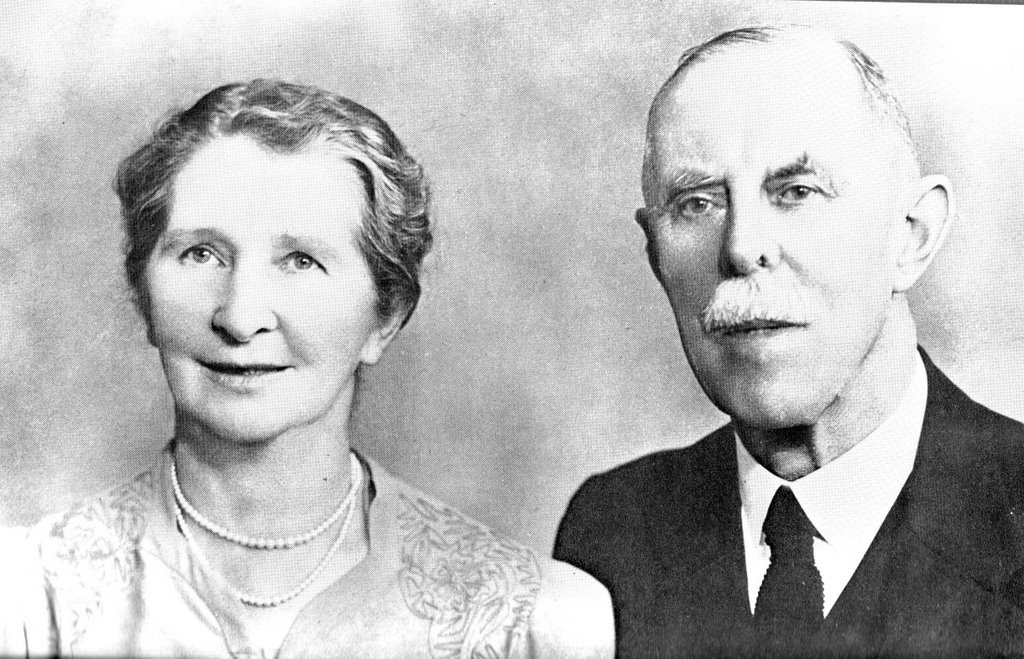
Image: ‘Receiving a photographic imprint.' A photographic imprint of Stella and Frank Boreham

[1] David Tacey, Re-enchantment: The new Australian spirituality (Sydney: HarperCollins, 2000), 241.
[2] Frank Fletcher, ‘Towards a contemporary Australian retrieval of sacral imagination and sacramentality’, Pacifica 13 (2000): 1.
[3] A Dillard, Pilgrim at Tinker creek, 35.

Saturday, December 02, 2006

Boreham on Beauty in the Unexpected

Romance of Monotony
In the tradition of Joseph Turner and William Blake, F W Boreham wrote many editorials on the ordinary experience of discovering beauty and truth in the unexpected. As Turner in his painting ‘Rain, steam and speed’ portrayed beauty in a train rushing through rain, Boreham perceived fascination in prosaic sources, which included “the romance of monotony”,[1] “the romance of the bank”[2] and “the evolution of pockets”.[3] Such themes were mined for truth but the unexpected and unlikely topics were also designed to arrest attention and add to Boreham’s ‘surprise power’. Other titles which caught the interest of readers and reviewers included the editorials ‘Wet paint’,[4] ‘Second wind’,[5] ‘The fly in the ointment’,[6] ‘If’,[7] ‘Black sheep’[8] and ‘Keep off the grass’.[9] Additional stylistic devices included the use of graphic statements as in his definition of tea as “liquid prophecy”[10] or his description of an acorn as “a pocket edition of a forest”.[11]

Appreciator of Small Things
At times, Dr. Boreham’s treatment of ordinary things seemed unexpected because the subjects were quaint or even trivial. In the tradition of the early French essayist Michel de Montaigne,[12] who wrote about ‘Sleeping’, ‘Thumbs’ and ‘Smells and Odours’, Boreham addressed seemingly unimportant subjects such as ‘Left-handedness’,[13] ‘Hats’,[14] ‘The man in the moon’,[15] ‘Smoke’,[16] ‘Scarecrows’,[17] ‘Babies’,[18] ‘Boots and shoes’[19] and ‘Sugar and spice’.[20] This feature of Boreham’s editorial writing saturated his life and wider work. His contemporary, J J North, identified this characteristic when describing Boreham: “From the beginning of his career he has been a tremendous appreciator of small things. He was never guilty of despising them. He came from London to Mosgiel. Mosgiel was, if we may be forgiven the pun, saved from the moss by a solitary woollen mill. Otherwise it belonged to the cow and the plough and to the pleasant murmur of the bees”.[21]

In an assessment of the early part of his career, North described the Boreham trademark of presenting surprising and peculiar topics: “It was something to hear a man fresh from London town who would preach on the inner meaning of test matches and hitting your middle wicket, who, as the Boer war came on, could give a series on David’s valiant men who slew bears in pits on snowy days”.[22]

Trivial but Treasures
Frank Boreham was aware that others sometimes found his subjects preposterous yet upon reviewing his life he found justification for his style when declaring: “The things that most readily rush to mind are things that, at first blush, seem ridiculously trivial ... and yet the fact that the mind insists on treasuring such trifles, letting slip many incidents of greater apparent importance, may indicate that memory has a more just standard of values than we sometimes fancy”.[23]

Geoff Pound

Image: Hitting your middle wicket.

[1] F W Boreham, Mercury, 24 November 1917.
[2] Boreham, Mercury, 30 September 1922.
[3] Boreham, Mercury, 20 August 1921.
[4] Boreham, Mercury, 2 April 1938.
[5] Boreham, Mercury, 31 May 1936.
[6] Boreham, Mercury, 5 December 1931.
[7] Boreham, Mercury, 2 June 1923.
[8] Boreham, Mercury, 2 August 1924.
[9] Boreham, Mercury, 28 April 1945.
[10] Boreham, Mercury, 31 October 1936.
[11] F W Boreham, The crystal pointers (London: The Epworth Press, 1925), 217.
[12] Michel de Montaigne, The essayes of Michael Lord of Montaigne, trans. John Florio (London: George Routledge & Sons, Ltd., 1891), 134-135, 352, 156-157.
[13] F W Boreham, The silver shadow (London: The Epworth Press, 1919), 255.
[14] Boreham, Mercury, 31 October 1931.
[15] Boreham, Mercury, 31 July 1954.
[16] Boreham, Mercury, 4 November 1939.
[17] Boreham, Mercury, 29 May 1920.
[18] Boreham, Mercury, 30 April 1955.
[19] Boreham, Mercury, 10 July 1954.
[20] Boreham, Mercury, 13 March 1954.
[21] J J North, Australian Baptist, 16 February 1926.
[22] J J North, New Zealand Baptist, April 1943.
[23] F W Boreham, My pilgrimage (London: The Epworth Press, 1940), 11-12.

Friday, December 01, 2006

Boreham on the Romance of the Everyday

Profundity in Postage Stamps
In December 1926, F W Boreham commenced an editorial with the question, “What can be more common-place than a postage stamp?”[1] This was typical of the style of many Boreham editorials in which he wrote about an object or issue that was common-place and, building on the familiar, urged readers to consider something more profound. Such articles included the titles, ‘The art of holiday making’,[2] ‘Going back to school’,[3] ‘Harvest time’,[4] ‘Fireside fellowship’,[5] ‘Drinking tea’,[6] ‘The weather’,[7] ‘Letter writing’[8] and ‘What’s in a name?’[9]

So Wealthy a Romance
In writing about the ordinary and the everyday, an enduring theme of F W Boreham was the notion of ‘romance’. He wrote that in everyday objects and even in the “life of the ordinary man there is a nugget of romance”.[10] In this statement, Boreham was inferring that romance was an element that gave special value to something or someone that might otherwise have been overlooked. Continuing with this imagery, he wrote variously of “discovering so wealthy a romance in the unfolding of Spring”,[11] the capacity of a crisis to “impart ... romance”[12] and a writer who “went on investing reality with romance”.[13]

Pregnant but Concealed
Boreham wrote that the romance of the everyday was a quality that was usually not immediately apparent. This idea was consistent with the notions in which the truth enclosed within nature’s “peels and pods”, Dickens’ “philosophy of envelopes” and Carlyle’s “concept of clothing”, provided variations on the idea of keeping the romance temporarily concealed.[14] Boreham inferred that there was a human responsibility to mine for truths in order to procure ‘a nugget of romance’. In another editorial, Boreham alluded to brown paper and string being “pregnant with romance”,[15] thus hinting at the way romance, while hidden within the ordinary, had a life within that was moving towards visibility.

Irresistible Fascination
Boreham believed people had an “irresistible fascination for all tales of romance”[16] and a longing to see “fresh phases of ... romance”,[17] yet he recognised that this sense had to be “awakened” and continually discovered.[18] While Boreham wrote about some things in which romance was widely anticipated, as in “the romance of the throne”[19] or the “romance of places unexplored”,[20] he sought to cultivate a pursuit of romance in objects where it was least expected. In this regard, Boreham wrote editorials on such unlikely topics as “the romance of a recluse”,[21] “the romance of a dictionary”[22] and “the romance of obscurity”.[23]

Halo of Surprise
The editorials that addressed the romance of everyday things exemplified ways that Boreham encouraged a way of looking through an object. In writing about the everyday experience of work, he admitted his inability to express his vision adequately when speaking of the “indefinable atmosphere of romance”.[24] It seemed for Boreham that the awareness of romance evoked an experience of wonder and mystery and was triggered by something that was seen. This thought arose from his frequent use of visual images in which he wrote of “an atmosphere of romance”, “a gleam of romance”[25] or casting “a halo of romance”.[26] Contemporary author, Annie Dillard, noted the emotional factor in such an experience when “although it comes to those who wait for it, it is always, even to the most practised and adept, a gift and a total surprise”.[27]

Illuminated by Radiance
In the foreword to one of his books, Boreham described how, walking along one day and noticing the beautiful effect of the glance of the sun on some rugged rocks, he arrived at the title of his latest book, The fiery crags. In explaining the purpose of the essays, he said, “I have simply attempted to communicate to these pages a few impressions gathered in restful moments when life’s commonplaces were illumined by the radiance that sometimes streams upon this world from worlds above”.[28] In this revealing title and commentary that conveyed another visual image illustrating romance in the everyday, Boreham alluded to further significant convictions.

While it has been noted that the discovery of romance must be worked at like a miner or pursued intentionally like an explorer, Boreham’s experience of momentarily seeing the fiery crags highlighted the elusive nature of romance which cannot be manufactured but may flash in the eyes of those with the patience to see. His mood for welcoming such an elusive experience was reflective rather than rational, contemplative more than cerebral. In this foreword to his book of religious essays, Boreham hinted at the spirituality of the experience and its divine source.

Geoff Pound

Image: Parable of the Postage Stamp

[1] F W Boreham, Mercury, 11 December 1926.
[2] Boreham, Mercury, 9 January 1915.
[3] Boreham, Mercury, 15 January 1916.
[4] Boreham, Mercury, 18 December 1928.
[5] Boreham, Mercury, 22 June 1957.
[6] Boreham, Mercury, 6 December 1930.
[7] Boreham, Mercury, 6 March 1926.
[8] Boreham, Mercury, 24 September 1927.
[9] Boreham, Mercury, 1 September 1917.
[10] Boreham, Mercury, 9 December 1933.
[11] Boreham, Mercury, 29 December 1945.
[12] Boreham, Age, 26 February 1949.
[13] Boreham, Mercury, 20 August 1927.
[14] Boreham, Age, 4 September 1954.
[15] Boreham, Mercury, 22 December 1956.
[16] Boreham, Mercury, 29 December 1945.
[17] Boreham, Mercury, 4 March 1944.
[18] Boreham, Mercury, 26 May 1956.
[19] Boreham, Mercury, 18 April 1925.
[20] Boreham, Mercury, 4 February 1939.
[21] Boreham, Mercury, 12 July 1952.
[22] Boreham, Mercury, 15 May 1932.
[23] Boreham, Mercury, 9 December 1933.
[24] Boreham, Age, 26 February 1949.
[25] Boreham, Age, 29 March 1941.
[26] Boreham, Age, 3 January 1953.
[27] Annie Dillard, Pilgrim at Tinker Creek (New York: Perennial Classics, 1985), 35.
[28] F W Boreham, The fiery crags, 7-8.

Thursday, November 30, 2006

Boreham on Telescopic Sight

New Kind of Looking
In what appeared to be a contra-dictory idea to the call to look at the ordinary or real life, F W Boreham advanced his thoughts on a new kind of looking. He illustrated this approach by picturing the way one uses a telescope—by looking through it rather than at it.

He said: “There are two ways of seeing every thing .… You may see it sacerdotally—seeing, that is to say, the thing itself, but seeing nothing through it or beyond it. Or you may see it sacramentally—scarcely seeing the thing itself, but seeing a world of wonder as you look through it. You never see a thing by looking at it; you only see a thing by looking through it”.[1]

Looking Through
Boreham then applied the telescopic manner of looking to other spheres. Rather than looking at nature, Boreham suggested that viewers miss the best that nature offers if they do not see through nature. Turning the readers’ attention to the Biblical revelation, Boreham said that “unless a man has looked through its phraseology, and caught the vision that it was designed to reveal, he has, in spite of everything, read the wondrous passages in vain”.[2]

Pointing to a Greater Vista
Boreham also related the principle of the telescope to the church in stating that it fulfils its mission, not by attracting attention to itself, but by pointing towards a greater vista. He concluded by affirming, “Life’s richest revelations come, not by looking at things, but by looking through them”.[3]

Geoff Pound

Image: ‘looking through a telescope.’


[1] F W Boreham, The tide comes in (London: The Epworth Press, 1958), 63.
[2] Boreham, The tide comes in, 65.
[3] Boreham, The tide comes in, 65.

Wednesday, November 29, 2006

Boreham on Uncluttering the Vision

Simplify!
In F W Boreham’s articles on William Blake he revealed that simplicity was an important strand in Boreham’s own thinking as it relates to seeing the value of ordinary things. He appeared to be echoing Henry D Thoreau’s chorus, “Simplify, simplify”,[1] and his frequent announcement of this theme was one of the indications of Boreham’s drift towards Quakerism.[2] He wrote of the despotic nature of possessions in which “the luxuries of one day become the indispensabilities of the next”, resulting in a blunting of one’s vision toward the greatest luxuries, which he contended were the least expensive.[3]

Leave Luxuries Behind
In conquering the “tyranny of disguise”, Boreham invited his readers to experience “the luxury of renouncing luxuries”, asking, “Is it not intensely significant that when we wholeheartedly abandon ourselves to the real pleasures of life, we leave our so-called luxuries behind us?” [4]These thoughts reveal the motivation for his abandonment of clutter indicated in such things as his determination not to drive a car, use a typewriter, install a telephone or watch television.

Benefits in the Turmoil
In Boreham’s judgement, one of the positive benefits of the international wars and the Depression was the way they brought an enforced renunciation of pleasure and a simplification of life. Writing about this revision of values, Boreham said: “In days like these, in which many of the ordinary commodities of life are rationed, and in which we are asked, for the sake of the starving millions of Europe, to curb our appetites and to impose upon ourselves a voluntary austerity, we learn with astonishment how many things we can do without”.[5]

Time for Overhaul
In a variety of editorials on this physical and mental overhaul, Boreham observed that the days of rationing and deprivation had resulted in people discovering “the inestimable value of a few simple and basic delights that are ordinarily overlooked”,[6] and the recognition that:

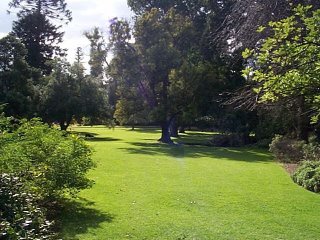
“Whatever losses we sustain, nothing can deprive us of the brightness of the daylight, the fragrance of gardens, the grace of velvety lawns, the glow of sunset, the love of good women, the laughter of little children, the loyalty of friendship, the companionship of books, the strains of stirring music, the beauty of noble paintings—the things that have represented the satisfactions of humanity since our little race began”.[7]

Geoff Pound

Image: ‘the grace of velvety lawns’.

[1] Henry D Thoreau, Walden, ed. J Lyndon Shanley (Princeton: Princeton University Press, 1971), 91.
[2] Rufus M Jones, The faith and practice of the Quakers (London: Methuen & Co Ltd, 1927), 90.
[3] F W Boreham, Mercury, 2 March 1957.
[4] Boreham, Mercury, 2 March 1957.
[5] Boreham, Mercury, 28 February 1917; Mercury, 7 September 1929; Mercury, 15 November 1941.
[6] Boreham, Mercury, 23 October 1943; Age, 6 April 1946.
[7] Boreham, Mercury, 17 May 1952.

Tuesday, November 28, 2006

Boreham on Looking at the Ordinary

Become an Explorer
F W Boreham offered a corrective to blindness or fragmented vision when saying, “To see life steadily and to see it whole, a man must become an explorer, determined to discover and to chart these spacious continents of human experience that have heretofore eluded him”.[1] He understood that the setting of one’s focus on the spacious continent of ordinary or ‘real’ life was the starting point for the sharpening of human vision.

Boreham called representatives of all spheres to a new consideration of ordinary things. In 1913, he detected that politicians and educationalists were grappling with the detachment of learning from life and he added his voice to the call for a return to “establishing some vital relationship between the teaching of the schools and the throbbing actualities of real life”.[2]

Literary Litmus Test
In the field of literature, Boreham declared, “The books we like best are the books that portray life as we ourselves have seen it”.[3] Judging that others shared this same delight, especially in autobiography and biography,[4] he pleaded that “we badly need a few biographies with bad endings”.[5] Boreham supported John Galsworthy’s litmus test for truthful character depiction in the question, “Do men and women in real life talk and dress and behave like this?” [6]Boreham added: “Literature, so far as his work was concerned, should be a mirror to the face of life. His men and women should be the sort of men and women whom one meets in banks and shops and restaurants and picture-shows and railway trains—ordinary but interesting, commonplace but lovable”.[7]

Philosophy of Life
Boreham’s pleaded for connecting historical study to life and this call was extended to other disciplines including the subject of philosophy. In 1954, in an editorial in which Boreham traced ‘The evolution of thought’, he wrote approvingly that philosophy showed signs of turning away from “nebulous theories, abstract propositions, mystifying hypotheses, and occult disquisitions” towards a better and more intelligible condition. In so doing, he observed: “Philosophy’s most monumental discovery, as Maeterlinck[8] pointed out, was the discovery that its primary and particular concern is with life itself. There is nothing in the archives of the past from which philosophy may not learn, nothing in the life of the present that philosophy can afford to ignore; and nothing in the sensational developments of the boundless future into which philosophy, with infinite profit both to itself and humanity, cannot pour its priceless hoard”.[9]

Life is the Theatre
Boreham’s claim, that ordinary life was the raw material upon which all academic research must draw, was restated in reference to philosophy: “Life is the stuff from which the philosopher must weave his magic web. Life is the subject of his investigation; life is the field of his activity; life is the theatre of his service”.[10]

Charm of Reality
Boreham saw himself as voicing the desires of ordinary people for ordinary things when saying, “The vital principle in window-dressing is the principle that the articles displayed in the window shall adequately and enticingly represent the goods in stock”.[11] Throughout his career Boreham perceived a gradual adjustment of the public vision and expressed his delight in claiming that “the outstanding discovery of the twentieth century is the discovery of the charm of reality”.[12]

Geoff Pound

Image: Window Dressing

[1] F W Boreham, Mercury, 11 December 1954.
[2] Boreham, Mercury, 25 October 1913.
[3] Boreham, Mercury, 12 September 1931.
[4] Boreham, Mercury, 18 February 1933.
[5] F W Boreham, Wisps of wildfire (London: The Epworth Press, 1924), 183.
[6] Boreham, Wisps of wildfire, 183.
[7] Boreham, Mercury, 14 August 1948.
[8] Maurice Maeterlinck (1862-1949) was a Belgian playwright, poet, storywriter and essayist who lived most of his life in France and won the Nobel Prize for literature in 1911. More information about Maeterlinck can be found in Something about the author Vol. 66 ed Donna Olendorf (Detroit: Gale Research Inc., 1991), 154-160.
[9] Boreham, Mercury, 9 January 1954.
[10] Boreham, Mercury, 9 January 1954.
[11] Boreham, Mercury, 2 January 1932.
[12] Boreham, Mercury, 12 September 1931; Age, 14 September 1946.

Monday, November 27, 2006

Boreham on Blindness

Acknowledging Blindness
In an article entitled ‘The blind spot’, F W Boreham lamented that “the things we see are as nothing compared with the things that we miss”.[1] In writing about the prevalent blindness to reality in ordinary things, Boreham chastised certain individuals who, in “luxuriating among the cowslips” failed to appreciate the beauty under their noses.[2] He also criticised those who declined “to recognise that the mud of life is jingling with jewels”.[3] In alerting readers to the human condition, Boreham was quick to admit his own blindness for, in 1928, the year when he first had occasion to wear glasses, he wrote, “I am sadly aware of a dimness of sight that no oculist can relieve”.[4]

Aversion to Artificiality
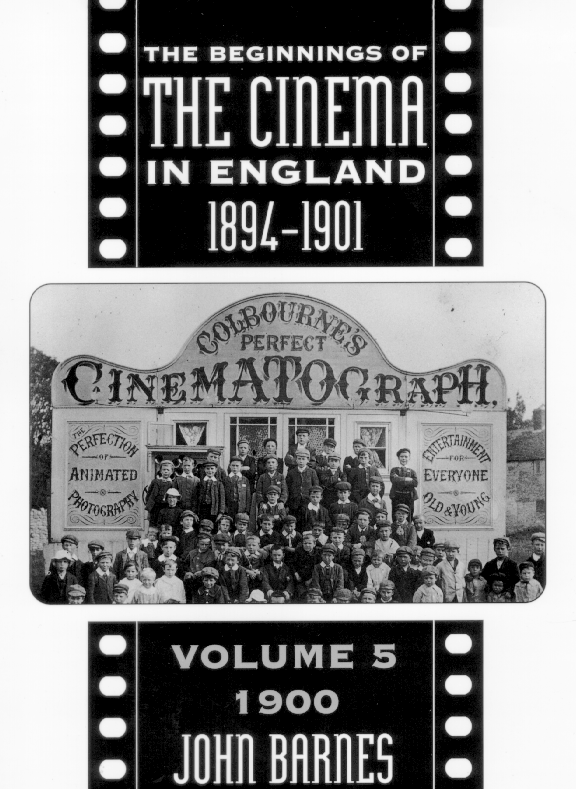
Boreham perceived that a symptom of the prevailing blindness in society was the growing popularity of artificial things. His aversion to the artificial (also a theme of Richard Jeffries)[5] was focused on shows about which he said, “very few things look their best when on exhibition”.[6] However, it was the artificiality of life portrayed by the cinema that received Boreham’s harshest criticism. Describing an evening at the cinema, sometime prior to 1915, he observed that the audience was full of admiration for the film’s lifelikeness but in Boreham’s assessment it was “a very stilted, flickery kind of affair”. Reflecting later, Boreham said, “The next day I saw the real thing .… It is a mad world truly! We go into ecstasies over the scene in the cinema; the scene as God paints it only makes us yawn”.[7]

Peril of Familiarity
An aspect of human vision that Boreham believed could be corrected was the blindness that came through familiarity. While he said of his holiday location at Wedge Bay, “The local inhabitants have never awakened to the charms of the beauty-spots around them”, he also confessed, “I saw more of London and formed a more just appreciation of its grandeurs during a brief visit to the Homeland from New Zealand than during all the years of my residence in the world’s metropolis”.[8] Boreham’s editorials on this theme aimed at recovering what the art critic, John Ruskin, described as the “innocence of the eye”.[9] In his writings, Boreham sought to take his readers back to a place or an occurrence with which they were familiar and describe it with a reality and in a way that enabled them to feel that they were seeing it for the first time.

Geoff Pound

Image: ‘A flickery kind of affair…’

[1] Boreham, Mercury, 7 February 1928.
[2] F W Boreham, The other side of the hill (London: The Epworth Press, 1917), 130.
[3] Boreham, Mercury, 6 July 1947.
[4] F W Boreham, The fiery crags (London: The Epworth Press, 1928), 251.
[5] Richard Jeffries, Field and hedgerow (London: Longmans, Green, & Co., 1892), 148.
[6] F W Boreham, Mountains in the mist (London: The Epworth Press, 1914), 141.
[7] F W Boreham, The golden milestone (London: The Epworth Press, 1915), 94.
[8] Boreham, The golden milestone, 109.
[9] John Ruskin, The genius of John Ruskin: Selections from his writings, ed. John D Rosenberg (George Allen & Unwin Ltd, 1963), 12.

Sunday, November 26, 2006

Boreham and a New Way of Looking

New Way of Looking
We have been looking at F W Boreham’s call for the sphere of ordinary life to become a primary focus for his reader’s study and we have considered this theme in reference to selected representatives who inspired him: Dickens, Turner, Blake and Jesus.

Attention is now directed to insights and illustrations from Boreham’s editorials that develop this theme and reflect on how his readers might develop their vision for the ordinary. What were the simple, common, everyday things and events that Boreham addressed? How did he advocate that they be seen and studied and why?

See For Yourself
In one of his many editorials on the theme of seeing, F W Boreham claimed in 1930 that “millions of people have gone through life seeing a blur” and he concluded by saying “the art of life lies in every man seeing clearly for himself”.[1] Boreham’s convictions about ‘seeing’ are reminiscent of the French theologian and scientist Pierre Teilhard de Chardin who, in 1938, writing at great length on the importance of ‘seeing’, concluded:

“We might say that the whole of life lies in that verb. That, doubtless, is why the history of the living world can be summarized as the elaboration of ever more perfect eyes within a cosmos in which there is always more to be seen .… If to see is really to become more, if vision is really fuller being, then we should look closely at man in order to increase our capacity to live”.[2]

While both writers elaborated on this theme in different ways and in dissimilar literary styles, they were united in their passion to convince their readers of developing one’s vision. F W Boreham claimed that the realisation of one’s full expression would come by ceasing to see through other peoples’ spectacles and looking through one’s own eyes.

Geoff Pound

Image: Eyes to See

[1] F W Boreham, Mercury, 11 January 1930.
[2] Pierre Teilhard de Chardin, The phenomenon of man (London: Collins, 1938-40), 31-32.