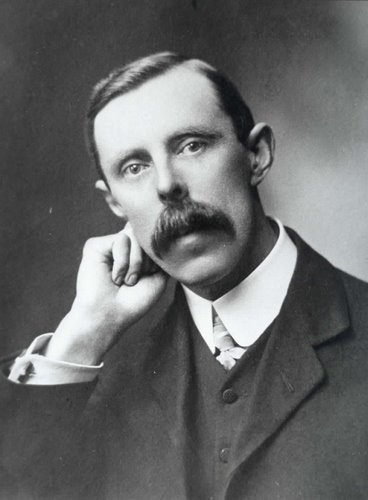
Frank William Boreham 1871-1959

Frank William Boreham 1871-1959
A photo F W Boreham took of himself in 1911

Tuesday, April 22, 2008

Geoff Pound on the Significance of 2009

Important Anniversary
F W Boreham once wrote, “When a man has been fifty years in his grave it ought to be possible to review his work dispassionately. The sentiment that is born of human fondness has by that time evaporated; and the prejudices that arise from personal animosity have died down.”

Next year (2009) it will be fifty years since the death of F W Boreham and for many reasons it will be an important year to reflect on his contribution and distil the insightful lessons from his life.

Teaching and Preaching
I am booking in dates now for preaching and teaching appointments in different countries in 2009 and I wanted to see if you (your seminary, church, conference organizers etc.) were interested.

This might include:

* A one off lecture or after dinner talk about F W Boreham (with his books available for purchase afterwards).

* Several lectures, perhaps for pastors and leaders at an annual conference, which take a Boreham theme. For instance, I have been working on a series of lectures to inspire effective preaching and communication in various media with the title, ‘Fancy a Preacher Named Bore-ham: The Communication Secrets of F W Boreham’.

* I also have spoken on Boreham and His commitment to Public Theology—getting the conversation about God out of the churches and engaging with the important issues that are facing society.

* I am not confined to Boreham themes as I regularly lecture in different parts of the world especially on Leadership (Getting a Vision for your organization, Leading into Constructive Change, Working constructively through conflict) and on Mission (examining the many dimensions that make up the mission of Jesus Christ).

* I am also keen to share something of the vision and opportunities of service through Theologians Without Borders and to speak about Creative Things that Are Happening in Theological Education and how this Creativity can be Engendered in ministry and in the seminary.

RSVP
If you have anything from a vague idea to a definitive invitation, do let me know at the earliest time so I can coordinate the different appointments.

Dr. Geoff Pound
geoffpound@yahoo.com.au


Images: Frank William Boreham; Geoff Pound

Monday, April 07, 2008

Boreham on Fate, Destiny and Providence

I was reading the other day Commander J W Gambier’s Links in my Life, and was amused at the curious inconsistency which led the author first to sneer at Providence and then to bear striking witness to its fidelity.

As a young fellow the Commander came to Australia and worked on a way-back station, but he had soon had enough. ‘I was to try what fortune could do for a poor man; but I believed in personal endeavour and the recognition of it by Providence. I did not know Providence.'
‘I did not know Providence!’ sneers our young bushman….

But on the very same page that contains the sneer Commander Gambler tells this story. When he was leaving England the old cabman who drove him to the station said to him, ‘If you see my son Tom in Australia, ask him to write home and tell us how he's getting on.’ ‘I explained,’ the Commander tells us, ‘that Australia was a big country, and asked him if he had any idea of the name of the place his son had gone to. He had not.’

As soon as Commander Gambier arrived at Newcastle, in New South Wales, he met an exceptionally ragged ostler. As the ostler handed him his horse, Mr. Gambler felt an irresistible though inexplicable conviction that this was the old cabman's son. He felt absolutely sure of it; so he said:
‘Your name is Fowles, isn't it?’
He looked amazed, and seemed to think that his questioner had some special reason for asking him, and was at first disinclined to answer. But Mr. Gambier pressed him and said, ‘Your father, the Cheltenham cab-driver, asked me to look you up.’

He then admitted that he was the man, and Mr. Gambier urged him to write to his father. All this on the selfsame page as the ugly sneer about Providence!

And a dozen pages farther on I came upon a still more striking story. Commander Gambier was very unfortunate, very homesick, and very miserable in Australia. He could not make up his mind whether to stay here or return to England. ‘At last,’ he says, ‘I resolved to leave it to fate.’ The only difference that I can discover between the 'Providence' whom Commander Gambier could not trust, and the `fate' to which he was prepared to submit all his fortunes, is that the former is spelt with a capital letter and the latter with a small one. But to the story.

‘On the road where I stood was a small bush grog shop, and the coaches pulled up here to refresh the ever-thirsty bush traveller. At this spot the up-country and down-country coaches met, and I resolved that I would get into whichever came in first, leaving it to destiny to settle.

Looking down the long, straight track over which the up-country coach must come, I saw a cloud of dust, and well can I remember the curious sensation I had that I was about to turn my back upon England for ever! But in the other direction a belt of scrub hid the view, the road making a sharp turn. And then, almost simultaneously, I heard a loud crack of a whip, and round this corner, at full gallop, came the down coach, pulling up at the shanty not three minutes before the other! I felt like a man reprieved, for my heart was really set on going home; and I jumped up into the down coach with a great sense of relief!’ And thus Mr. Gambier returned to England, became a Commander in the British Navy, and one of the most distinguished ornaments of the service. He sneers at 'Providence,' yet trusts to `fate,' and leaves everything to `destiny’!”

Boreham concludes that regardless of his sneering and confusion, Gambier is being guided by the Hand that longs to lead us home.

F W Boreham, ‘When the Cows Come Home’, Mushrooms on the Moor (London: Charles H Kelly, 1915), 205-208.

Image: “I jumped up into the down coach with a great sense of relief!”

Monday, March 31, 2008

Boreham on Children and Simplicity

In our last posting we heard F W Boreham talk of the importance of children and his indebtedness to children in his preaching ministry—“The children in the congregation are my salvation.” This new excerpt is from the same sermon and he extends the themes of children and simplicity in good communication:

Style of the Masters
Can anyone imagine John Wesley talking to his summer-evening crowd at Dublin about ‘nullifidian,’ or quoting German?

I will say nothing of the Galilean preacher. The common people heard Him gladly. He was so simple and therefore so sublime.

A little child, especially a little child of a distinctly restless and mischievous propensity, is really a great help to a minister, and it is a shame to deprive the good man of such assistance. It is only by such help that some of us can hope to approximate to real sublimity.

Keep Your Eyes on the Waiters
Lord Beaconsfield used to say that, in making after-dinner speeches, he kept his eye on the waiters. If they were unmoved, he knew that he was in the realms of mediocrity. But when they grew excited and waved their napkins, he knew that he was getting home.

Pick out the Stupidest
Lord Cockburn, who was for some time Lord Chief Justice of Great Britain, when asked for the secret of his extraordinary success at the bar, replied sagely, ‘When I was addressing a jury, I invariably picked out the stupidest-looking fellow of the lot, and addressed myself specially to him—for this good reason: I knew that if I convinced him I should be sure to carry all the rest!’

Speak to the Waiters
Dr. Thomas Guthrie, in addressing gatherings of ministers, used to tell this story of Lord Cockburn with immense relish, and earnestly commended its philosophy to their consideration. I was reading the other day that Dr. Boyd Carpenter, formerly Bishop of Ripon and now Canon of Westminster, on being asked if he felt nervous when preaching before Queen Victoria, replied, ‘I never address the Queen at all. I know there will be present the Queen, the Princes, the household, and the servants down to the scullery-maid, and I preach to the scullery-maid.’

Little children do not attend political dinners such as Lord Beaconsfield adorned; nor Courts of Justice such as Lord Cockburn addressed; nor Royal chapels like that in which Dr. Boyd Carpenter officiated. And, in the absence of the children, the only chance of reaching sublimity that offered itself to these unhappy orators lay in making good use of the waiter, the stupid juryman, and the scullery-maid…

Discuss Manuscripts with Your Students
Robert Louis Stevenson knew what he was doing when he discussed every sentence of Treasure Island with his schoolboy step-son before giving it its final form. It was by that wise artifice that one of the greatest stories in our language came to be written…

Expressing Love with Simplicity
We do not make love in the language of the psychologist; we make love in the language of the little child. When life approaches to sublimity, it always expresses itself with simplicity. In the depth of mortal anguish, or at the climax of human joy, we do not use a grandiloquent and incomprehensible phraseology. We talk in monosyllables. As we grow old, and draw near to the gates of the grave, we become more and more simple.

Perfect Simplicity
In his declining years, John Newton wrote, ‘When I was young I was sure of many things. There are only two things of which I am sure now; one is that I am a miserable sinner, and the other that Christ is an all-sufficient Saviour.’ What is this but the soul garbing itself in the most perfect simplicities as the only fitting raiment in which it can greet the everlasting sublimities?

Sublimity and Simplicity
‘Here are sublimity and simplicity together!’ exclaimed John Wesley on that hot July night at Dublin. ‘How can any one that would speak as the oracles of God use harder words than are to be found here? By this I advise every young preacher to form his style!’

Aspiring to be Great
‘He who aspires to be a great poet—as sublime as Milton—must first become a little child!’ declares the greatest of all littérateurs.

‘Whosoever shall humble himself as this little child, the same is greatest in the kingdom of heaven!’ says the Master Himself, taking a little child and setting him in the midst of them.

‘Pity my simplicity!’ pleads this little thing with its soft arms round my neck.
‘Give me that simplicity!’ say I.

F W Boreham, ‘Pity My Simplicity!’ Mushrooms on the Moor (London: Charles H Kelly, 1915), 153-157.

Image: “taking a little child…”

Sunday, March 30, 2008

Boreham on Children in Church

I am told that, away beyond the Never-Never ranges [remote areas of Australian outback] there is a church from which the children are excluded before the sermon begins.

I wish my informant had not told me of its existence. I am not often troubled with nightmare, my supper being quite a frugal affair.

But just occasionally I find myself a victim of the terror by night. And when I am mercifully awakened, and asked why I am gasping so horribly and perspiring so freely. I have to confess that I was dreaming that I had somehow become the minister of that childless congregation.

As is usual after nightmare, I look round with a sense of inexpressible thankfulness on discovering that it was only a horrid dream. An appointment to such a charge would be to me a most fearsome and terrifying prospect. I could not trust myself.

In a way, I envy the man who can hold his own under such circumstances. His transcendent powers enable him to preserve his sturdy humanness of character, his charming simplicity of diction, his graphic picturesqueness of phrase, and his exquisite winsomeness of behaviour without the extraneous assistance which the children render to some of us.

But I could not do it. I should go all to pieces. And so, when I dream that I have entered a pulpit from which I can survey no roguish young faces and mischievous wide-open eyes, I fancy I am ruined and undone. I watch with consternation as the little people file out during the hymn before the sermon, and I know that the sermon is doomed. The children in the congregation are my salvation.

F W Boreham, ‘Pity My Simplicity!’ Mushrooms on the Moor (London: Charles H Kelly, 1915), 151-152.

Image: “When I dream that I have entered a pulpit from which I can survey no roguish young faces and mischievous wide-open eyes, I fancy I am ruined and undone.”

Monday, March 17, 2008

Boreham on the Rabbi and the Wine Glass Breaking Wedding Custom

I was chatting the other day with a Jewish rabbi. We were exchanging experiences and somehow the conversation drifted round to the marriage service.

‘I have heard,’ I said, ‘that, at a Jewish wedding, a wine-glass is broken as part of the symbolism of the ceremony. Is that a fact?’

‘Of course it is,’ he replied. ‘We hold aloft a wine-glass; let it fall and be shivered to atoms; and then, pointing to its fragments, we exhort the young couple to jealously guard the sacred relationship into which they have entered, since, once it is broken, it can never be restored.’

F W Boreham, ‘Jed Smith’ Shadows on the Wall (London: The Epworth Press), 200-201.

Image: Jewish groom breaking wine glass with his shoe.

Sunday, March 16, 2008

Boreham on Strength of Character

In my college days I used to go down to a quaint little English village for the weekend in order to conduct services in the village chapel on Sunday. I was always entertained by a little old lady whose face haunts me still. It was so very human, and so very wise, and withal so very beautiful; and the white ringlets on either side completed a perfect picture. She dwelt in a modest little cottage on top of the hill. It was a queer, tumble-down old place with crooked rafters and crazy lattice windows. Roses and honeysuckle clambered all over the porch, straggled along the walls, and even crept under the eaves into the cottage itself. The thing that impressed me when I first went was the extraordinary number of old Bessie's visitors.

On Saturday nights they came one after another, young men and sedate matrons, old men and tripping maidens, and each desired to see her alone. She was very old; she had known hunger and poverty; the deeply furrowed brow told of long and bitter trouble. She was a great sufferer, too, and daily wrestled with her pitiless disease. But, like the sturdier of the poplars by my gate, she had gathered into herself the force of all the cruel winds that had beaten so savagely upon her. And the result was that her own character had become so strong and so upright and so beautiful that she was recognized as the high-priestess of that English countryside, and every man and maiden who needed counsel or succour made a beaten path to her open door.

F W Boreham, ‘Gog and Magog’, Mushrooms on the Moor (London: Charles H Kelly, 1915), 136-137.

Image: The Populars by Paul Cezanne. “Like the sturdier of the poplars by my gate, she had gathered into herself the force of all the cruel winds that had beaten so savagely upon her.”

Boreham on the Value of Struggle

Was it not Alfred Russel Wallace who tried to help an emperor-moth, and only harmed it by his ill-considered ministry?

He came upon the creature beating its wings and struggling wildly to force its passage through the narrow neck of its cocoon. He admired its fine proportions, eight inches from the tip of one wing to the tip of the other, and thought it a pity that so handsome a creature should be subjected to so severe an ordeal. He therefore took out his lancet and slit the cocoon. The moth came out at once; but its glorious colors never developed. The soaring wings never expanded. The indescribable hues and tints and shades that should have adorned them never appeared. The moth crept moodily about; drooped perceptibly; and presently died.

The furious struggle with the cocoon was Nature's wise way of developing the splendid wings and of sending the vital fluids pulsing through the frame until every particle blushed with their beauty. The naturalist had saved the little creature from the struggle, but had unintentionally ruined and slain it in the process.

F W Boreham, Mushrooms on the Moor (London: Charles H Kelly, 1915), 135-136.

Image: Emperor Moth—“its glorious colors never developed.”

Monday, March 10, 2008

Boreham on the ABC

The following Boreham essay/sermon or a variation of it was included in a book entitled: Ian Macpherson (ed.), Sermons I Should Have Preached (London: The Epworth Press, 1964), 30-37.

I know a pastor who each year preaches a series of sermons entitled, ‘Sermons I would love to have written’. (This is a good idea especially over a holiday period or when the pastor needs to crib a little more time for other tasks). This collection is in a similar vein.

This sermon is an example of Boreham’s rich creativity and it is planned to be included in the forthcoming, ‘The Best Essays and Sermons of F. W. Boreham’. It is posted here by request.

A BOX OF BLOCKS

I
We had a birthday at our house today, and among the presents was a beautiful box of blocks. Each block represented one of the letters of the alphabet. As I saw them being arranged and rearranged upon the table, I fell a-thinking. For the alphabet has, in our time, come to its own. We go through life muttering an interminable and incomprehensible jargon of initials. We tack initials on to our names—fore and aft—and we like to see every one of them in its place. As soon as I open my eyes in the morning, the postman hands me a medley of circulars, postcards, and letters. One of them bids me attend the annual meeting of the S.P.C.A.; another reminds me of the monthly committee meeting of the M.C.M.; a third asks me to deliver an address at the P.S.A. In the afternoon I rush from an appointment at the Y.M.C.A. to speak on behalf of the W.C.T.U.; and then, having dropped in to pay my insurance premium at the A.M.P., I take the tram at the G.P.O., and ask the conductor to drop me at the A.B.C. I have accepted an invitation to a pleasant little function there—an invitation that is clearly marked R.S.V.P. And so on. There is no end to it. Life may be defined as a small amount of activity entirely surrounded by the letters of the alphabet.

Now the alphabet has a symbolism of its own. The man who coined the phrase 'as simple as A.B.C.' went mad; he went mad before he coined it. There are, it is true, a few simplicities sprinkled among the intricacies of this old world of ours; but the alphabet is not one of them. I protest that it is most unfair to call the alphabet simple. Nobody likes to be thought simple nowadays; see how frantically we preachers struggle to avoid any suspicion of the kind! Any person living would rather be called a sinner—or even a saint—than a simpleton. Why, then, affront the alphabet, which, as we have seen, is working a prodigious amount of overtime in our service, by applying to it so very opprobrious an epithet?

'As simple as A.B.C.,' indeed! Macaulay's schoolboy may not have been as omniscient as the historian would lead us to believe but he at least knew that there is nothing simple about the A.B.C. The alphabet is the hardest lesson that a child is called upon to learn. Latin roots, algebraic equations, and the Pons Asinorum are mere nothings in comparison. Grown-ups have short memories. They forget the stupendous difficulties that they surmounted in their earliest infancy; and their forgetfulness renders them pitiless and unsympathetic. Few of us recognize the strain in which a child's brain is involved when, for the first time, he confronts the alphabet. The whole thing is so arbitrary; there is no clue. In his noble essay on The Evolution of Language, Professor Henry Drummond shows that the alphabet is really a picture-gallery. 'First,' he says, `there was the onomatopoetic writing, the ideograph, the imitation of the actual object. This is the form we find in the Egyptian hieroglyphic. For a man a man is drawn, for a camel a camel, for a hut a hut. Then, to save time, the objects were drawn in shorthand—a couple of dashes for the limbs and one across, as in the Chinese, for a man; a square in the same language for a field; two strokes at an obtuse angle, suggesting the roof, for a house. To express further qualities, these abbreviated pictures were next compounded in ingenious ways. A man and a field together conveyed the idea of wealth; a roof and a woman represented home; and so on.' And thus, little by little, our letters were evolved. But the pictures have become so truncated, abbreviated, and emasculated, in the course of this evolutionary process, that a child, though notoriously fond of pictures, sees nothing fascinating in the letters of the alphabet. There is absolutely nothing about the first to suggest the sound A; nothing about the second to suggest the sound B. The whole thing is so incomprehensible; how can he ever hope to master it? An adult brain, introduced to such a conglomeration for the first time, would reel and stagger; is it any wonder that these childish cheeks get flushed or that the curly head turns at times very feverishly upon the pillow?

The sequence, too, is as baffling as the symbols. There is every reason why two should come between one and three; and that reason is so obvious that the tiniest tot in the class can appreciate it. But why must B come between A and C? There is no natural advance, as in the case of the numerals. The letter B is not a little more than the letter A, nor a little less than the letter C. Except through the operation of the law of association, which only weaves its spell with the passing of the years, there is nothing about A to suggest B, and nothing about B to suggest C. The combination is a rope of sand. Robert Moffat only realized the insuperable character of this difficulty when he attempted to teach the natives of Bechuanaland the English alphabet. Each of his dusky pupils brought to the task an observation that had been trained in the wilds, a brain that had been developed by the years, and an intelligence that had been matured by experience. They were not babies. Yet the alphabet proved too much for them. Why should A be A? and why should B be B? and why should the one follow the other? Mr. Moffat was on the point of abandoning his educational enterprise as hopeless, when one thick-lipped and woolly-headed genius suggested that he should teach them to sing it! At first blush the notion seemed preposterous. There are some things which, like Magna Charta and minute-books, cannot be set to music. Robert Moffat, however, was a Scotsman. The tune most familiar to his childhood came singing itself over and over in his brain; by the most freakish and fantastic conjunction of ideas it associated itself with the problem that was baffling him; and, before that day's sun had set, he had his Bechuana pupils roaring the alphabet to the tune of Auld Lang Syne!

So ABC
D E F G
H I J K L M
NOPQ
RSTU
VWXYZ

The rhyme and metre fitted perfectly. The natives were so delighted that they strolled about the village shouting the new song at the tops of their voices; and Mr. Moffat declares that daylight was stealing through his bedroom window before the weird unearthly yells at last subsided. I have often wondered whether, in a more civilized environment, any attempt has been made to impress the letters upon the mind in the same way.

II
The symbolism of the alphabet rises to a sudden grandeur, however, when it is enlisted in the service of revelation. Long, long ago a startled shepherd was ordered to visit the court of the mightiest of earthly potentates, and to address him on matters of state in the name of the Most High. ` And the Lord said unto Moses, Come now, therefore, and I will send thee unto Pharaoh, and I will send thee also unto the children of Israel. And Moses said unto God, Behold, when I am come unto them and shall say, The God of your fathers bath sent me unto you, and they shall say, What is His name? what shall I say unto them? And God said unto Moses, Thus shalt thou say unto the children of Israel, I AM hath sent me unto you!'
`I am—!'
`I am'—what?

For centuries and centuries that question stood unanswered; that sentence remained incomplete. It was a magnificent fragment. It stood like a monument that the sculptor had never lived to finish; like a poem that the poet, dying with his music in him, had left with its closing stanzas unsung. But the sculptor of that fragment was not dead; the singer of that song had not perished. For, behold, He liveth for evermore! And, in the fullness of time, He reappeared and filled in the gap that had so long stood blank.
`I am—!'
`I am'—what?
`I am—the Bread of Life!’ ‘I am—the Light of the World!' ‘I am—the Door!’ ‘I am—the True Vine!' 'I am—the Good Shepherd!' `I am—the Way, the Truth, and the Life!' `I am—the Resurrection and the Life!'

And when I come to the end of the Bible, to the last book of all, I find the series supplemented and completed.
`I am—Alpha and Omega!' `I am—A and Z!' `I am—the Alphabet!' The symbolism of which I have spoken can rise to no greater height than that. What, I wonder, can such symbolism symbolize? I take these birthday blocks that came to our house today and strew the letters on my study floor. So far as any spiritual significance is concerned, they seem as dead as the dry bones in Ezekiel's Valley. And yet `I am the Alphabet!' `Come,' I cry, with the prophet of the captivity, 'come from the Four Winds, O Breath, and breathe upon these slain that they may live! 'And the prayer has scarcely escaped my lips when lo, all the letters of the alphabet shine with a wondrous lustre and glow with a profound significance.

III
For see, the North Wind breathes upon these letters on the floor, and I see at once that they are symbols of the Inexhaustibility of Jesus! `I am Alpha and Omega!' `I am the Alphabet!' I have sometimes stood in one of our great public libraries. I have surveyed with astonishment the serried ranks of English literature. I have looked up, and, in tier above tier, gallery above gallery, shelf above shelf, the books climbed to the very roof, whilst, looking before me and behind me, they stretched as far as I could see. The catalogue containing the bare names of the books ran into several volumes. And yet the whole of this literature consists of these twenty-six letters on the floor arranged and rearranged in kaleidoscopic variety of juxtaposition. Which, I ask myself, is the greater—the literature or the alphabet? And I see at once that the alphabet is the greater because it is so inexhaustible. Literature is in its infancy. We shall produce greater poets than Shakespeare, greater novelists than Dickens, greater philosophers, historians, and humorists than any who have yet written. But they will draw upon the alphabet for every letter of every syllable of every word that they write. They may multiply our literature a million-million-fold; yet the alphabet will be as far from exhaustion when the last page is finished as it was before the first writer seized a pen.

`I am-the Alphabet!' He says. He means that He cannot be exhausted.

For the love of God is broader
Than the measures of Man's mind;
And the heart of the Eternal
Is most wonderfully kind.

The ages may draw upon His grace; the people of every nation and kindred and people and tongue—a multitude that no statistician can number—may kneel in contrition at His feet; His love is as great as His power and knows neither measure nor end. He is inexhaustible.

IV
And when the South Wind breathes upon these letters on the floor, I see at once that they are symbols of the Indispensability of Jesus. Literature, with all its hoarded wealth, is as inaccessible as the diamonds of the moon until I have mastered the alphabet. The alphabet is the golden key that unlocks to me all its treasures of knowledge, poetry, and romance.

`I am the Alphabet!' He says; and He says it three separate times. For the words occur thrice in the Apocalypse. In the first case they refer to the unfolding of the divine revelation ; in the second they refer to the interpretation of historic experience; and in the third they refer to the unveiled drama of the future. As the disciples discovered on the road to Emmaus, I cannot understand my Bible unless I take Him as being the key to it all; I cannot understand the processes of historical development until I have given Him the central place; I cannot anticipate with equanimity the unfoldings of the days to come until I have seen the keys of the eternities swinging at His girdle.

The alphabet is, essentially, an individual affair. In order to read a single sentence, I must learn it for myself. My father's intimacy with the alphabet does not help me to enjoy the volumes on my shelves. The alphabet is indispensable to me; and so is He! There is something very pathetic and very instructive about the story that Legh Richmond tells of The Young Cottager. 'The rays of the morning star,' Mr. Richmond says, `were not so beautiful in my sight as the spiritual lustre of this young Christian's character.' She was very ill when he visited her for the last time. `There was animation in her look—there was more—something like a foretaste of heaven seemed to be felt, and gave an inexpressible character of spiritual beauty, even in death.'

'Where is your hope, my child?' Mr. Richmond asked, in the course of that last conversation.

`Lifting up her finger,' he says, 'she pointed to heaven, and then directed the same finger downward to her own heart, saying successively as she did so, "Christ there!" and "Christ here!" These words, accompanied by the action, spoke her meaning more solemnly than can easily be conceived.'
In life and in death He is our one indispensability. In relation to this world, and in relation to the world that is to come, He stands to the soul as the alphabet stands in relation to literature.

V
And when the East Wind breathes upon these letters on the floor, I see at once that they are symbols of the Invincibility of Jesus. `I am—A and Z!' He is at the beginning, that is to say, and He goes right through to the end. There is nothing in the alphabet before A; there is nothing after Z. However far back your evolutionary interpretation of the universe may place the beginning of things, you will find Him there. However remote your interpretation of prophecy may make the end of things, you will find Him there. He goes right through. The story of the ages—past, present, and future—may be told in a sentence `Christ first, Christ last, and nought between but Christ.' Having begun, He completes. He is the Author and Finisher of our faith. He sets His face like a flint. Nothing daunts, deters, or dismays Him. `I am confident,' Paul says, `of this very thing, that He which hath begun a good work in you will perform it unto the end.' He never halts at H or L or P or X; He goes right through to Z. He never gives up.

VI
But the greatest comfort of all comes to me on the Wings, of the West Wind. For, when the West Wind breathes upon these letters on the floor, I see at once that they are symbols of the Adaptability of Jesus. The lover takes these twenty-six letters and makes them the vehicle for the expression of his passion; the poet transforms them into a song that shall be sung for centuries; the judge turns them into a sentence of death. In the hands of each they mould themselves to his necessity. The alphabet is the most fluid, the most accommodating, the most plastic, the most adaptable contrivance on the planet. Just because, in common with every person breathing, I possess a distinctive individuality, I sometimes feel as no person ever felt before, and I express myself in language such as no person ever used. And the beauty of the alphabet is that it adapts itself to my individual need. And that is precisely the beauty of Jesus. `I am—the Alphabet!' I may not have sinned more than others; but I have sinned differently. The experiences of others never sound convincing; they do not quite reflect my case. But, like the alphabet, He adapts Himself to every case. He is the very Saviour I need.

F W Boreham, ‘A Box of Blocks’, Rubble and Roseleaves (London: The Epworth Press, 1923), 236-248.
Tuesday, March 04, 2008

Boreham on Overcoming Handicaps

When speaking of the difficulty which black young people experience in America in competing with their white rivals, Booker Washington tells us that his own pathetic and desperate struggle taught him that ‘success is to be measured not so much by the position that one has reached in life as by the obstacles which he has overcome while trying to succeed.’ There is a good deal in that.

I was once present at a meeting of a certain Borough Council, at which an engineer had to report on a certain proposal which the municipal authorities were discussing. The engineer contented himself with remarking that there were serious difficulties in the way of the execution of the plan. Whereupon the Mayor turned upon the unfortunate engineer and remarked, ‘We pay you your salary, Mr. Engineer, not to tell us that difficulties exist, but to show us how to surmount them!’ I thought it rather a severe rebuke at the time, but very often since, when I have been tempted to allow my handicaps to divert me from my duty, I have been glad that I heard the poor engineer censured.

F W Boreham, ‘The Handicap’, Mushrooms on the Moor (London: Charles H Kelly, 1915), 124-125.

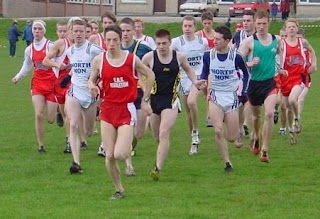
Image: Booker T Washington.

Wednesday, February 20, 2008

Boreham on the Handicap

It was a sunny autumn afternoon. The leaves were rustling about my feet, and the first nip of winter was in the air. It was Saturday, and I was out for a stroll. Suddenly a crowd attracted my attention, and, impelled by that curiosity which such a concourse invariably excites, I drew near to see whether it meant a fire or a fight. It was neither.

As I approached I caught sight of young fellows moving in and out among the people, wearing light many-coloured garments, and I guessed that a race was about to be run. Almost as soon as I arrived, the men were called up, arranged in a long line, and preparations made for the start. At a signal two or three of them sprang out from the line and bounded with an easy stride along the load. A few seconds later, three or four more followed; then others; until at last only one was left; and, after a brief period of further waiting, he also left the line and set out in pursuit. It was a handicap, Iwas told, and this man had started from scratch.

It was to be a long race, and it would be some time before any of the runners could be expected back again. The crowd, therefore, dispersed for the time being, breaking up into knots and groups, each of which strolled off to while away the waiting time as its own taste suggested. I turned into a lane that led up into the bush on the hillside, and, from that sheltered and sunny eminence, watched for the first sign of the returning runners.

Sitting there with nothing to do, it flashed upon me that the scene I had just witnessed was a reflection, as in a mirror, of all human experience and endeavour. Most people are heavily handicapped; it is no good blinking the fact. Ask a man to undertake some office or assume some responsibility in connexion with the church, and he will silence you at once with a narration of the difficulties that stand in his way. Ask a man to act on some board or committee for the management of some charitable or philanthropic enterprise, and he will explain to you that he has not a minute to spare. Ask a man to subscribe to some most necessary or deserving object, and he will tell you of the incessant demands to which he is subjected.

Now it is no good putting all this down to cant. We have no right to assume that these are merely the lame excuses of men who, in their secret souls, do not desire to assist us. We must not hastily hurl at them the curse that fell upon Meroz because it came not to the help of the Lord against the mighty. All that they say is perfectly true.

The difficulties that debar the first of these men from undertaking the work to which you are calling him are both real and formidable; the second man has every moment of his time fully occupied; the third man, because he is known to be generous, is badgered to death with collecting-lists from the first thing in the morning till the last thing at night. We must not judge these men too harshly. In the uncharitableness of our hearts we imagine that they have given us excuses which are not reasons. The fact is that they have done exactly the reverse; they have given us reasons which are not excuses.

We are on safer ground when we recognize frankly that it is very difficult for many people to devote much time, much energy, and much money to the kingdom of God. Many people are heavily handicapped.

F W Boreham, ‘The Handicap’ Mushrooms on the Moor (London: Charles H Kelly, 1915), 117-119.

Image: “It was to be a long race, and it would be some time before any of the runners could be expected back again.”

Friday, February 15, 2008

Boreham on Spurgeon and His Friendships

F W Boreham wrote the following foreword (pages 15-18), for the book written by his friend, A. Cunningham Burley. This book was published by Epworth in 1933 and was entitled, Spurgeon and His Friendships.

Author Mr. Burley
A cablegram from the author of this volume invites me to add a FOREWORD. I have not seen the book; but Mr. Burley is one of my oldest friends, and I know of the lifelong and patient research which he has applied to his present theme. We are living in an age of specialists; and for many years Mr. Burley has specialized on Spurgeon. A rumour that some trifle had been unearthed that might conceivably throw a fresh speck of light on the monumental personality of C. H. Spurgeon has many a time led Mr. Burley to drop everything that he might speed hotfoot to test the nugget of which intelligence had reached him. His must often have been the disillusionment that comes to children who scamper off in search of the crock of gold at the rainbow's foot; but such disappointments have never quenched his passion; and, in the course of his tireless quest, he must have amassed a prodigious wealth of carefully-sifted and thoroughly reliable information—a hoard such as few biographers are happy enough to possess.

C. H. Spurgeon
The centenary of Mr. Spurgeon's birth calls challengingly for a work in which we shall be able to contemplate his subtle and permeating influence in its true historic perspective. His rugged individuality stands out boldly against a striking, dramatic and picturesque background.

During the latter half of the nineteenth century, English history took a surprising turn; the nation was made all over again. Its politics, its literature, its science, its commerce, its art, and, above all, its faith, were recast and refashioned; and the position of Great Britain among the world-powers assumed an entirely new character and importance.

Rise of Evangelism
In this renaissance Mr. Spurgeon played a conspicuous part; and he did it in two ways. He did it by creating a popular atmosphere for evangelism. This was his supreme triumph. In his famous Memoirs, Greville graphically describes Mr. Spurgeon—whose physique struck him as singularly reminiscent of Macaulay's—preaching, at an ordinary service, to nine thousand people. It impressed him, as it impressed all thoughtful observers, as an arresting and epoch-making phenomenon. It forced the evangelical pulpit into the glare of public attention. The world was compelled to take notice. It made thinkable and possible the work of all those ministers and evangelists who have since captured the attention of the populace. And when one attempts to estimate the spiritual, ethical and civic value of the impact of Mr. Spurgeon's flaming intensity upon each individual unit in the surging crowds that flocked every Sunday with wistful hearts to hear him, one realizes how generously and how vitally he contributed to the new order that sprang into being in his time.

Profound Influence
But Mr. Spurgeon had a second string to his bow. A great age produces great men, and, by the very men that it produces, is made greater. The annals of the Victorian era glitter, like a starry sky, with brilliant and illustrious names. There were giants in those days. But among those Homeric figures there was scarcely one upon whom Mr. Spurgeon did not exercise a profound and formative influence. I am thinking, not so much of those who were the direct fruitage of his far-reaching and regenerative ministry, but of men who moved in circles quite remote from that in which he shone and whose names were seldom or never mentioned in association with his. The leaders of all departments of British life and thought recognized that the spirit of Spurgeon represented the life-force of the ages. He magnetized and sometimes electrified them. They went to hear him; they sought his counsel; and they struggled to keep the movements that they directed in harmony with the atmosphere that he generated. The most skilful and penetrating historians will find it beyond their wit to account in so many words for Mr. Spurgeon's authority over the minds of the men who dominated his period. But the most cursory review of the history of the nineteenth century must convince any man that his sway was stupendous. A king-maker occupies a more exalted eminence than a king. And in that age of crisis and of transformation there were many kingly spirits who gratefully confessed that, but for Mr. Spurgeon's ministry—in public or in private—their own contribution to the development would have been negligible.

Massive Theme
This is stating an obvious fact in nebulous and abstract terms. Mr. Burley's pages will, I am certain, abound in vivid and telling narratives that will provide concrete vindication of this general principle. He has a massive theme; his whole heart is in his work; his able contributions to current journalism have proved that his pen is eminently capable of the honourable task to which he now aspires; and I welcome this opportunity of breathing an affectionate benediction on his venture.

F W Boreham
KEW.,
VICTORIA,
AUSTRALIA, June, 1933.

Thanks: I am grateful to Pastor Jeff Cranston for suggesting this good post so that lovers of Boreham’s writings might enjoy this foreword. Sincere thanks to Jeff’s assistant, Lynn Swanson for scanning and sending this article.

Dr. Geoff Pound

Image: C. H. Spurgeon.

Thursday, February 14, 2008

Boreham Books into Chinese


Some avid readers of this site may remember me writing about the future of Boreham publishing and saying that it would be good to get the works of F W Boreham into Chinese.

In April 2007 in a posting entitled, ‘Geoff Pound Speaks About Publishing Boreham Books’, I said:

“I am discovering that some readers of the Boreham Blog site are from China and I am waiting for someone from the Chinese speaking world to put their hands up and work with us on translating and publishing Boreham books into Mandarin or Cantonese.”

Following that posting I had one sound out that didn’t go anywhere but in recent weeks I have had a phone call from a Mandarin and English speaker who works as an interpreter and translator and he is passionate about translating FWB into Mandarin!

I met with him recently to talk about this venture. He is very self-effacing and does not want any publicity or fanfare. Already he has translated six essays as he is translating the forthcoming book (in English), The Best Essays and Sermons of F W Boreham.

He is commencing an F W Boreham Blog in Mandarin on which he will post stories from “All the Blessings of Life” to introduce Boreham to the Chinese world and to generate interest in Boreham books that will later be published in the traditional (not online) method.

This man has read about 10 of the Boreham books and is looking to purchase more (anyone got any spares?)

I asked him how he is finding the challenge of translating Boreham into Mandarin. He said: “It won’t be hard to translate Boreham. Mandarin is a very poetic and pictorial language and these are words that describe well the Boreham books that I have read.”

I will keep you posted on these developments especially for people who would like to write to Chinese-speaking friends and point them in the direction of the Boreham Blog in Chinese.

If you have any words or ways with which you would like to encourage this man, do write to me and I will be glad to forward them to him.

Dr. Geoff Pound

Image: The Lord’s Prayer

Monday, February 11, 2008

Boreham on Conclusions and Reasons

I remember passing a window in London in which a sewing-machine was displayed. The machine was working. A large doll sat beside it, its hand on the wheel. The doll's hand appeared to be turning the handle. As a matter of fact, the machine was electrically driven, and the wheel turned the hand of the doll.

In the realm of cause and effect we are frequently the dupes and victims of a very dexterous system of legerdemain. The resultant quantity is invariably clear; the contributing causes are not what they seem.

I find myself believing today pretty much what I believed twenty years ago; but I find myself believing the same things for different reasons. As life goes on, a man learns to put more and more confidence in his conclusions, and to become more and more chary of the reasons that led to those conclusions. If a certain course seems to him to be right, he automatically adopts it, and he confidently persists in it even after the reasons that first dictated it have fallen under suspicion.

‘More than once in an emergency at sea,’ says Dr. Grenfell, the hero of Labrador, ‘I have swiftly decided upon a certain line of action. If I had waited to hem my reason into a corner before adopting that course, I should not be here to tell the tale.’

We often flatter ourselves that we base our conclusions upon our reasons. In reality, we do nothing of the kind. The mind works so rapidly that it tricks us. It is another case of legerdemain. Once more, it is the machine that turns the doll, and not the doll that turns the machine.

F W Boreham, ‘A Woman’s Reason’, Mushrooms on the Moor (London: Charles H Kelly, 1915), 109-110.

Thursday, January 03, 2008

Boreham on the Challenge of Drowned Hens

A man lived in a very comfortable house, with a large, light, airy cellar. The river ran near by.

One day the river overflowed, the cellar was flooded, and all the hens that he kept in it were drowned.

The next day he went off to see the landlord.

‘I have come,’ he said ‘to give you notice. I wish to leave the house.’

‘How is that?’ asked the astonished landlord. ‘I thought you liked it so much. It is a very comfortable, well-built house, and cheap.’

‘Oh, yes,’ the tenant replied, ‘but the river has overflowed into my cellar, and all my hens are drowned.’

‘Oh, don't let that make you give up the house,’ the landlord reasoned; ‘try ducks!’

F W Boreham unfolds some of the issues of this story in his essay, recognizing the fine art of putting up with nasty things but encouraging the creative juices to flow to see if there is a better way to be living under difficult circumstances.

F W Boreham, ‘Landlord and Tenant’, Mushrooms on the Moor (London: Charles H Kelly, 1915), 52-53.

Tuesday, January 01, 2008

Boreham Books to Make you Sing!

Psychologist, Dr Bruce L Thiessen has written an enchanting review of All The Blessings of Life: The Best Stories of F W Boreham and Second Thoughts, also by F W Boreham.

Read about the way these books have helped Dr Thiessen to compose a new song (which you can listen to) and assist him in his musical career.

Link: Bruce L Thiessen, A Book Review You Can Sing To.

Where You Can Purchase Boreham Books:

Dalton Books

COC Online Shop

Amazon.Com

Image: Cover of All the Blessings of Life.

Boreham on the New Year

New Year day marks both a burial and a birth. We stand reverently by the graveside of the past; we gaze curiously into the cradle of the year just born. It is at such moments that we exhibit, in full-orbed perfection, life's two monumental chivalries. A natural instinct restrains us from speaking ill of the dead; we are in honour bound to think as kindly as we can of the year that has passed, forgiving its blemishes and magnifying its benefits. And, as to the year that sprawls in its infancy before us, it becomes us to treat it as we ourselves were treated in similar circumstances.

Is there anything in the solar system more beautiful than the faith which on our first arrival, our parents reposed in us? They knew that we should be human, yet they idealised us until they thought of us as almost divine. They dreamed of all the good things we should do, and never for a moment suspected the bad. In their enraptured eyes, an aureole already encircled our brows. It is with some such rainbow-tinted chivalry that we extend our welcome to a newborn year.

Few things are more intriguing than our capacity for scraping together a presentable stock of glittering optimism at this particular season. We are subtly conscious of having turned a corner; entered upon a fresh phase, rounded a cape into warmer latitudes and sunnier seas. Something tells us that however unkind our yesterdays may have been, our tomorrows are unanimously and whole-heartedly on the side of the angels.

The High Art Of Self-Culture
In a sense, such mental processes and reactions are wholly illogical, perhaps a trifle absurd. After all, the year is a cycle. Nature recognises no day as its beginning; she indignantly scorns the thought of a close. To her, the succession of the seasons represents the inspired mechanism of perpetual motion. She knows no weariness, no monotony, no senility, no end. In spite of this, however, there is a modicum of sound sense in marking a certain point in the beginningless and endless circle, and in making that mystic point the theatre of a little discreet heart-searching. Are we on the right track? What progress are we making? Are we appreciably nearer our goal than when we last took our bearings ?

Obviously, the highest attainment in life consists in making the best of ourselves. But it is not easy. The outstanding fact in each man's pilgrimage is the terrifying fact of his own individuality. Each person is a pathfinder, blazing a trail through an unexplored continent. There are no maps or charts. Nobody else has ever had his life to live. Nobody else's experience, therefore, can serve him as a guide book for his own lonely trudge. By hook or by crook, he must find his way as he struggles on.

Wisdom Of Taking One's Bearings
It is all very well for metaphysicians and theorists to write books on "Life and How to Live It"; such a treatise is useless to the average man. He abhors the general; he craves the particular. He wants a book dealing distinctively with his own personal life. It must begin with his own birth; it must reach its climax with his own death; it must have his photograph as its frontispiece. And, because nobody on earth is competent to write it, and because nobody but himself would wish to read it, such a volume has never been published, and, in the nature of things, never will be.

It follows that if a man is to develop his personality and fulfil his mission in life at all successfully, he must stand occasionally on some lofty eminence, from the commanding heights of which he can survey the country that he has already traversed and map out for himself a path through the unknown territory that melts into infinity before him. Herein lies the rationale of our New Year celebrations. We arbitrarily fix a point in the circle as the beginning and the end of that circle; and on reaching that mysterious point, we pause to readjust ourselves to ourselves, to one another, to those around us, to God above us, and to the eternal scheme of things.

F W Boreham, This Day with F W Boreham, 1 January.

Image: “Each person is a pathfinder, blazing a trail through an unexplored continent.”

Monday, December 31, 2007

Boreham on the End of the Year

This is a time for contemplation. It is true that when a person is on a journey, the important thing is to keep going. Yet there come times when, pausing for a meal or taking breath on the summit of a picturesque knoll, it is convenient—and even profitable—to review the ground that he has already covered and to take his bearings in relation to the unfinished portion of his trudge. It is with some such sensations that we shall spend the present weekend. The end of a year is not, in reality, a point of any consequence; yet it seems to represent the end of one stage and the beginning of another.

This fondness of ours for rounding things off is one of our most characteristic human instincts. Who is there, among those who delight in books, who has not read a dozen times Gibbon's infamous postscript to his monumental "Decline and Fall," the postscript in which he describes the tumult of emotion with which, after a quarter of a century of intense application, he wrote the last sentence of his history? Sir Archibald Alison tells of a similar experience. He called his wife into the room to see the last line written, and both found moisture creeping to their eyes when the pen was finally lifted from the page. And we all like to think of Sir Christopher Wren, old, feeble but tremendously excited, being driven to the city to witness the very last touches being put to his noble cathedral. Such incidents are notable because typical.

Is Man a Squirrel In a Revolving Cage?
The end of a year, however, differs essentially and fundamentally from the end of other things, inasmuch as it is, in its very nature, not only an end, but a beginning. It is a case of: "The King is dead; long live the King!" If the speech of the orator is ill-conceived and ill-finished, he will suffer for it in days to come by being permitted to contemplate from the platform a paralysing array of empty benches. If the manuscript of the author represents scamped and slipshod work, he will meet his Nemesis in the shape of universal neglect. In each case the public will punish the offender for the delinquencies of the past by peremptorily denying him a future. But nothing can deprive us the new year. Whatever the old year has done or left undone, we start afresh. By an amazing distortion of human reasoning, this inevitable system of succession—year following year without respect to the behaviour of the years—has been tortured by unhealthy minds into an excuse for pessimism. Thus, to the gloomy broodings of Nietzsche, it seemed to place humanity in the position of a squirrel in a revolving cage or a convict on a treadmill. The insensate thing twirls round and round unceasingly without regard to any kind of progress. It turns man into a kind of recurring decimal that walks on and on and on indefinitely, but never by any chance works out. The philosophy is a frigid one. We prefer to view the position in the light of a fine story that Lowell tells in the narrative of his travels in Europe. When crossing the Alps with a friend, the pair suddenly reached a summit from which they commanded a magnificent view to east and west. As Lowell gazed eastward, the pageant of antiquity seemed to unroll before his eyes. Baring his head he cried, in a transport of veneration: "Glories for the past, I salute you!" He then turned to his friend who turned his face in the opposite direction. Thinking of all the pregnant potentialities stirring within the life of those younger and more aggressive peoples, he exclaimed, "Glories of the future, I salute you!" Lowell confesses that his friend had the better of him. It is some such reflection—the rapture of the forward look—that dispels pessimism and excites expectancy as we turn our faces to the year that is about to be.

A Philosophy Of Sunshine And Apple Blossom
The cheerfulness thus generated must, however, be curbed by certain necessary modifications. Year may succeed year with the regularity and reliability of the law of gravitation. But what of ourselves? Do the years leave us as they find us? Do they simply break sportively over us as the waves break over the happy bathers? "My hair," explained Mrs. Glover, the actress, to Douglas Jerrold, the humorist, "is turning grey through using essence of lavender." "Are you sure,” Jerrold replied, grimly, "that it is not due to essence of thyme?" We suspect that the subdued melancholy of which we are all conscious at this period is due, not to the substitution of one year for another, but to a secret and subconscious recognition of change within ourselves. Yet, happily, even this pensive mood is not lasting. As soon as the bells ring in the new year, we shake it from us, and, with the ageing Ulysses, we resolve to strive, to seek, to find, but not to yield.

We grow dreadfully old in December, but we are newborn babes in January. Longfellow's biographer has described a certain day on which the poet, his hair as white as snow but his cheeks as ruddy as a rose, was strolling in an orchard with a lady friend. "How is it," she asked, "that you are still so vigorous and that it is still possible for you to write so exquisitely?" "Look at that apple tree," replied Longfellow; "it is the oldest apple tree in the orchard and yet its blossoms this year are as beautiful as I have ever known them during the past fifty years. The secret is simply this: the tree makes a little new wood every year, and out of the new wood comes the wealth of blossom." It was merely a poet’s way of saying what, in his "Marius the Epicurean," Pater says of Cornelius Fronto. "The wise old man," he writes, "would seem to have carefully and consciously replaced each natural trait of youth, as it departed from him, by an equivalent grace of culture." Essence of thyme can never age or wither such heroic spirits. Though the outward man perish, yet the inward man is renewed day by day. It is impossible to depress men in whose minds the passage of the years awakens no philosophy, but one of sunshine and apple blossom!

F W Boreham, This Day With F W Boreham, 31 December.


Image: "We grow dreadfully old in December."

Wednesday, December 26, 2007

Boreham on ‘Such a Lovely Bite!’

I was out on the river in an open boat, fishing. It was a glorious sunny afternoon when we pushed off; the great hills around were at their greenest; and the only reminder vouchsafed to us that tomorrow is midwinter's day was the glitter of snow away on the top of the mountain. The water around us, reflecting the cloudless sky above, was a sea of sapphire, out of which our oars seemed to beat up pearls and silver.

Arrived at our favourite fishing grounds, we lay quietly at anchor, and for a while the sport was excellent. But, later on, things quietened down. The fish forsook us, or became too dainty for our blandishments. The sun went down over the massive ridges. A hint of evening brooded over us. The blue died out of the water, and the greenness vanished from the hills. Everything was grey and cold. As though to match the gloom around us, we ourselves grew silent. Conversation languished, and laughter was dead. We turned up the collars of our coats, and grimly bent over our lines. But the cod and the perch were proof against all our cajolery, and would not be enticed.

At length my hands grew so cold and numb that I could scarcely feel the line. My enthusiasm sank with the temperature, and I suggested, not without trepidation, that we should give it up. My companions assented to the abstract proposition; but, with that wistful half-expectancy so characteristic of anglers, did not at once commence to wind up their lines. I was, therefore, just on the point of setting them an example when one of them exclaimed excitedly, “Wait a second; I had such a lovely bite!” That was all; but it gave us a fresh lease of life. For half an hour we forgot the hardening cold and the deepening gloom, and chatted again as merrily as when we baited our hooks for the first time. It was a bite; that was all. But, oh, the thrill of a bite when patience is flagging and endurance ebbing out!

A Bite
It is because of a certain cynical tendency to deride the value of a bite that I have decided to spend the evening with my pen. “A bite!” says somebody, with a fine guffaw. “And what on earth is the good of a bite, I should like to know? A bite is neither fish, flesh, fowl, nor good red herring! A bite is of no use for breakfast, dinner, tea, or supper! Bites can neither be fried nor boiled, measured nor weighed. A bite, indeed!’-and once more the cynic loses himself in laughter. That is all he knows about it, and it merely supplies us with another evidence of the superficiality of cynicism. The critic is sometimes right, but the cynic is never right; and the roar of laughter that I hear from the cynic's chair, as he talks about bites, is, therefore, rightly translated and interpreted, a kind of thunderous applause. Why, in some respects, a bite is better than a fish. Only very occasionally does a fish look as well on the bank or in the boat as it appeared to the excited imagination of the angler when he first felt the flutter on the line. I have caught thousands of fish in my time; but most of them I have dismissed from memory as soon as they went flapping into the basket. But some of the bites that I have had! I catch myself wondering now what beauteous monsters they can have been.
“Well, and how many did you catch?” I am regularly asked on my return.
“Oh, a couple of dozen or so; but, oh, I had such a bite!...”

And so on. It is the bite that lingers fondly in the memory, that haunts the fancy for days afterwards, and that rushes back upon the angler in his dreams.

Attributing Super Qualities to the Unrealized
The bite is always the biggest fish. There is something very charming—something of which the cynic knows nothing at all—about this propensity of ours to attribute superlative qualities to the unrealized. It is a species of philosophic chivalry. It is a courtesy that we extend to the unknown. We do not know whether the joys that never visited us were really great or small, so we gallantly allow them the benefit of the doubt. The geese that came waddling over the hill are geese, all of them, and as geese we write them down; but the geese that never came over the hill are swans every one, and no swans that we have fed beside the lake glided hither and thither half as gracefully.

F W Boreham, ‘Such a Lovely Bite!’ Mushrooms on the Moor (London: Charles H Kelly, 1915), 42-45.

Monday, December 24, 2007

Boreham on Christmas at Midsummer

Christmas is once more with us, although the migrants who have poured into Australia during the year may be pardoned if they find some little difficulty in recognising it.[1] To those who were reared in the older lands of the Northern Hemisphere, an Australian Christmas must always seem a weird, uncanny hotch-potch. Every Englishman settled in Australia cherishes in his heart a fond, though frantic, hope. He knows that it can never be realised; the stars in their courses are fighting against him; he is but crying for the moon. Yet, even though he be permitted to spend a hundred Summers beneath these sunnier skies, he will never quite relinquish that pleasing and passionate illusion.

He will steal furtively to the window every Christmas morning and will throw up the blinds to see if, at long last, his dream has all come true. How he would love to see the whole horizon a sheet of dazzling whiteness! He wants the snow; the graceful, fluttering snow; the deep and drifting snow; and, however long he lives, Christmas can never be Christmas to him without it. In his inmost heart he recognises that, in the nature of things, the old English Christmas can never be duplicated on Australian soil. The fireside frolics do not dovetail with the heyday of harvest-time. The things that pertain to the traditional Yuletide—the snowman in the garden and the snowballing on the street, the skating on the lake and the frosty walk to church; the snapdragons in the kitchen, and the ghost story in the flickering firelight—these, sigh for them as we may, can never fall within the range of Australian experience.

Christmas Is Christmas Under Any Stars
Yet it makes no difference. The yearning abides. Southey avers that, however long a man lives, the first 20 years of their life will always be the biggest half of it. The thoughts of youth are long, long thoughts. The first two decades of our existence fasten upon our hearts sentiments and traditions that will dominate all our days. A man who has spent childhood and youth in the old lands of the north may come to Australia, may make himself perfectly at home here and win their way to happiness and prosperity. Yet whenever he beholds Father Christmas wiping the perspiration from his brow as he wanders among the roses and the strawberries of our fierce Australian mid-summer, he will feel secretly sorry for the good old man. He seems to be casting about for snowflakes and icicles and finding only cool drinks and ice creams.

Yet, after a very few years on this side of the planet, migrants discover to their delight that the joys of Christmas-tide are not restricted to any particular season of the year, nor are they bounded by the accidents of climate. Christmas is Christmas, whether it comes in Winter or in Summer, in drifts of snow or in a blaze of floral beauty. The lovely spirit of the thing remains the same, however its trappings and externals may change. Beneath scorching suns or amid glistening hoar frost, Christmas-time is the time when we all think a little more kindly of the people concerning whom we have cherished bitter thoughts. It is the time when we remember with a tug at the heart old friends whom we had almost forgotten. It is the time when we think of the poor, when we think of the children's stockings, when we think of each other, and think a good deal more of the pleasures that we can give than of the pleasures that we can get. Snow time or strawberry time, Christmas-time is Christmas-time.

The Yule Message Cosmopolitan And Perennial
And, after all, what have Summer or Winter, heat or cold, to do with the message that will be pealed by all the Christmas bells and carolled by all the Christmas choirs during the approaching festival? If Christmas means anything, it means that, at Bethlehem, heaven came palpitatingly close to earth. God so loved the world that He gave His Son. Humanity was bankrupt. As Matthew Arnold puts it, "on that old Pagan world disgust and secret loathing fell." Civilisation was played out. History seemed to be rushing towards the abyss. Wistful eyes turned in every conceivable direction in hope of finding a path to better things. Then, just as men were most tempted to yield to stark despair, the astonishment of the ages broke upon them. In the words of Dr. George Macdonald:

They all were looking for a King
To slay their foes and lift them high;
Thou cam'st a tiny baby thing
That made a woman cry.

The shepherds heard the angels sing their Gloria in Excelsis; the wise men saw the beckoning star blaze in their gloomy sky; the significance of that Judean idyll gradually dawned upon the nations; the entire course of history was diverted into a new channel, a better day had dawned; men felt that the world could never be quite the same again.

The sublime happening of that first Christmas was not only an incarnation; it was the beginning of innumerable incarnations. As Angelus Silesius sings:

Though Christ a thousand times
In Bethlehem be born,
If He's not born in me
My life is all forlorn.

Thus, the Incarnation multiplies itself a million-fold. The Manger becomes a casket in which all the jewels of divine revelation glitter with ever-growing lustre. Whether Christmas comes to us garlanded by icicles or rosebuds, its central significance and essential glory abide everlastingly the same.

F W Boreham, This Day with F W Boreham, 25 December 2007. (It first appeared in the Hobart Mercury, 23 December 1949.

Image: “The Manger becomes a casket in which all the jewels of divine revelation glitter with ever-growing lustre.”

[1] This editorial appears in the Hobart Mercury on December 23, 1949.

Boreham on the Magic of Christmas

It is difficult to believe that within the bounds of Christendom there breathes a soul so dead that no little trills of pleasurable sensation tingle through his nerves as he anticipates once more the pealing of the Christmas bells, the spreading of the Christmas feast, and all the fun and frolic incidental to the time-honoured occasion. There is a magnetism about Christmas that transforms everything and everybody. At Christmas each individual undergoes a mysterious and magical metamorphosis.

Is it because at Christmas more than at any other time, the divine impinges upon the human, and the human upon the divine? It is this intensely human and yet profoundly sublime element in the Christian revelation—an element that is all the more appealing because it is infused with mortal tenderness as well as with celestial authority—that will make the Christmas message particularly grateful as we keep the feast this year.

We are living in a worried world. To a worried world most festivals would constitute themselves a form of mockery. Yet nothing could be more soothing and strengthening to those who are feeling the pressure of the hour than the timely reminder that the Highest is not remote from the anxieties of the lowliest, but has, at Bethlehem, assumed our very flesh and blood in order that He may render Himself the more intelligible and approachable. Christmas sweetens and sanctifies the joys of the glad and ministers comfort to those with whom the world is going hardly.

Appeal To The Gregarious Instinct
Nor is this all. For a subsidiary, and scarcely less attractive factor comes into operation. Quite obviously, one of the most important ingredients in the composition of the Yuletide sentiment is the element of contagion. There is always a peculiar satisfaction in thinking what everybody is thinking, feeling what everybody is feeling, and doing what everybody is doing. We are gregarious creatures; we go in packs and herds; we unconsciously stimulate each other to joy and sorrow, to admiration and execration, to emotion and excitement.

It is easy to laugh when everybody is laughing; easy to weep when everybody is in tears. The most solitary and phlegmatic man cannot walk through a park on a public holiday in exactly the same temper in which he would traverse it on a day on which he has its lawns and lakes and avenues all to himself. In spite of himself, he is influenced by the carnival atmosphere, and imbibes something of the spirit of the occasion. For pleasure is highly infectious. The gladness of the multitude communicates itself, almost irresistibly, to the individual. This vital principle never wields its spell with greater force than at Christmas time.

Christmas Spirit Deeply Ingrained
If there is anything at all in the doctrine of heredity, it may reasonably be supposed that a certain reverence for the Christmas festival must, by this time, have become ingrained in the very warp and woof of our British breed. Miss Frances Power Cobbe, an eminent sociologist, used to say that it would take 10,000 years to produce a full-blooded atheist out of the scion of 40 generations of Christianity. That being so, what of the Christmas sentiment? Beneath whatever stars a Briton happens to dwell, the old emotions will creep back upon him in December. Men who recognise no special authority in the sublime origin of the Christmas faith, nevertheless find the sacred traditions clustering about the season too magnetic and too compelling to permit of their being disregarded.

With shepherds and with sages they turn wistful faces towards Bethlehem. They cannot close their ears to the angels' voices; they cannot shut their eyes to the beckoning star. The music of the Christmas bells vibrates through all human sensations, evoking a response from every breast. Humanity has a few noble traditions too stupendous and too sacred to be classified as the peculiar property of any class, clime, or creed; and the tender and inspiring reflections suggested by the return of the Christmas season stamp it as an integral portion of that priceless heritage.


F W Boreham, 'This Day With F W Boreham, 24 December.